
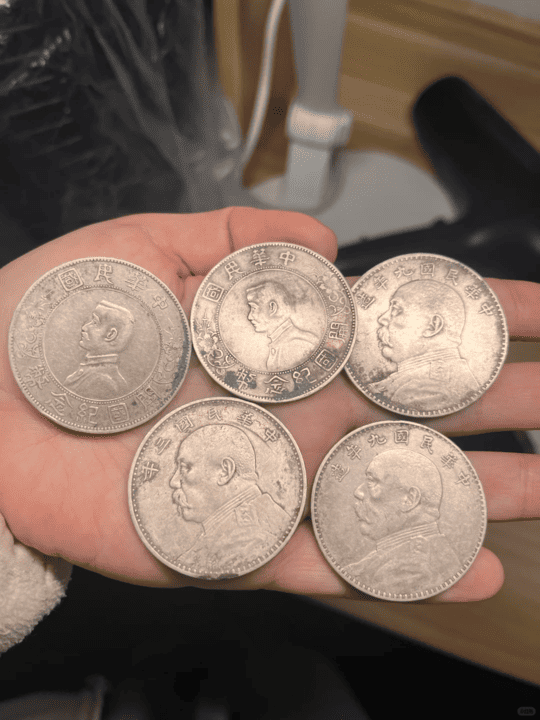
Read a Yuan Shikai dollar as two connected faces
Begin with the full portrait side and reverse under even light. Before naming a variety, copy the date, denomination, portrait-side wording and grain-wreath details exactly as they appear.
- Dated side — keep the complete date inscription, portrait, epaulettes and surrounding characters in one level photograph.
- Grain-wreath side — show the denomination, leaves, ribbon, inner border and any visible lettering without cropping the rim.
- Edge and scale — add an overlapping sequence around the circumference, followed by weight, diameter and thickness with the original instrument and unit.
Year 3, Year 8, Year 9 and other Yuan Shikai dollars are separated first by their visible date wording. Smaller portrait, character or wreath differences come later and must be located on the subject coin.
A handwritten sleeve or slab attribution is a research lead, not a substitute for the dated side. Retain its wording and number separately from the physical observations.
Build a condition map before comparison
Describe toning shade, high-point wear, strike softness, wiping hairlines and cleaning-related brightness individually. A dark coin should not be polished to make the portrait easier to read.
Mark every chop, hole, solder point, rim knock and suspected edge repair on an overall view. Then add a raking-light detail with the same orientation.
Keep one number on every view and reading
Batch photographs are useful for quantity only. Each Yuan Shikai dollar needs its own two faces, complete edge and measurement card, because similar coins can otherwise exchange details unnoticed.
If the weight or diameter is repeated, keep the date, tool, unit and contact position. An unexplained replacement figure weakens rather than improves the file.
Use direct inspection for a defined question
Photographs can show lettering, wreath structure and obvious damage. They may not settle metal, very fine tooling, a repaired edge beneath a holder or lustre changed by treatment.
Name the hidden section and preserve the enclosure until an in-person examination is warranted. Opening a slab merely to satisfy curiosity risks losing useful context.
Reconcile the Yuan Shikai record before handover
Check that the date, portrait, denomination, wreath, edge and measurements all belong to the same item number. Keep provenance and market comparisons in their own background section.
Read the edge run from its chosen starting point and confirm there is no gap between frames. Note any reeding change without filing, rubbing or applying chemicals.
Let the weak date or hidden rim choose the next Yuan Shikai view
List the weak characters, concealed rim section or surface question first, then request the view that addresses that exact gap. Compare dimensions only within a coin type already supported by visible evidence; a catalogue range cannot identify a worn date or manufacture a missing variety feature.
Preserve the first photographs when later information changes the proposed name. Date the new interpretation and explain which observable detail prompted it.
Keep the unresolved list specific enough to direct the next inspection rather than invite a guess.
At handover, count the coin once and retain its holder, labels and first measurement card. Keep any proposed variety wording visibly provisional until another reviewer can repeat the diagnostic observation.
No dip, polish, filing or scratch test is needed. A traceable uncertainty preserves more evidence than a brighter surface or a convenient but unsupported name.
