
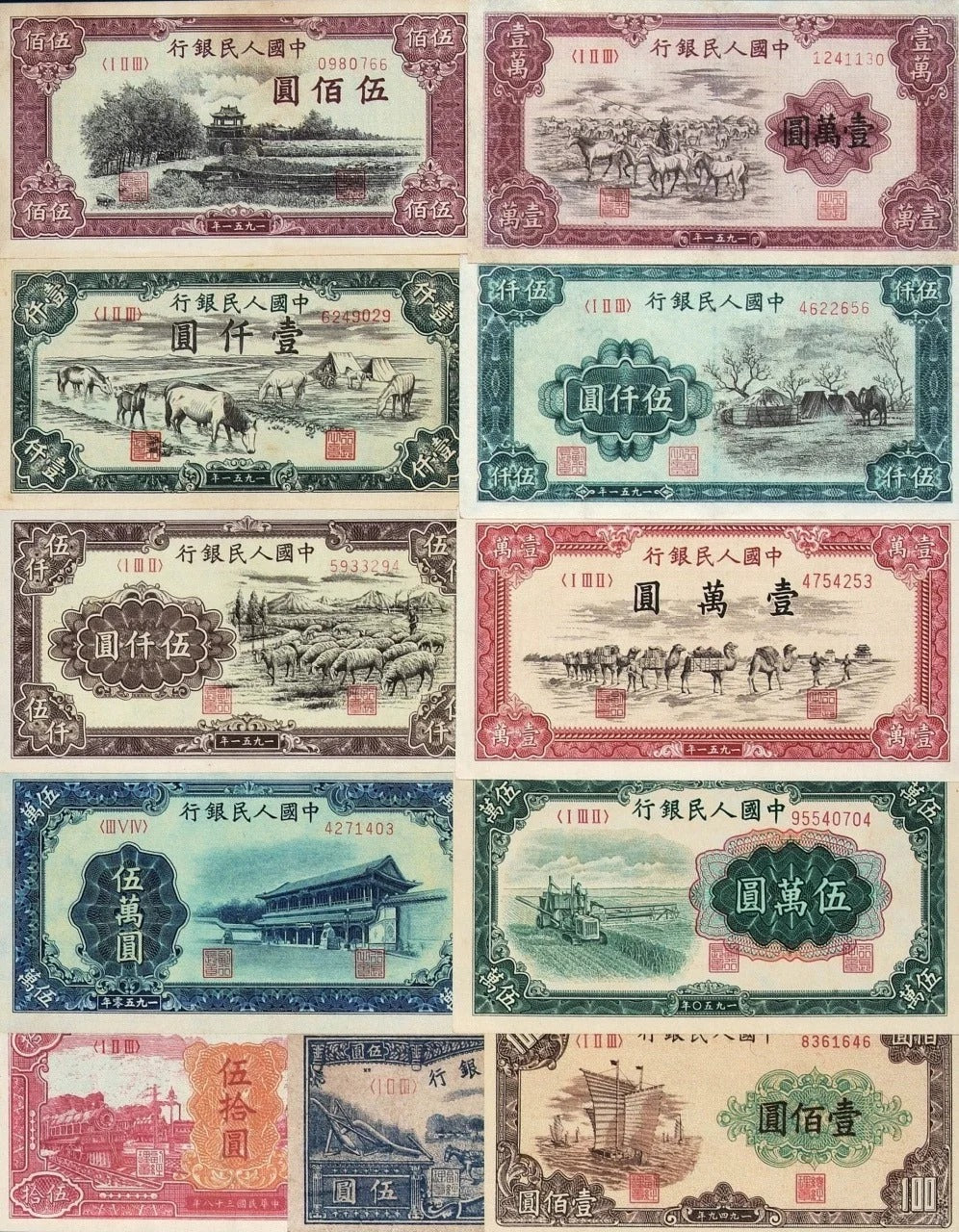
In banknote collecting, there's a saying:"Condition accounts for ninety percent of the value."For the same old Renminbi banknote, the market price for a PMG 65-graded note can be 5-10 times higher than a 50-graded one. However, paper is inherently fragile – folds, mold spots, ink discoloration, and edge damage all deduct from its value. Especially in Hong Kong's humid climate, preserving banknotes is much more challenging than in northern regions. Below, we'll explain condition standards and practical preservation methods.
I. Why Banknote Condition Accounts for Ninety Percent of the Value
Unlike silver coins, banknotes are extremely fragile: folds, soft edges, mold spots, ink discoloration, and edge damage all immediately lower their estimated value. In truly mature Buyback and auction markets, subjective descriptions like"80% new, 90% new"are no longer sufficient. The industry widely adopts the 1-70 grading standard from PMG (Paper Money Guaranty), an American banknote grading company, as a common language.
PMG Grading Comparison Chart
| PMG Grade | General Term | Physical Characteristics | Significance in Secondary Market |
|---|---|---|---|
| 70 EPQ | Top Gem Uncirculated | No handling marks under 5x magnification, excellent margins. | Auction house treasures, highest premium. |
| 65–69 EPQ | Gem Uncirculated | Visually almost perfect, only extremely minor handling. | Core of the high-end market, highly liquid. |
| 58–64 | Choice Uncirculated | No obvious signs of circulation, possibly very light folds or off-centering. | Mainstream of the mid-range market, stable value retention. |
| 20–45 | Extremely Fine to Very Fine | Obvious signs of circulation, 2–10 folds. | Value depreciates with wear, only rare versions still hold buyback value. |
| 4–12 | Good to Poor | Severe wear, missing corners, softened and aged paper. | Limited buyback value unless extremely rare. |
(Note: EPQ stands for"Exceptional Paper Quality,"meaning the banknote is completely original and has not undergone chemical cleaning, physical pressing, or color restoration. This designation is crucial for achieving high-prices.)


II."King Notes"and Secondary Market Trends for the First, Second, and Third Series Renminbi
Having understood the logic of condition, let's look at the core banknotes of the three old series of Renminbi that are most sought after in the market (converted at 1 Renminbi ≈ 1.1 HKD).
1.First Series Renminbi: Issued at Founding, Thoroughly Recalled
The First Series was issued between 1948 and 1955. During that wartime period, materials were scarce, and paper quality varied. The recall rate was high in later years, making surviving quantities extremely rare. Key representatives of the"Twelve Great Treasures"of this series include:
- 10,000 Yuan"Horseback Riding"(Horse Herding):Only circulated in Inner Mongolia, with an extremely high recall rate. A pristine example once sold for over HK$1.1 million in the market.
- 5,000 Yuan"Mongolian Yurt"(Mongolian Yurt):Also a special edition for Inner Mongolia, extremely rare.
For the complete story of the First Series and the market trends of the Twelve Great Treasures, you can refer toValuation Guide for the First Series Renminbi's Twelve Great Treasures.
2.Second Series Renminbi: Printed by Soviet Union, Historical Turning Point
The Second Series was issued in 1955. Among them, the"Soviet Three Notes"(Shi Yuan - Ten Yuan, Wu Yuan - Five Yuan, Can Yuan - Three Yuan) were printed by the Soviet Union. After Sino-Soviet relations deteriorated in 1964, they were urgently recalled and destroyed, leading to a drastic drop in surviving quantities.
- "Big Black Ten"(Da Hei Shi) 10 Yuan note:Large in size and featuring exquisite printing. Mid-grade examples fetch around HK$110,000 to HK$220,000, while pristine examples have reached over HK$440,000.
- Soviet Three Yuan (Su San Yuan):Good condition examples are worth approximately HK$55,000 to HK$110,000.
The full background, authentication points, and recent transactions for the"Big Black Ten"and"Soviet Three Notes"are detailed in the articleAnalysis of Secondary Market Trends for the Big Black Ten and Soviet Three Notes.
3.Third Series Renminbi: The Longest Circulating Generation
Issued starting in 1962, this series circulated for the longest period, reflecting the industrial and labor themes of that era.
- Two Yuan"Lathe Worker"(Er Yuan Quan 「 Che Gong 」):Watermarks include ancient coin and five-pointed star. The former is rarer. Condition requirements are extremely high; the price difference between a folded and unfolded note can be several times.
- "Green Back with Watermark"(green-back watermark Yi Jiao) 1 Jiao:High market interest, pristine examples can easily exceed HK$10,000.
For a detailed explanation of all varieties of the Third Series Renminbi and actual transaction prices in Hong Kong and Macau, refer to the articleHong Kong and Macau Collection Market Guide for the Third Series Renminbi.


📷 Found old Renminbi at home and don't know its value?
Take clear photos of the front and back, with clear serial numbers. Send them to us viaWhatsApp at 98342057. We'll reply within half an hour with the series, condition, and a preliminary estimate. Remember not to wash or iron them arbitrarily – any alteration can halve their value or more.
III. Hong Kong's Humid Climate: Four Protections for Banknote Preservation
Hong Kong's summer humidity often reaches 80-90%. If banknotes are stored improperly, yellow spots and mold can quickly appear. It is recommended to follow the"four protections"principle below for preservation to ensure that their condition does not significantly decline for at least several years:
- Moisture Protection:Maintain relative humidity between 45% and 60%. If you have several"king notes"worth over HK$10,000, the safest option is to use an electronic dehumidifying cabinet. Do not store them in drawers or iron boxes (iron boxes can rust and contaminate the paper).
- Sweat Protection:Finger oils and sweat salts can leave residue on the paper, leading to long-term oxidation and discoloration. When handling banknotes, wear cotton gloves or use stainless steel tweezers.
- Friction Protection:Use acid-free PET banknote sleeves or rigid plastic holders for individual notes. Do not stack several notes together and stuff them into an envelope.
- Light and Chemical Protection:Prolonged exposure to UV light will cause ink to fade; old newspapers and ordinary plastic bags are acidic and will slowly corrode the ink, all of which should be avoided.
For a more comprehensive understanding of banknote condition assessment and serial number patterns, the articleBanknote Condition and Special Serial Numbers Collection Guideprovides more practical examples.
IV. The Most Common Mistake:"Cleaning"Old Banknotes Yourself
Every year, customers bring in banknotes that have been"beautified,"hoping for a good price. In reality, such"cosmetic notes"are a major drawback in the banknote buyback market.
- Washing:Damages paper fibers, removes original embossing, and softens the paper.
- Ironing:High heat discolors ink, scorches edges, and is easily revealed under UV light.
- Bleaching/Color Restoration:Chemical agents leave residues on the paper, and PMG will directly assign a Net grade or refuse to grade it.
The instruments of professional grading organizations are extremely sensitive. Restoration marks invisible to the naked eye will immediately become apparent under UV light. A note that could have received an EPQ grade might end up only being worth the price of a heavily damaged note after tampering, not to mention the possibility of being outright rejected for grading.
The correct approach: Keep it in its original state, take clear photos, and have a professional assess its condition first before deciding whether to send it to PMG. If you haveold Renminbi or Republic of China banknotesfrom before the founding of the PRC, it's even more important to maintain their original condition and avoid any attempts at cleaning.

V. 2026 Hong Kong & Macau Market: Common Old Banknote buyback price Ranges
The table below summarizes the actual transaction ranges in the Hong Kong and Macau markets over the past three months, for your reference. The actual price of a single note still depends on its condition, series variety, and graded score.
| Series / Denomination | Common Circulated Condition | Uncirculated / PMG 60+ | Remarks |
|---|---|---|---|
| First Series 10,000 Yuan Herding Horses | HK$660,000+ | HK$1,100,000+ | Foremost of the Twelve Great Treasures, extremely rare |
| Second Series Big Black Ten | HK$110,000–220,000 | HK$440,000+ | Printed by Soviet Union, rare |
| Second Series Soviet Three Yuan | HK$55,000–110,000 | HK$220,000+ | Jinggangshan as main motif |
| Third Series Two Yuan Lathe Worker (Ancient Coin Watermark) | HK$2,200–4,400 | HK$11,000+ | Watermark type determines price difference |
| Third Series Green Back with Watermark 1 Jiao | HK$3,300–6,600 | HK$16,500+ | One of the popular notes in the Third Series |
For the Fourth Series and more recent banknotes, the articleFourth Series Renminbi Collection Market Guideprovides market trends for each variety. If you also want to estimate the value of your old stamps, you can refer to theRare Stamp Buyback Guide.
Conclusion: Banknote Buyback Relies on Preservation, Not Luck
The value of an old banknote is not solely determined by its year and series, which merely set a lower limit. Condition is the key factor that determines its upper limit. If you possess First, Second, or Third Series Renminbi, old Hong Kong dollars, or Republic of China banknotes, remember three things: do not wash, do not iron, and do not fold them for storage. Keeping them in their original state and taking clear photos for a professional assessment is the safest way to preserve their value.
Contact Information
Gujinjianbao has been collecting silver coins, old banknotes, stamps, and old gold in Hong Kong and Macau for years. We offer free online preliminary appraisals, on-site collection, and settlement via cash or FPS.
- WhatsApp:98342057
- WeChat:john19998
- Phone:852-98342057
Send us clear photos, and we will reply with a reasonable estimated price range within 24 hours.
Want to know the value of your old banknotes?
Free appraisal, valuation reply within 30 minutes, same-day doorstep collection, instant cash payment. Send us clear photos via WhatsApp, and we'll reply with a reasonable price range within half an hour.
