
 WhatsApp item photos
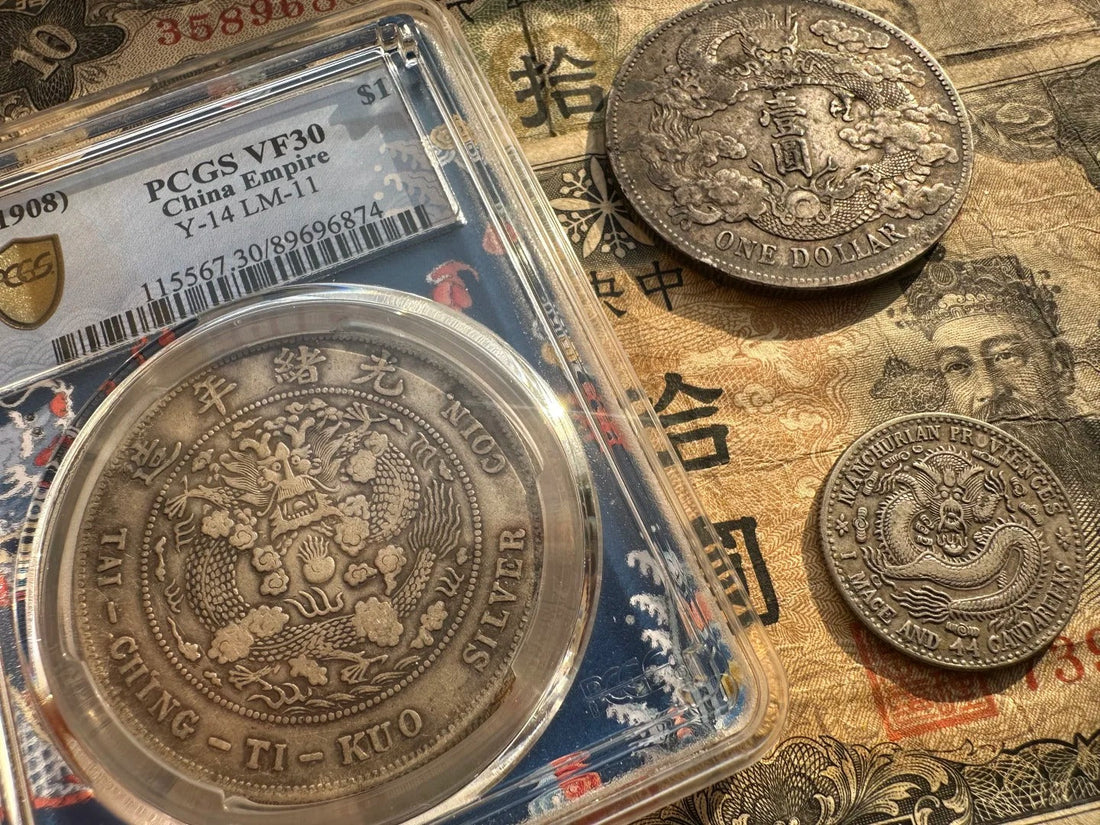
Let the Guangxu Yuanbao legends decide the first group
Take complete, level photographs of the inscription side and dragon side. Copy the visible mint or province, date and Kuping denomination before deciding whether the issue belongs with the Central Mint or a provincial authority.
- Mint or province — retain the exact characters and their order, including any passage weakened by wear or hidden by a holder.
- Denomination — transcribe the complete Kuping wording rather than shortening it to a market label.
- Dragon side — preserve the central dragon, surrounding English or Chinese legend, border and denticles in one uncropped view.
Assign one number to the coin, its holder, measurements and old paperwork. A tray photograph records the group but cannot support an individual mint conclusion.
Distinguish central and provincial evidence carefully
Use ‘Central Mint’ only when the visible wording supports it. A dragon style shared with another issue does not override a provincial name present on the coin.
Likewise, do not supply a province from an old sleeve when the relevant characters remain covered. Transcribe the label as provenance and leave the physical reading open.
If the inscription and former attribution conflict, retain both statements with dated photographs. The discrepancy becomes a defined point for specialist review.
Map the dragon from centre to rim
Photograph the head, whiskers, horns, claws, scales, clouds and tail with enough surrounding detail to locate each feature on the complete reverse.
Include English lettering, punctuation, beaded border and denticles. Fine variations should be compared only after the mint and denomination evidence has been secured.
Complete the edge and measurement record
Work around the circumference from a fixed landmark in overlapping frames. Note reeding, seams, rim knocks, filing, holes, solder and old mounting evidence without disturbing the metal.
Show weight, diameter and thickness with the instrument, original unit and measuring position. Keep an earlier reading when a repeat changes and investigate the setup.
Dimensions can check a supported type; they cannot turn weak mint text into a central or provincial attribution.
Describe the surface before considering treatment
Record toning colour, high-point loss, weak strike, wiping hairlines and cleaning-related brightness as separate observations. No dark area needs polishing for the dragon to be documented.
Locate chops, scratches, rim bruises and repaired sections on full views, then add details under raking light. Preserve the first neutral-light images for colour comparison.
Make the authority and Kuping wording answer to one numbered coin
Confirm that the transcribed central or provincial authority, Kuping denomination, dragon, edge circuit and measurements all return to the same reference number before deciding which comparison is relevant.
Keep confirmed wording, proposed issue and surface condition apart. Published histories should carry a source and consultation date rather than merging with the coin's physical description.
State any concealed edge or unreadable character precisely. Direct examination should address that specific gap while retaining stable holders and paper materials.
For several coins, sort by visible authority and denomination before comparing dragon details. Each piece must retain its own photographs and readings throughout.
At handover, preserve toning, envelopes and labels as found. Dipping, scraping or filing would remove evidence needed for the comparison.