
 WhatsApp item photos
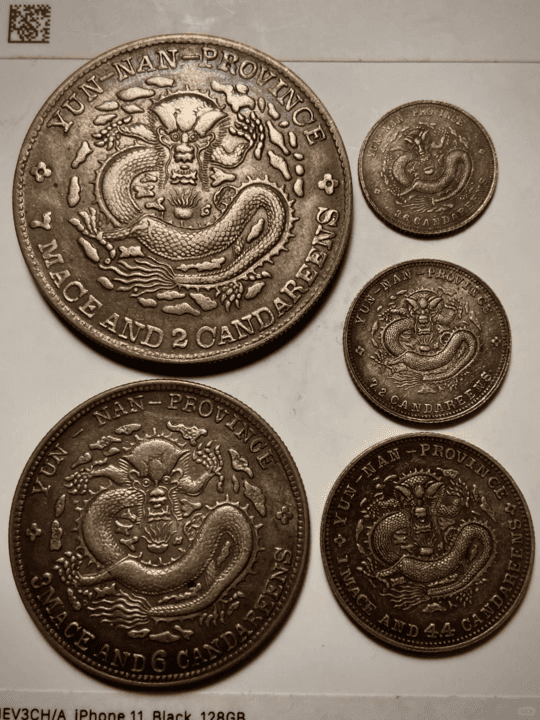
Start with features that survive the surface colour
Take complete views of the inscription and dragon sides, keeping the rim visible. Transcribe the mint or province, date and Kuping wording before discussing colour.
Assign one number to the coin, holder, edge sequence and measurements. Every surface close-up must return to a located area on those complete views.
Questions to leave open
Treat an old label or online comparison as a research lead, not a surface diagnosis. Mark any covered inscription or rim section for later review.
Do not call a dark area natural, artificial or cleaned until observable texture and context support the description.
Separate toning from wear and treatment
Describe grey, brown, blue or black colour by position and distribution. Note interruptions around scratches, relief or contact points without assigning an unsupported cause.
Use raking light for wiping hairlines, polished patches, residue and uneven lustre, retaining the first neutral-light image beside every texture view.
Read the dragon and border under consistent light
Locate the dragon head, scales, claws, clouds, beaded border, denticles and English lettering without sharpening the image into false detail.
Distinguish weak strike from circulation wear. A soft scale or character may need comparison in hand rather than a stronger digital filter.
Cover the full edge before measuring
Photograph overlapping sections from a fixed landmark, recording seams, filing, holes, solder, mount traces and rim knocks exactly where they occur.
Retain weight, diameter, tool, unit and contact point. Measurements support a type grounded in visible wording; they cannot supply an unreadable mint.
Keep packaging and history in supporting roles
Photograph a slab, envelope or collector note under the coin number. Its former name and grade remain separate from the metal's observable condition.
Cite issue or production history with its reference and consultation date, leaving another specimen's colour and measurements outside this description.
Resolve colour and edge conflicts before attribution
Reconcile both faces, the edge circuit, dimensions and holder before proposing a finer variety. Preserve conflicting readings rather than selecting a convenient one.
List confirmed inscriptions, proposed attribution and unresolved surface questions separately so another specialist can repeat the examination.
If a holder conceals decisive evidence, define the exact position before considering direct inspection. Stable packaging and patina should remain undisturbed.
For a group, number each dragon coin before sorting by visible authority, date and denomination. A tray image records quantity only.
No dip, polish, scrape or edge filing is required. The value of the file lies in preserving the original surface and its limitations.