
 WhatsApp item photos
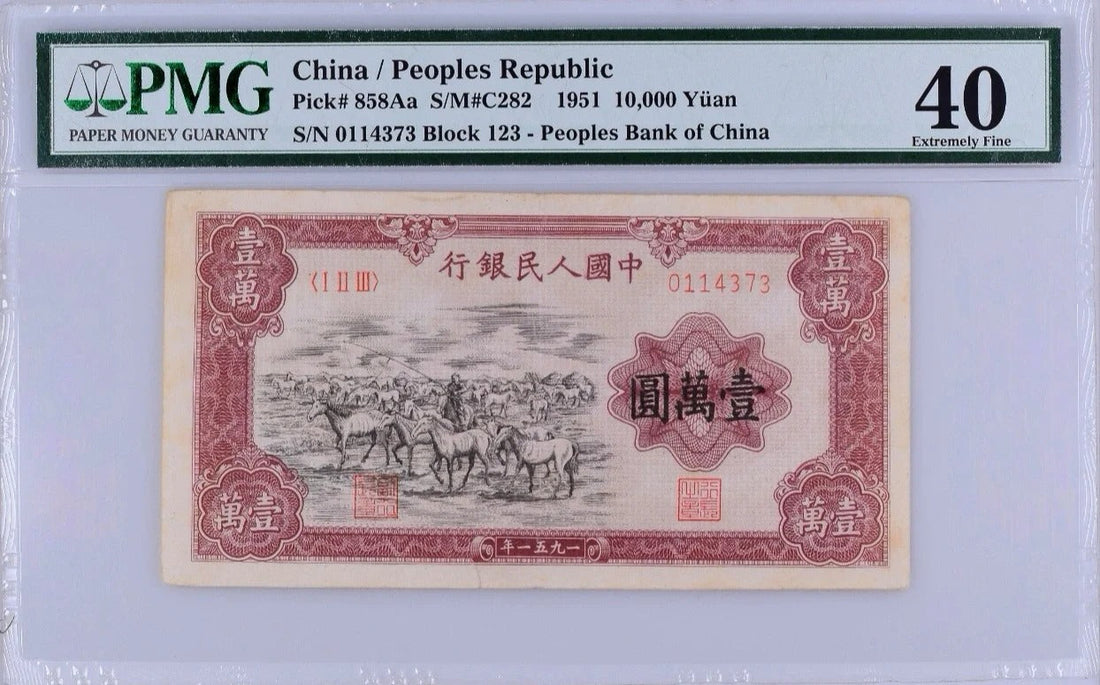
Treat the First Series as a range, not one design
Begin each note with uncropped front and back photographs. Copy the denomination, printed date, issuing text and principal designs before attaching a catalogue name.
Record the complete prefix and serial number, including uncertain digits by position. Keep height and width with the measuring tool and original unit.
Number sleeves, album spaces and old captions separately but link them to the banknote. Their wording may preserve provenance without proving the note's precise version.
Make design names answer to visible evidence
If the subject note visibly carries the Horse Herd design, describe and photograph it. Do not add that name to another First Series note because it appears prominently in a guide or family list.
Use enough of the full composition to place buildings, transport, workers, landscapes, numerals and ornamental borders. An isolated vignette can conceal a different denomination or format.
Keep unlike paper material outside the series
Ration coupons, foreign notes, commemorative items and uncut sheets should receive their own category and object number. Similar age or storage does not make them First Series currency.
When uncertain, use a neutral description based on the denomination and visible design. Refine it only when the wording and format agree.
Do not use one note's dimensions or watermark observation to complete another. Every entry needs its own physical and photographic support.
Preserve bundles and serial relationships
Record the visible quantity, wrapping and first and last accessible serial before moving a group. Keep the order of a run even if individual notes are later photographed.
Do not split a bound or historically arranged bundle simply to expose every serial. State which positions remain inaccessible and preserve the packaging connection.
A group photograph confirms count and order; individual front-back sets carry condition and design observations. Both layers should share a clear numbering scheme.
Describe paper condition without cosmetic treatment
Map folds, edge splits, tears, pinholes, missing corners, stains, foxing, thinning, glue, tape and colour changes. Locate each point before adding a magnified image.
Record evidence of washing, pressing, repair or recolouring as observations rather than attempting to reverse it. Never iron, laminate or wet the note for a cleaner image.
Build a conclusion that can be checked
Separate verified denomination and design, proposed version, cited issue history and unresolved features. This avoids turning background research into a transcription from the object.
Use transmitted light only on the actual note and record the setup. Do not assume a watermark or security feature from a neighbouring denomination.
If the banknote remains attached to an album, support the page and photograph both safely visible sides. Forced detachment can remove fibres, annotations and provenance.
Retain first images and serial readings when later evidence changes the classification. Date the amendment and explain the visible basis for it.
At handover, reconcile the item count, serial order, sleeves and unresolved list. Suitable inert storage matters more than flattening an old fold.