
 WhatsApp item photos
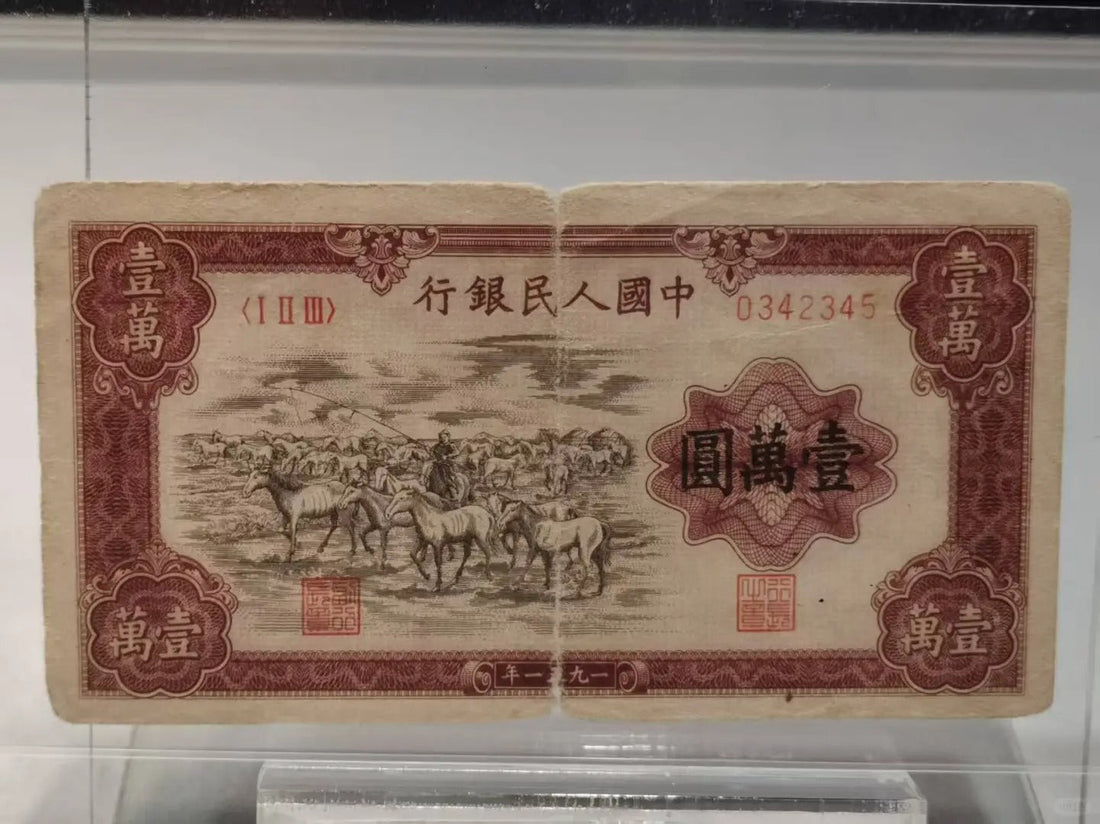
Return from the file name to the Horse Herding note
Transcribe the prefix, full serial and their printed positions from the object. Store packaging and family descriptions elsewhere, preserving both accounts if they conflict.
Use even transmitted light for actual paper observations and leave any unconfirmed watermark open. A collector nickname helps retrieval but does not fill an unreadable field.
Place signs of plugging, recolouring, pressing or changed corners in condition. Keep mixed paper categories separate before review.
Cite issue information
Move coupons, foreign notes, commemorative issues and uncut paper into separate groups before documenting the First Series RMB Horse Herding note. Shared storage does not make them one category.
Side light can reveal water exposure, pressing, filled holes, trimming, recolouring and replaced corners. Retain the paper's present state and its original measurements.
Give every production or historical statement a named source and consultation date. Old sleeves, oral descriptions and web images remain research leads.
Describe the actual note before the collector name
Enter the working title, readable text, principal designs, dimensions, enclosure and condition. Do not infer characters covered by a frame or sleeve.
Photograph old album pages and annotations with the note, but never write, stamp or attach a fresh label directly to the paper.
Retain native dimensions and orientation
Make a transmitted-light image with a broad, even source and no filter. Local glare can erase fibre and outline detail rather than reveal it.
Keep mould, adhesion, tears and old tape unchanged, and isolate affected paper. Washing, ironing or damp wiping adds damage and removes evidence.
Use one number for whole-note images, details, dimensions, enclosure and documents. Record any area that remains hidden by packaging.
Make later review possible
A special prefix or serial must stay with the visible edition, paper, ink, corners and repair state. A desirable number is not a condition assessment.
Images can locate print and obvious damage, while paper composition, fine restoration and enclosed regions may still need direct inspection.
Organise the Horse Herding note in three stages
First connect its sleeve, album position, seal and existing order to one identifier. Then transcribe the series, denomination, visible year wording and principal design.
Next record the dimensions with instrument and unit, followed by transmitted-light observations. Every entry keeps its date and original reading.
Separate what was observed from what was later proposed. Market names, inherited stories and unresolved research belong outside the object field.
If an image and measurement disagree, repeat the same orientation and preserve both results. Seek paper-note inspection only for the remaining precise question.
Before consultation, align full faces, size and transmitted-light files with their date and direction. An unexplained discrepancy is retained, not edited away.