
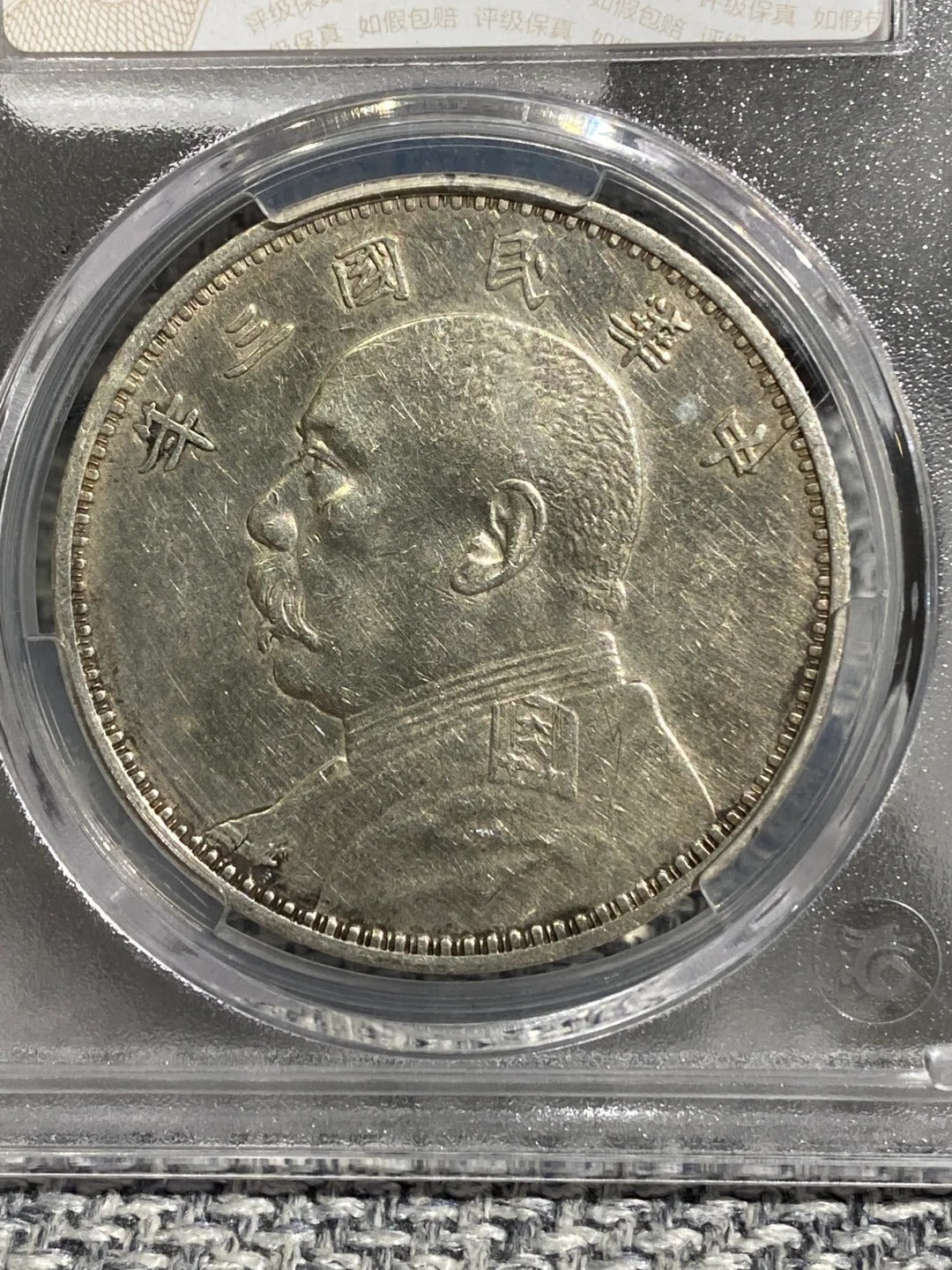
Begin with the coin, not the Gansu label
Photograph the dated portrait side and grain-wreath reverse in full. Preserve every visible character, denticle and rim before isolating a proposed diagnostic.
Set the evidence order
Record portrait hair, epaulettes, lettering and inner border in located images; keep full-face and raking-light views in separate image groups.
Leave weak, covered or unsafe areas open, explaining the holder or lighting restriction.
Transcribe visible wording first
Copy the date, denomination and legends exactly, then locate any feature proposed as Gansu rather than assuming it from a sleeve.
Give the coin, holder, edge circuit and measurement card one reference number to prevent details crossing within a batch.
Keep specialised names provisional
Photograph the full circumference from a fixed point, recording reeding, seams, flattened sections, filing, holes and solder.
A grading label may preserve a former variety name, but the portrait, wreath and surface still require independent comparison.
Cite any historical or variety source with the date consulted. Online enlargements show positions, not missing strokes.
Map the condition before attribution
Separate toning, circulation wear, weak strike, wiping lines, tooling and cleaning-related brightness by location.
Use terms such as signed, O variety, triangle-yuan or regional issue only when the corresponding feature is visible on this coin.
Retain neutral-light originals before contrast changes, and never polish the portrait or edge for clarity.
Let unresolved evidence direct the next step
Record weight, diameter, thickness, tools and units after the coin type is supported, preserving any repeat that disagrees.
Direct inspection is appropriate for metal, microscopic tooling, repaired rims or details concealed by a holder.
Decide whether the Gansu attribution needs direct review
Verify that date, portrait, grain wreath, diagnostic lettering, edge and dimensions all return to the same object.
Divide the conclusion into confirmed features, proposed variety and condition findings so each can be challenged independently.
Keep old envelopes and family notes as provenance, retaining their wording without turning it into physical evidence.
Date later revisions and preserve earlier photographs. Explain which newly visible feature changed the attribution.
Pass the uncleaned coin and its unresolved list to the next reviewer without opening a stable enclosure casually.
