
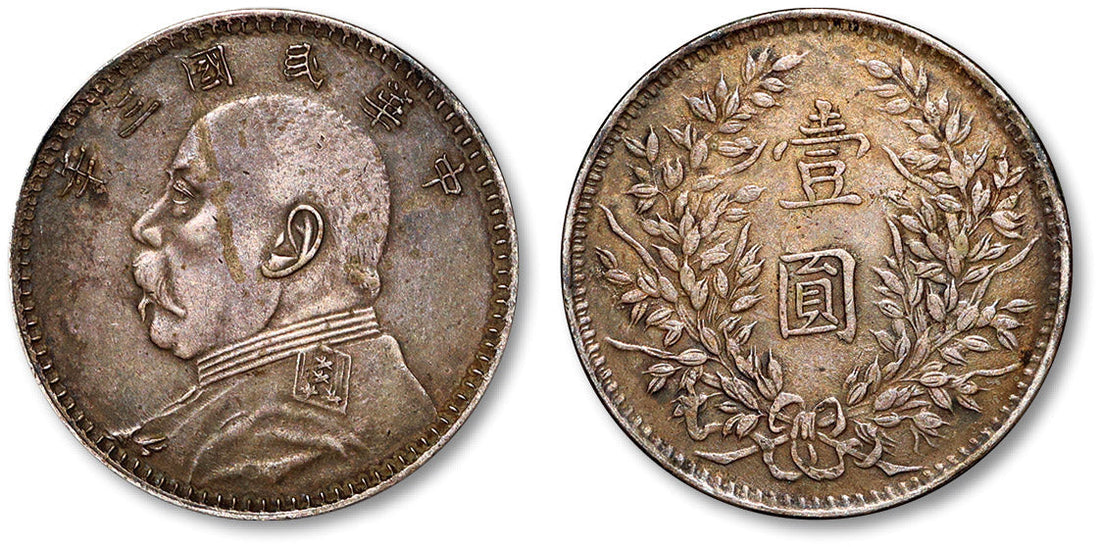
Let the Yuan Shikai dollar lead the record
Start with what the metal shows: portrait hair, epaulette, date characters and inner denticles. Packaging, family descriptions and later research belong in separate fields, especially when they disagree.
Give patina, high-point wear, knocks and possible cleaning their own locations. A document date is not the coin's date, and neither should overwrite the other.
Check that complete views, raking-light images and damage details all carry the coin number. Stop wherever the holder prevents a repeatable observation.
What belongs on the first card
While the dollar remains packaged, enter its working name, readable inscriptions, principal designs, available dimensions and present enclosure. Mark every obscured character as unresolved.
Countermarks, old sleeves and provenance notes can be retained without treating them as proof of the portrait lettering, grain wreath, strike, surface or circumference.
Set the order for photographs and measurements
Take uncropped portrait and wreath sides before locating hair strands, shoulder detail, date characters, denomination, inner denticles or a proposed variety marker.
When several portrait dollars are present, assign each a number before sorting visible dates or suggested varieties. Its two faces, circumference, weight and diameter must remain traceable to that number.
Store original images, detail frames, instrument readings, sleeves and papers under the same record. Add later evidence as a dated layer instead of replacing the first observation.
Keep attribution notes outside the observation field
Names such as signed, O variety, triangular yuan or local issue should enter the record only when the relevant feature is visible on this coin. Otherwise retain the term as a research lead.
Photograph the edge in overlapping sections. Leave joins, filing, holes, solder or former mounting traces as found; polishing would remove evidence needed for comparison.
A historical or production statement needs an identifiable reference and consultation date. Online photographs and handwritten labels can point to research, not settle the attribution.
Preserve the surface before a closer check
A grading holder contributes its printed attribution and grade. The enclosed date, portrait, wreath and surface still need to agree with what can actually be seen.
Photographs can locate obvious wear and damage, but composition, minute repair and holder-covered edge sections may require examination in hand.
Turn a variety question into observable checks
Begin with the date, denomination and portrait-side lettering. Then compare portrait hair, epaulette and denticles only within the visible type; never borrow missing detail from another Yuan Shikai dollar.
Record the entire grain-wreath side and the circumference before adding weight or diameter. Name the instrument, unit and reading position beside each result.
Keep older photographs when a direction, measurement or proposed name changes. Note the date and reason for the new entry so both versions remain reviewable.
Before sharing the file, make sure every close-up can be located on an uncropped face and every measurement returns to this coin. Unlocated details stay outside the summary.
Old labels and oral history remain useful context, but they should never be merged with the dollar's observed portrait, wreath, surface or edge.
