
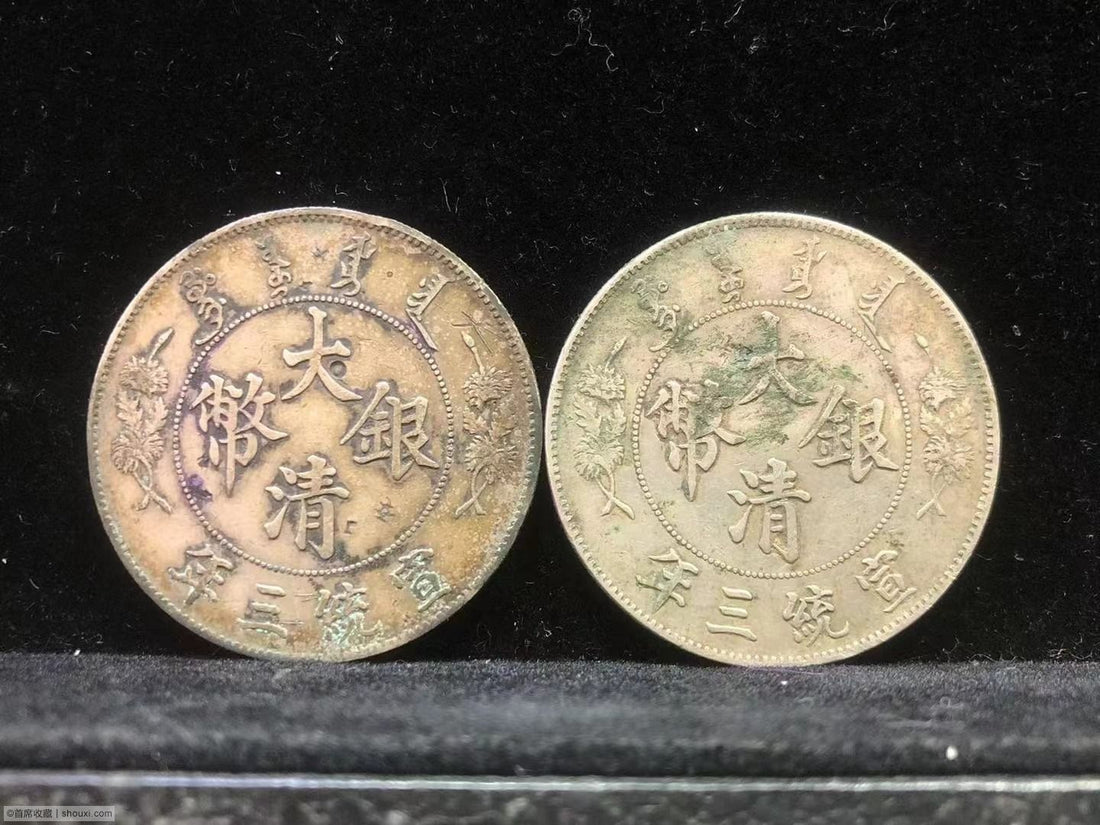
Group the Great Qing silver coins before comparison
For a set or mixed group, confirm the number of coins and assign each piece an identifier. Establish which face carries the inscriptions and which carries the dragon before transcribing details.
- Identification: provincial mint or mint name, date inscription, Kuping denomination and visible legends
- Measurements: complete edge sequence, weight, diameter, measuring tool and original unit
- Condition: mint marks, applied chops, pierced areas and rim alterations
Match packaging and certificates to the actual coin. Do not use a collector nickname to complete missing wording, and state any restriction on opening or handling.
Market evidence needs more than a figure
Date every comparison and name its source, market, coin type and condition. Without those points, a figure is background only and should not be compared directly with another period or variety.
A grading holder contributes an attribution and grade, but the visible provincial mint, date, Kuping wording, dragon and surface still require checking. State exactly which inscription or edge area remains hidden.
Align type, quantity and unit first
Before comparing observations, match the coin type, specification, quantity, condition, evidence date and handover basis. Material gathered under different conditions cannot be reduced to one unexplained total.
Sort several dragon dollars by visible provincial mint, date and Kuping denomination, then number each coin. Keep its inscription side, dragon side, edge, weight and diameter together.
Every photograph must return to the same coin
Coins sharing a market name may differ by provincial mint, date, denomination or dragon design. Group them by the legends on the actual coin before considering finer varieties.
Photograph the edge in overlapping sections around the circumference. Retain every join, reworked rim, piercing, solder point and sign of jewellery mounting in its current condition.
Match overall views, dragon and inscription close-ups, and original measurements to one identifier. Note obvious damage and packaging limits while retaining every first reading and unit.
Agree the inspection scope before handover
Before any direct inspection, set out the measuring method, attribution basis, areas to be touched and documents to remain with the coin. Do not assume a condition that has not been agreed.
Transcribe the provincial mint, date, Kuping denomination and legends on both faces. Compare weight and diameter only within the same established coin type, leaving indistinct text open.
Document colour and patina before wear, striking weakness, wiping hairlines or chemically induced hues. Darkness alone does not justify cleaning, and the first measurement and unit remain unchanged.
When Dragon-Dollar Evidence Is Ready for Market Comparison
Keep the provincial mint, date, Kuping denomination and inscriptions together, with full-coin and dragon close-ups as a second evidence set. Link both to the coin number before adding variety or market context.
Use three passes: confirm the identifier, complete images and measurements, then review the dragon, legends and beaded border. Finish by checking for missing views rather than filling gaps from another coin.
Separate what the coin shows from later judgement. Original images and readings support observation; collector names, provenance accounts and unresolved questions remain clearly identified as context.
When a photograph and reading disagree, repeat the measurement under the same conditions. If the inconsistency remains, preserve both results for direct inspection rather than selecting one.
Before an enquiry, review the overall views, close-ups, measurements and packaging. Add a photograph where the mint, date or Kuping denomination is incomplete without altering the coin.
