
 WhatsApp item photos
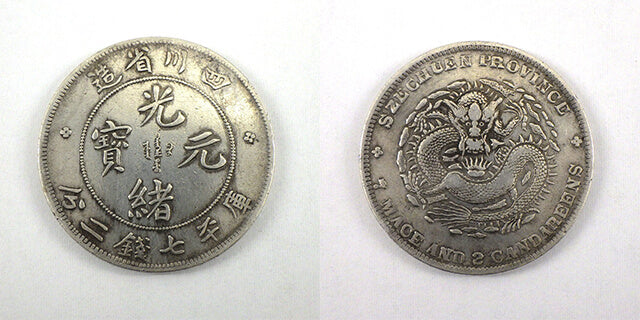
Read the province before naming a Guangxu Yuanbao
Begin with the provincial or mint wording, reign inscription and Kuping denomination visible on the coin. The dragon, pearl circle, English legends and layout then provide a coherent basis for comparison.
Take uncropped views of the inscription and dragon faces before attempting a provincial attribution. Keep the full rim visible so later close-ups retain their orientation.
Do not let the collector name lead
A sleeve or market nickname may say Hubei, but that word remains unconfirmed until its corresponding inscription and design can be located on the metal.
Keep a doubtful character open
If glare, wear or a holder blocks part of the legend, transcribe only the clear characters. A careful gap is preferable to completing Hubei or another province from expectation.
Build a complete edge sequence in overlapping sections. Preserve joints, changed reeding, piercings, solder and former jewellery work exactly as found.
Compare Hubei only with evidence aligned
Weight and diameter should retain the tool, unit and measuring position. Interpret the figures only after the provincial mint and denomination have been provisionally established.
A holder label offers an attribution and grade, not independent confirmation of the enclosed inscriptions or surface. Note which characters, edge sections or colour are distorted by plastic.
Use a dated, identifiable reference for any issue or production comparison. Catalogue images guide a check only when the provincial wording, denomination and design genuinely align.
Make condition language precise
Separate patina colour, circulation rub, weakly struck detail, wiping lines, bright cleaned areas, knocks and rim changes. Dark toning is not a reason to polish a Guangxu Yuanbao.
Applied marks and old labels may carry useful history, but they do not replace the province, reign wording, denomination or dragon design. Preserve them as supporting material.
Give each dragon dollar its own identifier
For several provincial issues, number the pieces before arranging them by mint wording and denomination. Keep each dragon side, inscription side, edge and measurement set intact.
Keep full-face photographs beside the edge sequence and dimensions. This prevents a persuasive Hubei detail from drifting to another dragon dollar in the group.
Date later observations rather than replacing the first transcription. A conflict between label and metal remains useful when both versions can be followed.
What to resolve in a Hubei comparison
First verify that the provincial wording, Kuping denomination, dragon and English legends belong to the same coin. Only then compare alignment, lettering and other finer diagnostics.
Retain a full-face view beside every detail image. An enlarged dragon claw or character without a known position is too weak to carry an attribution.
If weight, diameter or label conflicts with the visible type, repeat the reading and preserve both versions. State whether handling, enclosure or measurement position could explain the difference.
Do not force open a slab to complete an edge sequence. Photograph every safely visible section and identify the remaining gap for an in-hand review.
Before seeking a valuation, organise the coin evidence around the mint wording, denomination, dragon, English legends, full edge and present condition. That set makes an informed Hubei comparison possible.