Let the Japanese dragon coin supply its own identification
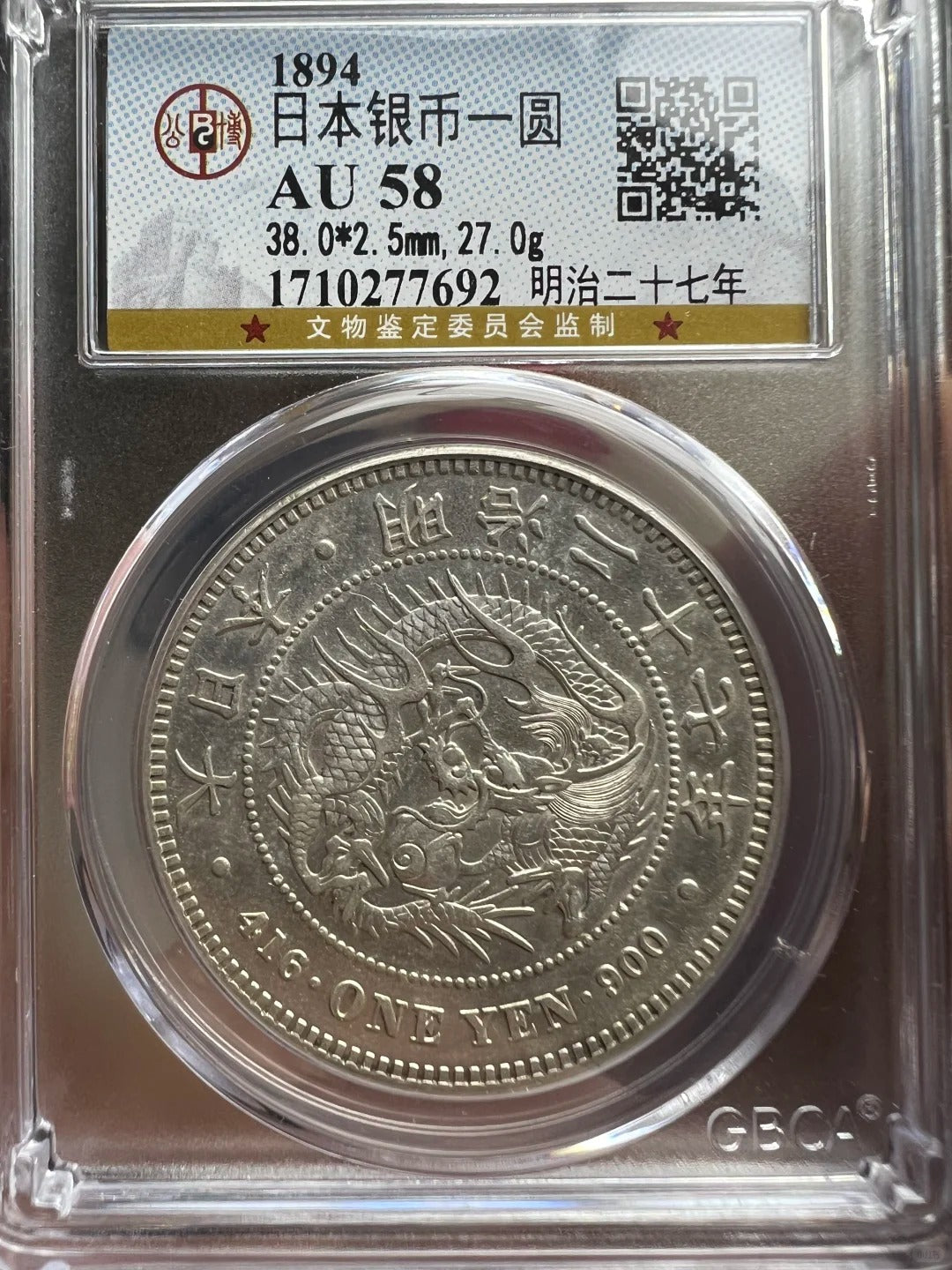
Transcribe the date, denomination, country wording and principal designs from the two complete faces before using a collector nickname. A worn character remains open until the metal or a reliable reference supports it.
Photograph any mint feature or applied mark at a scale that shows its position. A Marugin or other mark needs an uncropped view beside the close-up, not a label detached from the coin.
Keep weight, diameter, tool and unit with the same numbered piece. Dimensions help only after its visible type and denomination have been aligned.
Read the dragon, legends and borders together
Use neutral full-face photographs for layout and raking light for strike, relief and fine surface lines. The dragon, wreath or other principal motif should remain visible within the complete circumference.
Transcribe Japanese characters conservatively and retain the image direction. Do not use a Chinese market name to complete unreadable official wording.
Map the full edge
Photograph the circumference in overlapping sections, preserving joints, rim alterations, piercings and solder exactly as found. Locate any changed section against a full-face view.
When a holder conceals the edge, document every accessible area and name the gap. Opening is justified only when it answers a clear question with acceptable risk.
Under consistent light, record colour distribution, circulation rub, contact marks, weak strike, wiping and unusual brightness separately; darkness neither proves originality nor calls for cleaning.
Separate patina from wear and treatment
Compare protected recesses with exposed fields under consistent lighting. If photographs cannot distinguish treatment from storage colour, reserve the conclusion for examination in hand.
Retain the unfiltered image whenever a brighter copy is made for legibility. Automatic colour changes can exaggerate patina and conceal fine lines.
Preserve sleeves, grading labels and family descriptions with their dates, but verify every proposed year, denomination and mark against the enclosed coin.
Use old notes only as provenance
Use an identifiable, dated reference for production or historical claims. Similar online photographs become meaningful only after their type and design match.
If an earlier attribution conflicts with the visible legends, transcribe both and explain the discrepancy. Do not delete useful provenance to make the identification appear settled.
Build a Japanese dragon-coin enquiry in layers
Begin with complete faces and readable legends, then add the date, denomination, principal motifs and any applied mark. Keep the same orientation across all close-ups.
Next attach the original weight and diameter, followed by the edge sequence and neutral surface images. This keeps measurable evidence ahead of market terminology.
If the old label names a different year or denomination, transcribe both versions and photograph the conflict. Do not erase a useful provenance discrepancy.
Retain unfiltered originals when adjusting brightness for legibility. Colour-enhancing edits can make ordinary patina appear more dramatic than it is.
A specialist can assess the precise open point—date character, applied mark, altered edge or surface—when every photograph and measurement belongs to the same coin.
