
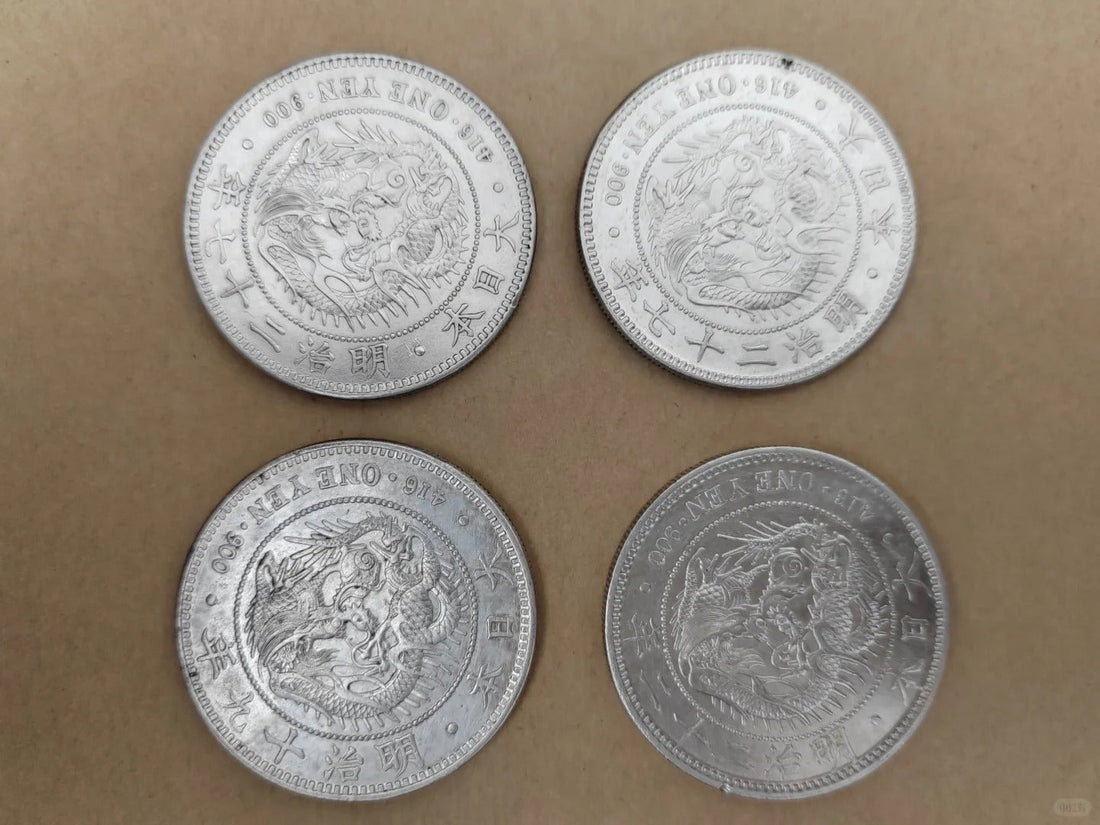
Begin with the complete Japanese dragon coin
Photograph both faces squarely and copy the visible era date, denomination, national wording and principal devices before using a familiar market name.
Keep evidence in separate groups
Place full faces and the ordered edge in the image group; keep sleeves, slab labels and old notes in a provenance group under the same item number.
Leave weak characters and holder-obscured details open rather than completing them from a similar coin.
Read wording and design before dimensions
Add located details of the dragon, wreath, crest, characters, border and mint marks only after each full face has been retained.
A close-up should contain enough surrounding design to recover its position and orientation without relying on a filename.
Separate Japanese issues from other foreign silver
Keep Junk dollars, piastres, British Trade Dollars, Morgan dollars and other families in their own records, even when old storage mixed them together.
Use the object’s wording, date and denomination for the formal name. Chinese collector nicknames can remain as search notes.
Give every coin its own faces, edge and measurement card before arranging a batch by year or design.
Complete the circumference without alteration
Work from one landmark around overlapping frames, recording reeding, lettering, seams, filing, perforations, solder and former mounting.
Map toning, wear, weak strike, scratches and cleaning sheen independently, keeping dark silver untouched throughout photography.
Preserve packaging limits
A slab provides a label and enclosure, not proof of a hidden edge. State the covered section and retain the seal until inspection is justified.
Record weight, diameter and thickness with their tools and units. If a repeat differs, keep both dated attempts.
Historical or production notes need an identified reference and consultation date; old labels and oral accounts remain contextual.
Reconcile the era date with the complete edge
The date, denomination, dragon, reverse design, edge sequence and measurements must all return to the same number before the file can support a name.
Direct observations, the proposed variety and condition conclusions belong in separate sections. A comparison image only identifies a position worth checking.
In-person review is reserved for unresolved metal, faint tooling, subtle repair or detail concealed by packaging; routine polishing or opening adds no useful evidence.
When later information changes the name, the first photographs and readings remain in place, while the revision carries its date and visible basis.
At handover, the holder, envelope and unresolved list travel with the uncleaned coin.
