
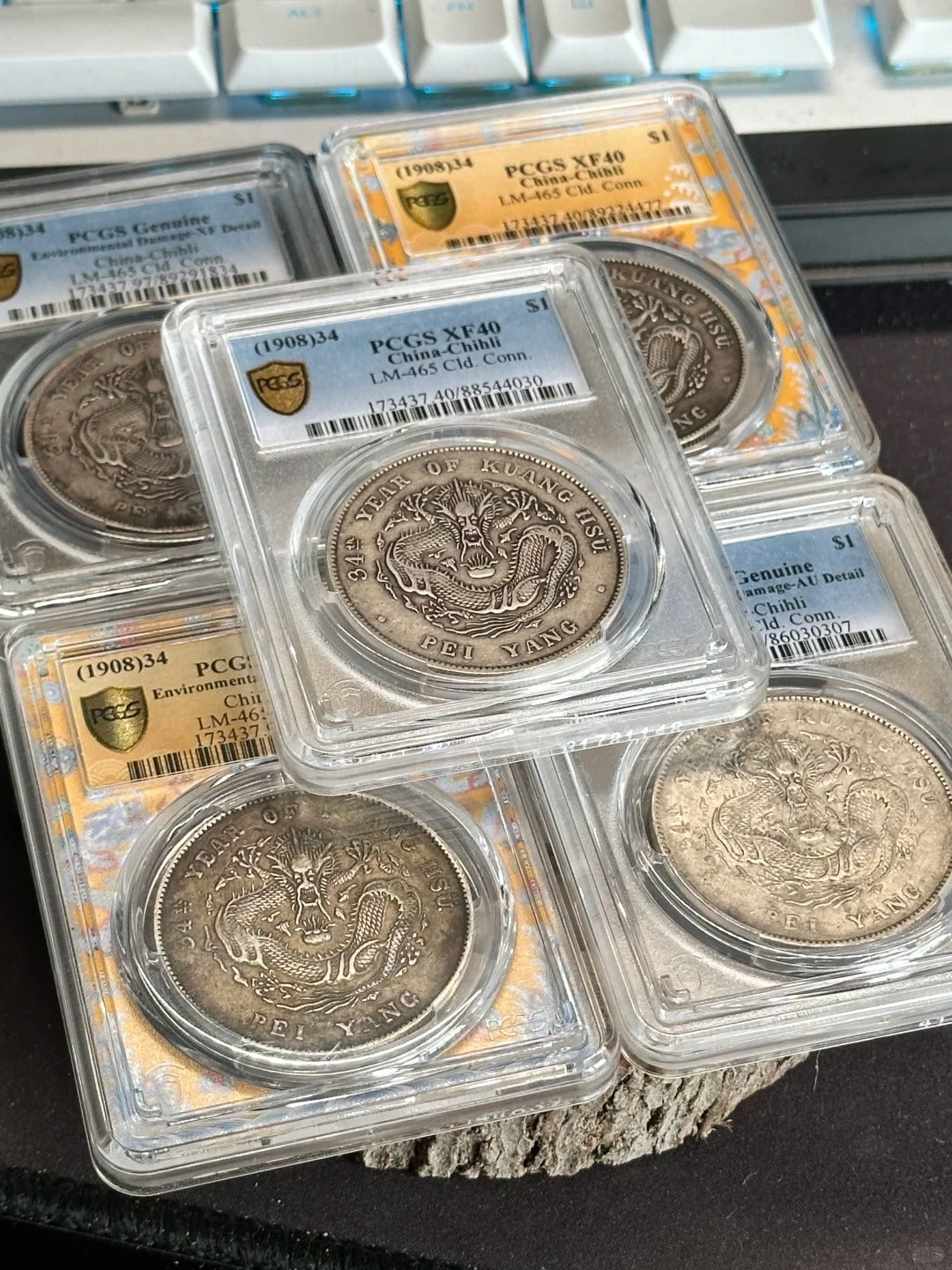
Number Each Japanese Dragon Silver Coin Separately
When several pieces are present, begin one evidence set per coin and establish the orientation from complete, uncropped faces.
- Photography records complete faces, raking-light views and damage details with their positions visible.
- Identification records the date, denomination, national wording, main designs and any visible mark without borrowing text.
- Measurement records weight, diameter, instruments, native units and exact contact points for that coin.
Keep an old label as a dated research lead and list any face or edge area hidden by the current enclosure.
Separate Other Foreign Silver First
Place British Trade Dollars, French Indochina piastres, Mexican Eagle Dollars, Morgan dollars and other silver in their own groups before comparison.
Use the inscriptions and designs on the Japanese coin to establish a working family, then consult specifications within that family.
Capture Whole Views, Edge and Readings
Preserve both faces in consistent orientation before enlarging date characters, dragon features, legends, inner border or a proposed marker.
Photograph the full circumference in overlapping sequence, keeping joins, rim work, piercings and former-mount traces untouched.
Retain each scale and calliper display in its original unit, and append rather than overwrite a conflicting repeat.
Keep Documentary Material Distinct
A grading holder supplies printed wording and a stated grade, but it cannot substitute for the enclosed date, designs, edge and surface.
Cite historical or production references with access dates, while preserving a sleeve note or oral account as contextual evidence only.
Do not use a collector nickname as the formal identification when the required inscription or design is not visible.
Describe the Metal Surface Conservatively
Separate stable patina, circulation wear, weak strike, contact marks, wiping hairlines and altered colour under neutral and raking light.
Use direct examination where packaging conceals the circumference, dimensions conflict or a fine repair cannot be located from images.
How a One-Yen Attribution Uses Date, Denomination and Dragon
The source image concerns a Japanese dragon one-yen coin, so the visible denomination, date characters, national wording and dragon design form the working attribution.
A similar dragon on another denomination cannot supply a missing character, measurement or edge feature for this one-yen record.
Patina, circulation wear and possible wiping remain condition observations, while marks and old labels are indexed as separate physical or documentary evidence.
Weight and diameter become useful comparisons only with their original tools, units and contact points attached to the same coin.
Any hidden date stroke, unreadable mark or inaccessible rim interval is named directly, defining the limited purpose of a later in-hand review.
