
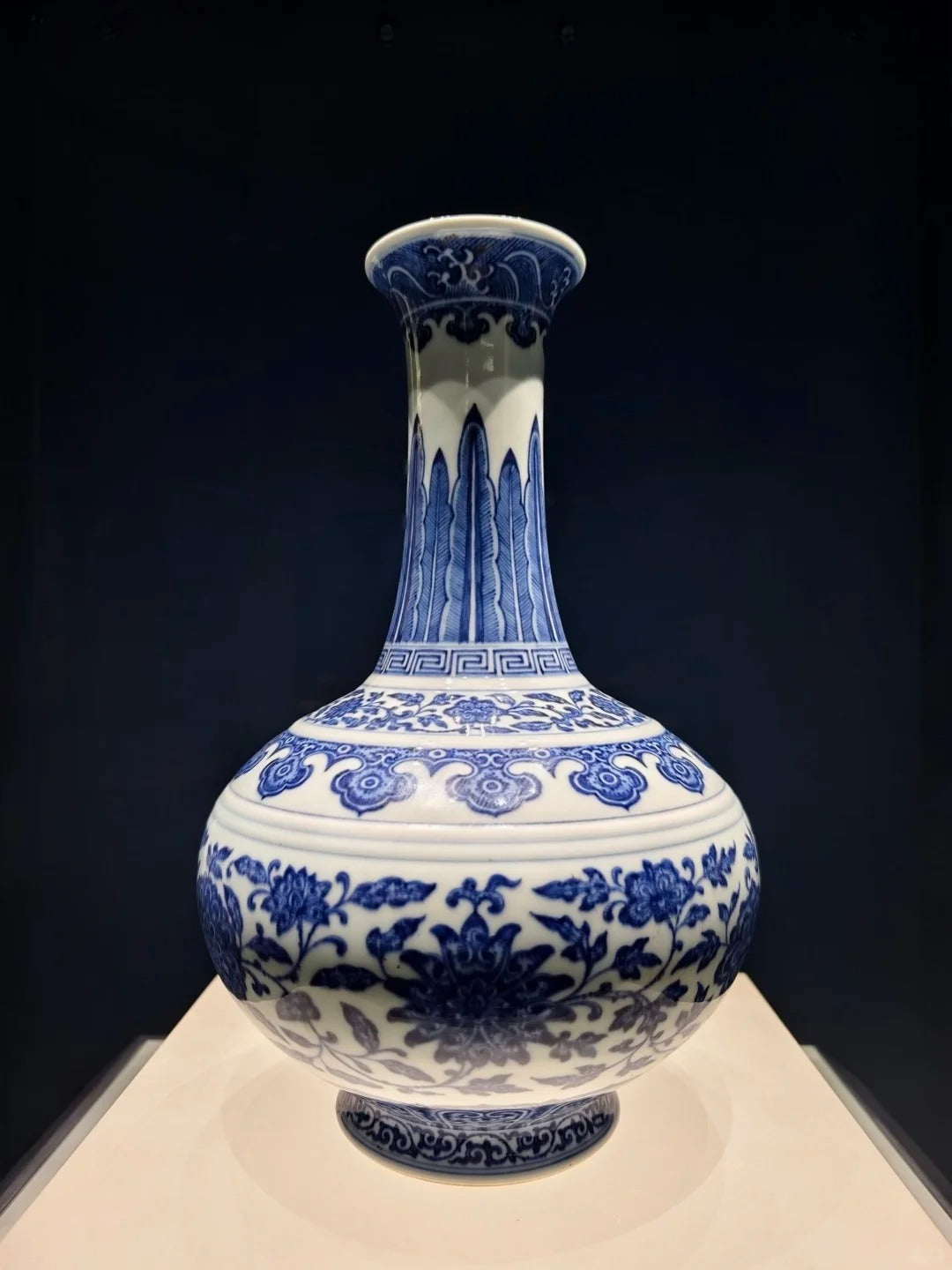
Kangxi, Yongzheng and Qianlong define a catalogue scope
Grouping the Kangxi, Yongzheng and Qianlong reigns is a cataloguing convention; it does not, by itself, prove imperial-kiln production. A checklist for porcelain attributed to these reigns should separate form, dimensions, body and glaze, decoration, foot and marks, while leaving the date open until the piece is examined.
Do not link Kangxi, Yongzheng and Qianlong wares solely through one character in a mark or a similar colour. Photograph each vessel independently: overall form, rim, foot, marks, painting and firing traces, followed by any rim chips, hairlines and old repairs.
Related reading should begin with Qing porcelain and imperial-kiln material, not use Song or Yuan Longquan wares as substitutes. Photographs support documentation, but body, glaze, hidden cracks and repair boundaries still need examination of the object.
Cite production and historical information
Photograph paired vessels together to compare height, mouth diameter and profile, then take separate base and damage views for each. This prevents details from the two pieces being confused. Note anything still hidden by packaging.
A proper base sequence includes the inside and outside of the foot-ring wall, the footrim's contact surface, kiln grit, firing-support marks and the complete inscription. Do not crop down to the reign mark or supply a missing feature from a similar object.
Give a source and access date for production or historical information. Keep old labels, oral accounts and online images as research leads, all matched to the same object number.
Separate the type before arranging the evidence
If the porcelain remains packaged, record the name in use, visible wording and design, dimensions or weight, packaging and condition. Mark anything indistinct for comparison.
Preserve old boxes, wooden stands, paper labels and collection numbers as background. A provenance story still needs support from the vessel's body, glaze and workmanship; never infer a missing feature from a look-alike.
Preserve original measurements
Examine body colour, trimming direction, exposed clay and glaze thickness together with the foot. A single crackle pattern or kiln mark cannot date a piece on its own. State any restriction caused by packaging.
Record the boundaries and stability of joins, filled glaze, overpainting and kintsugi repairs. Do not remove an old repair until the structure is understood, and do not borrow information from a similar vessel.
Keep overall and detail photographs, measurements, packaging and documents under one object number. Explain the effect before any physical contact.
Make a later review traceable
Lift a large vessel with both hands supporting its base and body. Never put the load on the rim, lugs, handles or a wooden stand, and do not force off a firmly attached base.
Photographs can support broad classification and visible damage. Material, fine repairs and areas hidden by packaging may still require direct inspection; leave unsupported points open.
Reviewing Kangxi, Yongzheng and Qianlong porcelain attributions
Begin with the body and glaze, marks and firing traces. Record form, mouth diameter, height and foot diameter together; describe body colour, glaze colour, painting and mark position separately. Tie both evidence groups to the object number without assuming that either proves date or imperial status. Use that number to retrieve the correct piece when more information is needed.
After the first pass, confirm that exposed clay, foot trimming and firing traces, as well as differences in the dimensions and decoration of a pair, all point to the right object. Keep separate dates for converted measurements, oral accounts and later-supplied information. Finish with a gap check across the body, glaze, marks and firing evidence.
Images can support wording, design, proportions and obvious damage, but not necessarily material, hidden hairlines or subtle later work. Keep these limitations with the object number. If the body, glaze, marks or firing traces remain uncertain, return to the form and measurements.
Support the base and body with both hands; do not lift from the rim, lugs, handle, spout or old wooden stand. Do not tap suspected cracks or force apart an old repair. Keep these restrictions with the correct object number, then list any unresolved differences in the dimensions or decoration of paired vessels.
Once the rim, foot-ring wall and damage locations are on the same enquiry list, recheck the date, units and image orientation. If earlier and later information conflict, preserve both versions.
