
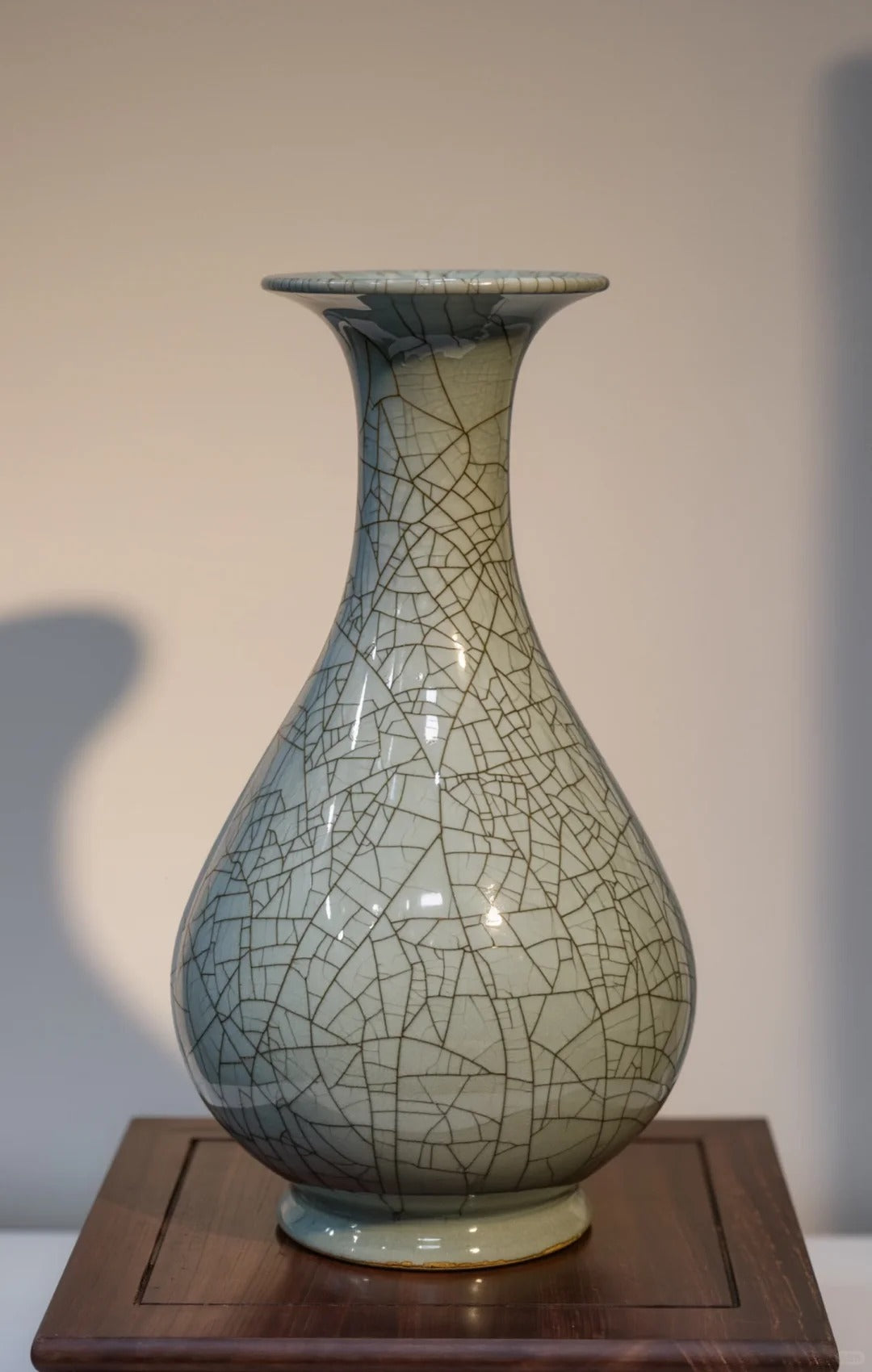
Measure the form before enlarging an old porcelain detail
Take the complete object before close-ups. Record form, mouth diameter, height and foot diameter against the individual porcelain number, with instrument and unit.
Keep separate observation groups
Use condition for exposed body, foot trimming and firing traces. Use identification for body colour, glaze, decoration and the exact position of a mark; neither group establishes age by itself.
Retain native readings alongside any conversion and leave concealed areas open. Do not dismantle a mount or base merely to fill the card.
Photograph damage only after the whole form
Locate joins, filled glaze, overpainting, kintsugi and loose repair boundaries. An old repair stays in place until its structure can be handled safely.
For a pair, photograph both silhouettes together, then assign separate numbers for bases, dimensions, motifs and damage so the details cannot be exchanged.
Keep full profiles, mapped details, measurements, packaging and papers under the same object identifier. State the effect before any contact handling.
Document the full base, safe handling and sources
A base photograph should include inner and outer foot walls, the contact surface, kiln grit, firing pads and the complete mark—not just cropped characters.
Support a large vessel under the body and base with both hands. Do not lift it by the rim, handles, ears or an attached wooden stand.
Cite an identifiable source and consultation date for historical or production statements. Labels, oral accounts and online images remain indexes.
Give each porcelain object a dedicated page
Enter a working name, visible text and design, dimensions, packaging and condition. Mark every obstructed feature as pending.
Compare body colour, trimming direction, exposed clay and glaze thickness with the entire foot. A single crackle pattern or kiln mark cannot determine age alone.
Check the card before moving the object again
Read the form through the proportions of mouth, neck, shoulder, body and foot. Step back and centre the camera to reduce wide-angle distortion.
Images establish proportions, decoration and obvious damage; material, hairlines and minute restoration may still require inspection in hand.
Make the body, glaze and firing-trace file specific
Start with exposed body, foot finishing and firing traces, then compare dimensions and decoration where a pair exists. Each observation remains attached to its object number.
After the first pass, connect body colour, glaze, brushwork and mark position with profile, side and top views. Date later conversions or oral additions separately.
Photography may support visible text, motif and proportions but not settle hidden cracks, material or subtle later treatment. Retain those limits with the object.
Carry porcelain with both hands beneath the base and body. Do not tap a suspected crack or force a fixed stand or old repair.
Before comparison, number every old porcelain item so its body, glaze, mark and firing traces cannot migrate to a similar vessel.
