
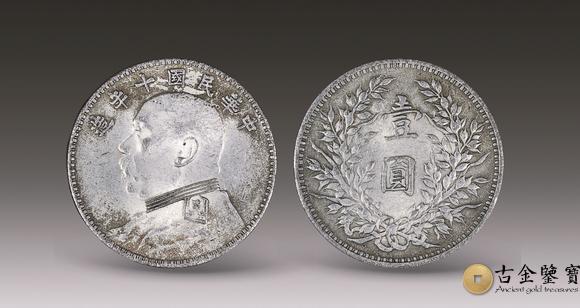
Begin with complete views of the Republic Year 10 Yuan Shikai dollar
Every close-up must trace back to the same coin. For a Republic Year 10 Yuan Shikai dollar carrying the working label “T-dot / year-character gap”, first transcribe the date, denomination and inscriptions on the portrait and grain-wreath sides; never borrow wording from a nickname or a similar piece.
Treat the market name only as a search aid. In a separate measurement note, capture the complete edge, weight, diameter, tool and unit, all under the same item number.
Locate any visible striking mark, chop mark, perforation or trimmed-edge area. Preserve old label wording as unverified background, and leave any inaccessible, illegible or unsupported detail unresolved.
Source issue information separately
On review, retain uncropped obverse and reverse views showing the full circumference. Add located close-ups of the portrait hair, epaulette, date characters, grain wreath, denticles and proposed variety markers, while keeping the original readings and units.
If several portrait dollars appear together, group them by visible date and proposed variety. Number every coin so its portrait face, wreath face, edge, weight and diameter cannot migrate to another piece; note anything a holder still conceals.
Any statement about issue, manufacture or history needs a named source and consultation date. An old label, oral account or online image is a research lead, not evidence from the coin.
Separate the variety before arranging measurements
For each coin, note its current name, legible inscriptions, design, dimensions or weight, holder and visible surface condition. Anything unclear remains open for another examination.
Transcribe the date, denomination, portrait-side wording and grain-wreath-side wording before comparing a proposed variety. Interpret weight and diameter only after the coin type has been established.
Keep original readings intact
Distinguish patina, circulation wear, a weak strike, fine wiping lines and colour associated with chemical cleaning. Dark toning does not by itself call for cleaning, and every reading keeps its original unit.
Chop marks, old paper sleeves and provenance claims provide context. They cannot replace assessment of portrait lettering, the grain wreath, strike, metal surface and rim; state exactly what a holder prevents you from seeing.
Link overall images, close-ups, measurements, packaging and documents under one item number. Append later evidence instead of overwriting the first observation, and never fill a gap from a similar coin.
Make a later comparison traceable
Descriptions such as signed, O variety, triangular-yuan or regional type apply only when the matching feature can be located. Take complete views first, then assess the smaller markers.
Images can support sorting and locate conspicuous damage. Metal composition, subtle repairs and areas hidden by a holder may still require direct examination, so keep those limits explicit.
Check the Year 10 T-dot and year-character-gap attribution
Begin with the date, denomination and inscriptions on both faces. Locate the grain wreath, tied ribbon, denomination characters and proposed variety marks in the complete views, and identify any detail that remains missing rather than forcing an attribution.
Keep visible striking marks, chop marks, holes or edge trimming with the condition observations. Store sleeves, grading holders and old labels as supporting material under the same number, without allowing a converted measurement or oral account to replace the original evidence.
If a document and the coin disagree, transcribe both wordings and their dates. Leave variety, period or material unresolved until supported; information from a comparable piece cannot complete the attribution.
The aim is to let another specialist locate the same Year 10 dollar and repeat the examination. It is enough to state what is illegible, inaccessible or unsupported, then confirm that its sleeve, holder and labels still match the coin.
Before an enquiry, review the overall, detail, measurement and packaging photographs. Retake any missing view of the date, denomination or portrait lettering without cleaning or altering the silver dollar.
