
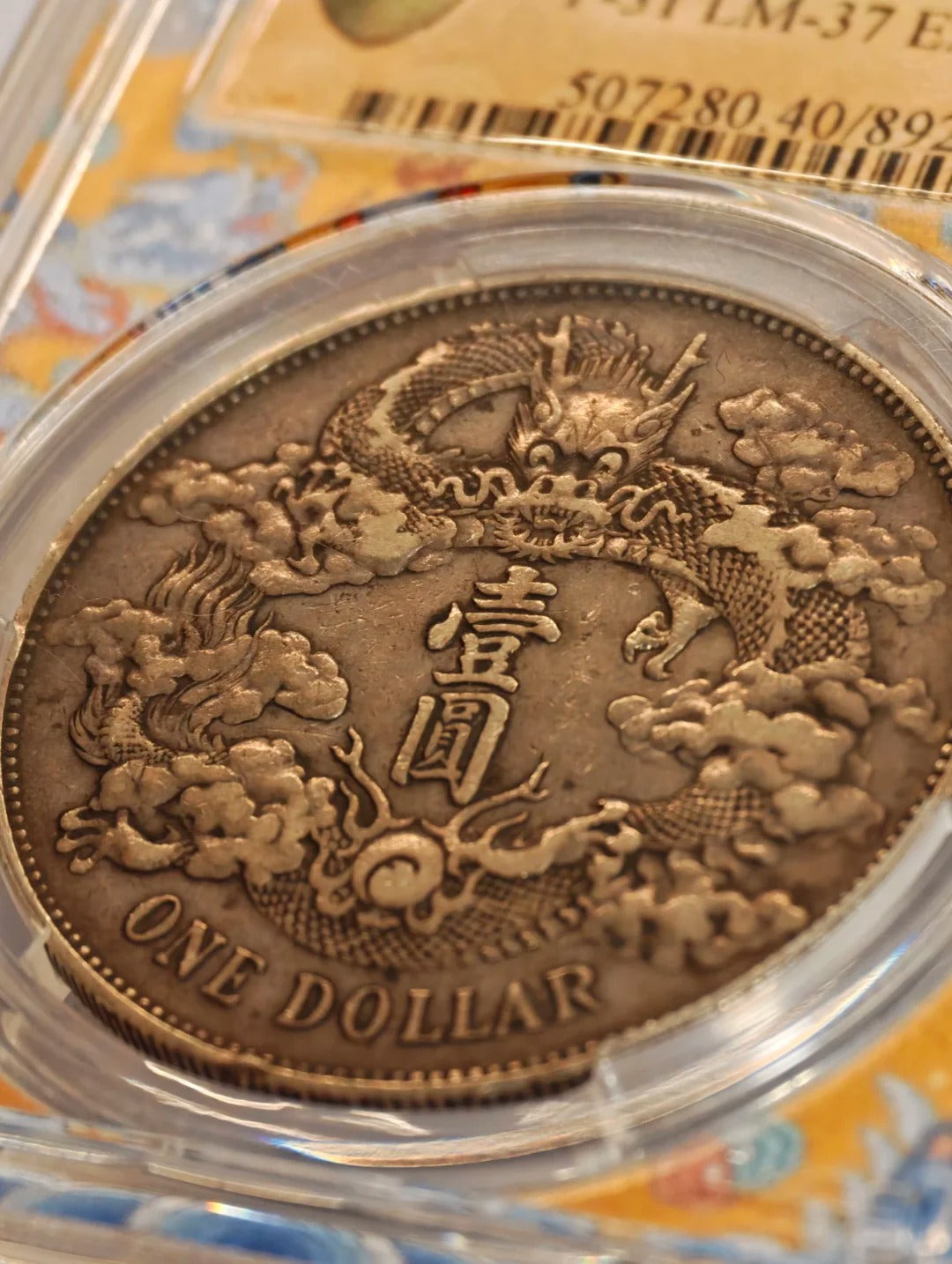
Read patina across the whole silver dollar
Begin with colour-neutral photographs of both complete faces and the full circumference. Patina gains meaning from its distribution around lettering, protected recesses, worn high points and the edge, not from a single saturated close-up.
Add raking light from more than one direction to show relief, hairlines and breaks in the tone. Keep exposure and white balance consistent enough for the views to be compared honestly.
Describe colour, density and transition without turning darkness into a grade. Grey, gold, blue or uneven areas should be located precisely and considered beside wear and surface texture.
Separate circulation from later intervention
Map smooth high-point rub, contact marks and rim knocks independently from wiping lines or an unnaturally bright patch. A weakly struck detail is not automatically wear.
Look for colour that continues naturally into protected spaces and around devices, while recognising that photographs alone may not settle whether a surface has been chemically treated.
Never polish a toned coin to test an assumption. Cleaning removes evidence and may make the cause of an unusual surface harder, not easier, to understand.
Use photographs that another collector can interpret
Keep one neutral full view beside each oblique image, and ensure every close-up can be located on the complete coin. Avoid filters that intensify blue or suppress fine lines.
Photograph the edge in overlapping sections. Edge colour, local bright spots, joins and rim work may help explain a pattern seen on either face.
Retain the existing surface
Handle the silver dollar by its edge over a clean, padded area. An inert holder can protect it, provided no insert rubs the patina or traps obvious moisture.
Store the coin in a stable, dry environment away from reactive paper, soft plastic and household chemicals. Sudden cleaning or re-housing should not be the first response to darkening.
Date each photographic session so later colour or surface changes can be distinguished from differences in lighting. Preserve the original image alongside any corrected copy.
Make a condition opinion proportionate to the evidence
Full views may show circulation wear, knocks and broad cleaning signs. Very fine hairlines, altered colour or a concealed edge can still require direct examination under controlled light.
If a holder creates haze or reflections, state the optical limit. Do not transfer a mark on the plastic to the coin's condition description.
A practical patina review
Start with the same silver dollar under neutral diffuse light, then add low-angle illumination. Compare exposed fields, protected recesses, lettering, rim and edge before deciding whether the colour looks continuous.
Describe high-point wear and contact marks in a separate pass. This keeps normal circulation from being confused with wiping, dipping or local abrasion.
When a bright area interrupts darker tone, locate its boundaries and texture rather than guessing the treatment. Record what the images support and reserve the rest for examination in hand.
Keep old envelopes and labels as contextual evidence, especially when storage may explain toning. Do not place reactive material back against the metal merely to preserve an arrangement.
For an appraisal, send neutral full faces, oblique views and the full edge sequence. A specialist can then discuss patina and wear without asking for the coin to be cleaned first.
