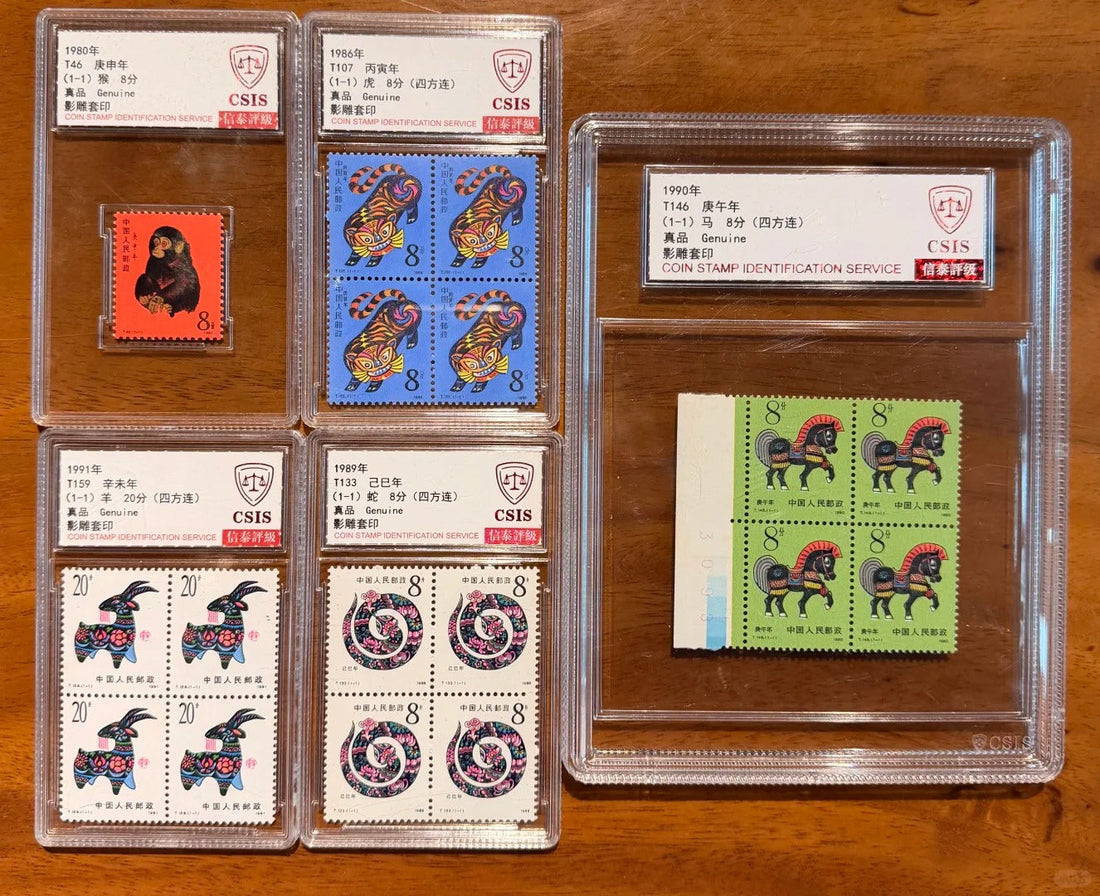
In the high-end stamp collecting and buyback market, seasoned collectors often repeat one iron rule: “The design is the face; the gum is the soul.” New collectors, or people sorting old belongings at home, may be able to see at a glance whether a 1980 Monkey stamp or a Cultural Revolution stamp has an attractive design, yet overlook the thin layer of gum on the back.
In fact, the condition of the gum—original, regummed or absent—can determine whether a rare stamp is an “art asset” worth millions or merely a “scrap of paper” with sentimental value. As a professional dealer in old collectibles in Hong Kong, Gu Jin Jian Bao explains stamp gum today from a buyer’s in-depth perspective, helping you assess the “hidden wealth” in your collection more accurately.
1. Three Grades of Stamp Gum: Original Gum, Regummed and No Gum
When conducting a Hong Kong old-stamp buyback assessment, an appraiser’s first task is to classify the gum.
1. Original Gum (OG)
Original gum is the gum applied by the printing works when the stamp was produced. A top-grade original-gum stamp, such as a “superb original-gum” example, should have an even, lustrous gum surface with no fingerprints, hinge marks or oxidation spots.
- Market position: These stamps command the highest buyback prices and have the greatest market liquidity.
2. No Gum (NG / Gum Washed Off)
No gum usually means that the gum has disappeared because the stamp was soaked to remove a postmark, forcibly separated after moisture caused it to stick, or deliberately washed.
- Impact: Losing the original gum causes the condition grade to fall sharply. Even for rare Cultural Revolution stamps, no-gum examples generally fetch only 30% to 50% of the price of comparable original-gum stamps.
3. Regummed / Added Gum
This is a major hazard in stamp collecting. Unscrupulous sellers may apply a fresh layer of chemical gum to a no-gum stamp in an attempt to sell it at an original-gum price.
-
Decisive impact: Under professional appraisal standards, regumming is regarded as an artificial alteration. Many professional grading services, such as ASG or Yuan Tai Grading, may decline to assign a grade or label such stamps as “repaired”; their buyback value can be even lower than that of no-gum examples.

2. Professional Appraisal: How Can You Tell Original Gum from Regumming?
For high-value stamps such as the 1980 Monkey stamp or The Whole Country Is Red, visual inspection alone is not enough. The expert team at Gu Jin Jian Bao generally combines microscopic physical examination with optical equipment for an in-depth appraisal:
1. Microscopic Inspection: Surface Pattern and Edges
- Original gum: The gum surface looks natural. Under a 20× or 60× magnifier, the paper fibres and gum appear seamlessly integrated, while the perforation edges retain naturally torn fibres.
- Regummed: Gum often seeps into the perforation edges, making the holes look unnaturally “clean” or leaving traces of overflow. Under magnification, the regummed surface may show tiny bubbles or flow lines.
2. Surface Feel and Sheen
- Original gum: The surface feels dry and has a soft sheen that is not glaring.
- Regummed: The gum may feel tacky and show an unnatural chemical gloss. Some chemically treated stamps have been bleached, which can make the paper brittle.
3. UV Inspection
This is one of the key tools for distinguishing untreated gum from alterations.
- Original gum: Under a UV lamp, the paper and gum show a natural, even fluorescent response.
- Regummed / repaired: Added chemical gum or repair solutions may appear as distinct patches or abnormal reflections under particular UV wavelengths, revealing traces of treatment.
4. A Monkey-Stamp Characteristic: Offset Ink on the Gum
When authenticating a genuine 1980 Gengshen Monkey stamp, the back often shows a distinctive “offset ink” phenomenon: black intaglio ink from the face of the stamp beneath transfers onto the gum when sheets are stacked. These marks occur naturally and appear as short vertical strokes, making them an important indicator of a genuine original-gum example.

3. The Decisive Impact of Gum Condition on Buyback Prices
To show more clearly how condition—especially the gum—affects value, the table below uses the 1980 Monkey stamp as an example, converted at the stated current exchange rate of RMB1 ≈ HKD1.1:
| Stamp Condition / Grade | Gum Characteristics | Reference Market Buyback Value (per stamp / HKD) | Value Percentage |
|---|---|---|---|
| Pristine Original Gum (98-100 points) | Flawless, lustrous original gum with no handling marks | HK$ 13,200 - 16,500+ | 100% |
| Very Fine Original Gum (90-95 points) | Original gum; only extremely slight yellowing or a minute paper speck permitted | HK$ 8,800 - 12,000 | 60% - 80% |
| Fine Original Gum (80-89 points) | Even yellowing of the gum or a slight gum crease | HK$ 4,400 - 6,600 | 30% - 40% |
| No Gum / Gum Washed Off (below 70 points) | Gum completely lost; the paper may be damaged | HK$ 1,100 - 2,200 | 10% - 15% |
| Regummed / Added Gum (not graded) | Artificially regummed and chemically treated | Treated as defective and very difficult to resell | < 5% |
(Note: The prices above are for reference only. The actual buyback price depends on the market on the day of appraisal and an inspection of the physical stamp.)

4. Expert Advice: How to Protect a Stamp’s “Soul”
A stamp worth a fortune can lose half its value within a single humid rainy season in Hong Kong if it is stored improperly.
- Stable temperature and humidity are essential: The ideal environment is 15-25°C with relative humidity of 45%-55%. A purpose-built electronic dry cabinet is strongly recommended, with the humidity kept at 45%.
- Never handle stamps with bare hands: Oils and salts from the fingers feed mould. Always use professional round-tipped stainless-steel stamp tongs when viewing a stamp.
- Store albums upright: A stamp album should stand upright like a book on a shelf. Never stack albums flat, as prolonged pressure can cause irreversible adhesion between the gum and the stamp mount.
-
Avoid chemical contamination: Use high-quality polyester film, such as PET, for stamp mounts. Never use cheap plastic bags containing plasticisers, which can cause stamps to fade or the gum to deteriorate.

Conclusion: Professional Appraisal to Maximise the Value of Your Collection
Stamp gum is a highly specialised subject involving a rigorous system of stamp-grading standards and market logic. If you have old banknotes, rare Cultural Revolution stamps or zodiac stamps passed down by an older family member, remember: never wash them or attempt to repair the gum yourself. Any improper treatment can cause the collection’s value to fall sharply.
Gu Jin Jian Bao, a leading buyer of old coins and stamps in Hong Kong and Macau, has decades of professional appraisal experience. We offer free online assessments and home service throughout Hong Kong, helping each rare stamp receive the best price consistent with its condition.

🌟 Gu Jin Jian Bao: Professional Buying Services in Hong Kong and Macau
-
Items We Buy at High Prices:
- Stamps: 1980 Monkey stamps, Cultural Revolution issues including The Whole Country Is Red and Black Inscription, Qing Dynasty Red Revenue stamps, and early PRC commemorative and special-issue stamps.
- Coins and banknotes: Qing silver coins, Yuan Shikai dollars, Sun Yat-sen Memento dollars, old Hong Kong Queen’s Head five-cent coins, and First through Fourth Series Renminbi, including the Big Black Ten and Soviet Three Notes.
- Gold and antiques: Gold coins, antique porcelain, calligraphy and paintings.
-
Contact Details:
- WhatsApp: (852) 9834 2057
- WeChat: john19998
- Business name: Gu Jin Jian Bao
Send photos now for a free preliminary appraisal and immediate quote, available 24 hours a day. Turn old items stored in the attic into a worthwhile cash return with ease.
