
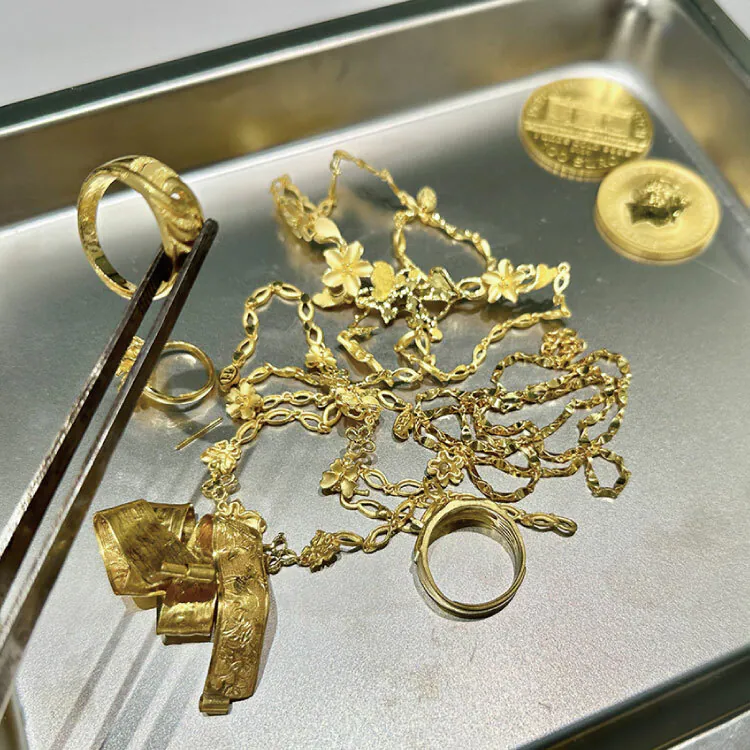
A Tsuen Wan handover does not imply a fee policy
Tsuen Wan describes the meeting or handover area; it does not prove zero wastage, zero commission or a fixed payment method. List every item, hallmark, gross weight, non-gold component, inspection and named deduction individually.
Photograph the scale platform, reading and unit together. Do not mix grams, taels and troy ounces, and distinguish gross weight from any gold-only figure when stones, cords, solder or added parts are present.
Both parties should reconcile identifiers, count, packaging and unresolved questions. Explain fire assay, cutting, abrasion or opening before it occurs rather than replacing detail with a slogan.
Move from complete views to vulnerable details
Photograph each item as a whole, then locate its hallmark, clasp, solder joint, fittings and damage. A front view of the design alone is not enough.
List stones, pearls, cords, springs, internal supports and other non-gold parts before discussing net weight. Keep each component with the relevant item number.
Complete views, details, measurements, packaging and documents all use the same identifier. Name any concealed area instead of guessing.
Keep unknowns visible
Breaks, distortion and old style do not necessarily change fineness, but missing metal, solder and repair affect the amount weighed. Map each location.
Reference gold price, fineness and confirmed gold weight are different inputs. State every deduction or handover term after the object has been examined.
Cite the basis and date of any market comparison. Receipts, oral statements and online information remain contextual evidence.
One item per description
Start with the visible name, hallmark, design, dimensions or weight, present enclosure and condition. Leave an unreadable mark open.
Hollow bangles, articulated chains and set rings may contain supports or different materials. Photograph seams, clasps, openwork and moving components.
Check the list before handover
Bag, photograph and weigh pieces of different stated fineness separately. Keep the scale unit and decimal places visible.
Images can locate obvious damage and marks, while composition, fine repair and enclosed parts may still require proportionate testing.
A transparent Tsuen Wan handover sequence
Begin with item number, jewellery group, complete view and any non-removable area. Then add hallmark, clasp, solder, fittings and damage.
Retain individual weights, the calculated gross total and the exact scale unit. A total is meaningless if its included pieces cannot be reproduced.
List packaging, receipts and documents with their identifiers, preserving any contradiction with the objects. Do not allow paperwork to confirm fineness alone.
Name the inspection method, its intended answer and possible effect before consent. Every fee or deduction should have a stated basis and scope.
For appraisal, bring the pieces in their current condition with the original papers. Avoid polishing or dismantling evidence before the meeting.
