
 WhatsApp item photos
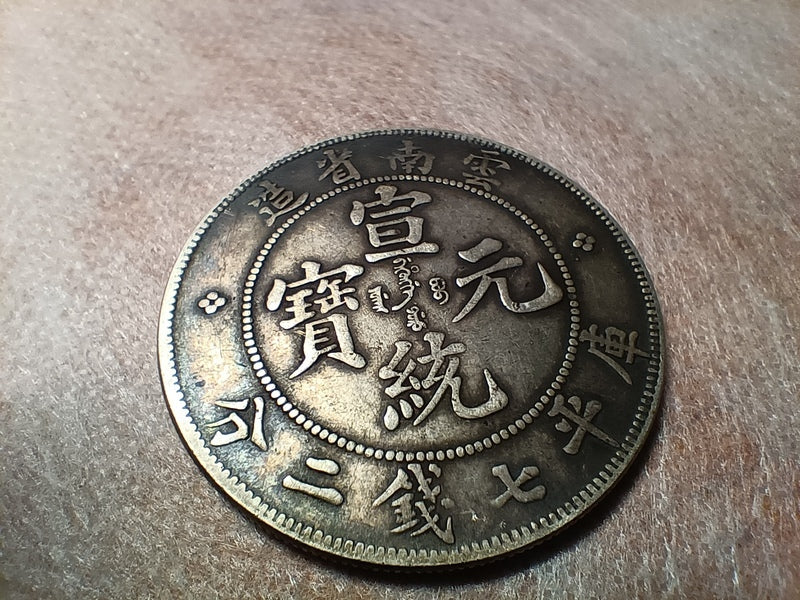
Copy the inscriptions before selecting a provincial variety
Begin with level, uncropped photographs of both faces. Transcribe the province, Xuantong wording, date and Kuping denomination only where they are visible, keeping punctuation and worn gaps in their original positions.
What to leave unresolved
Do not complete a weak provincial character or denomination from another Xuantong Yuanbao. Record which section is worn, covered or outside the current photograph.
Give the coin one item number and carry it through full views, close-ups, the edge, measurements, sleeve and any old label.
Read the dragon and border in context
Photograph the head, whiskers, horns, claws, scales and tail with surrounding detail. Include the beaded border, denticles and adjacent legends so each feature can be located.
Use raking light for shallow lines, strike weakness and possible tooling. Keep the level full face as the reference rather than drawing a conclusion from one dramatic angle.
Retain the first dragon-side and inscription-side files when adding magnified details. A later reviewer should be able to return every claw, character or border close-up to the whole coin.
Make a complete edge sequence
Follow the circumference in overlapping frames from a fixed starting point. Note reeding, seams, filing, knocks, holes, solder and former mounting without rubbing the rim.
Record weight, diameter, instrument, unit and contact positions. These measurements support comparison after the coin type is established; they cannot replace missing text.
Keep a dated second reading beside the first if the figures disagree. Repeat the setup before deciding whether the difference comes from the instrument, contact point or record.
Separate surface history from attribution
Describe toning colour, high-point loss, strike softness, wipe lines, scratches and cleaning-related sheen by position. Do not polish the fields or dragon to expose brighter metal.
Map each chop or repair to a full view and the relevant edge frame. State when damage crosses lettering or design needed for attribution.
Use references and labels in a controlled way
Photograph old envelopes, grading labels and family notes beside the coin number. Retain their wording as background while testing the proposed province and denomination against the metal.
Cite historical or production information with the source and consultation date. Online comparisons may identify a diagnostic position but cannot supply a character absent from this coin.
Know when photographs have reached their limit
Images can establish legible inscriptions, major dragon features and obvious edge damage. Metal, fine tooling, concealed repair and subtle cleaning may still require direct examination.
Keep a holder intact when opening would remove provenance or expose a fragile surface. Identify the exact inscription, border or edge question for the specialist.
Check the province, date, Kuping wording, dragon, border, full edge and measurements against the same item number. Remove any comparison close-up whose source coin is uncertain.
Retain the initial readings when new information changes the proposed variety. Date the revision and state which visible feature or cited reference prompted it.
Keep condition and attribution separate: a supported provincial type may still have unresolved treatment. Pass hidden characters or edge sections forward without dipping, filing or opening a sealed holder.