
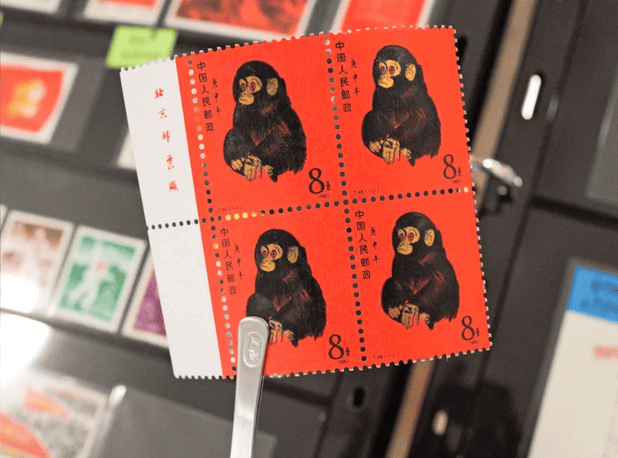
Describe a Monkey stamp block of four from what is visible
Do not name a block of four solely from an album caption or similar online image. Begin with its page number, arrangement, old annotations, image direction and item identifier.
Add overall dimensions and the positions of visible design details. Keep every photograph, measurement and enclosure note with this same multiple.
Evidence that remains to be checked
If the complete front, reverse, perforations or sheet margin is missing, mark the gap. Circle any area that cannot be viewed without disturbing the album.
Background stories do not determine condition; this Monkey stamp block of four is assessed from the material presently available.
Distinguish a sheet, souvenir sheet and cover
Show the complete block of four before photographing its outer and internal perforation lines. On the reverse, record gum, hinge traces, thinning, adhesion and paper change without repeated touching.
Mark short or pulled perforations, bent tips, creases, foxing, adhesion and mould by position. Colour or paper feel alone cannot establish a conclusion.
Use photographs that do not distort paper condition
For a sheet, keep margins, plate inscriptions, colour marks and joined perforations visible; for a cover, retain both complete sides, postmarks and the sealed edge.
Photograph the album from its cover through numbered pages, preserving handwritten notes and the existing order. Do not rearrange the stamps for a cleaner picture.
Start with issue code and denomination
Transcribe the visible stamp name, year, issue code, denomination and format. Number singles, sets, blocks of four, full sheets, souvenir sheets and covers separately.
When a set is present, count and photograph the actual arrangement. A shared subject does not prove that every stamp in the set survives.
Know the limit of photographic assessment
Stop turning pages when moisture or adhesion is present. Isolate the album from other paper and avoid water, hot air, direct sun or cleaners on the gum.
Online images may assist with issue research, but paper, gum, perforations and later treatment can still need direct examination.
A safe sequence for the block of four
First secure the album page, arrangement and annotations, then add the complete front and reverse of the Monkey stamp block of four.
Photograph all outer and internal perforations, visible margins and gum. Keep the item in place when removal risks thinning or separation.
Transcribe certificates and old labels separately, retaining discrepancies. Neither should supply a missing denomination or format detail.
Before consultation, reconcile the number of stamps, album order, packaging and every unresolved point. Do not invent completeness to finish the description.
Bring the original album and note which gum, perforation or margin area remains inaccessible. Safe preservation takes priority over a detached photograph.
