
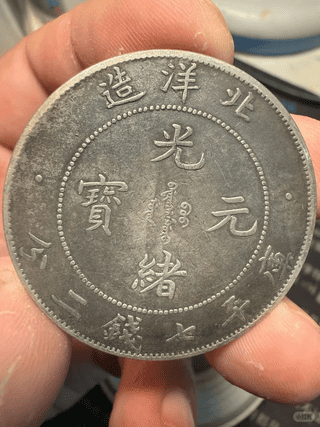
Begin with the Beiyang Guangxu Yuanbao inscriptions
Transcribe the visible mint or bureau name, date, Kuping denomination and wording on both faces. Leave worn characters open rather than restoring them from another dragon dollar.
Retain complete inscription and dragon sides with the full circumference, then add dragon, bead-circle, English-lettering and edge details. Preserve weight and diameter with tool and unit.
Describe black, grey or coloured toning as surface condition only. Cleaning, rim work and corrosion require raking-light and edge evidence; patina cannot prove date or authenticity.
Capture the edge as one continuous sequence
Photograph overlapping edge arcs and leave joins, filing, holes, solder and jewellery-conversion traces untouched. Do not polish the circumference.
Log surface colour, relief loss, softly formed details, fine abrasive trails and suspected chemical colour in separate fields. Keep every photograph under the coin number.
Maintain a unique record for each dragon dollar
Transcribe mint, date, Kuping denomination and both-face wording. Once those observations support the series, assess weight and diameter without separating them from the coin.
Keep complete faces before located details of dragon, bead circle, denticles, English lettering and denomination. Every close-up retains orientation.
Record surface and wear without collapsing them
Number multiple dragon dollars before grouping by mint, date or denomination. Their text side, dragon side, edge, weight and diameter remain separate.
Copy grading-holder wording separately, then check the enclosed mint, date, denomination, dragon and visible surface without opening the case.
Know when direct examination is required
Retain countermarks, old sleeves and provenance accounts as supporting evidence. They cannot replace inscriptions, dragon form, bead circle, metal surface or edge.
Dragon dollars with similar names can differ by mint, date, denomination or design. Group them from visible metal wording before fine comparison.
Reconcile Beiyang mint text, Kuping denomination and dragon side
Place the visible Beiyang mint wording, date and Kuping denomination on one complete face, then map dragon scales, claws, cloud or flame details on the other. Every close-up needs an adjacent legend or design reference.
Lay the full circumference beside weight, diameter, instrument displays and original units under the Guangxu Yuanbao number. Record any holder-obscured arc instead of supplying a standard edge.
Locate countermarks, holes, rim work and local wear before judging mint or dragon-side lettering. A batch image records quantity, not which alteration belongs to this coin.
Keep sleeves, grading holders and old labels as dated source layers when they name a different mint or denomination. The visible metal remains the attribution evidence.
For review, align the Beiyang Guangxu Yuanbao faces, edge and readings, then list the exact unread mint character, Kuping text or dragon detail. Preserve the package until any proposed examination has a defined location and effect.
