
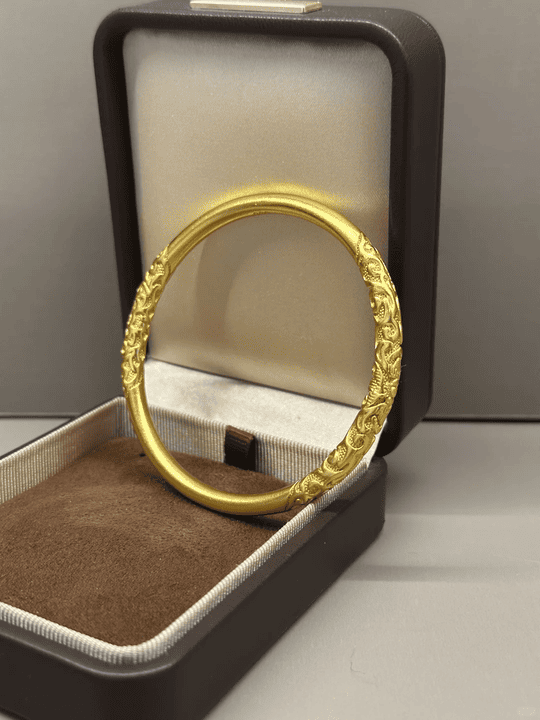
Map hollow areas, the clasp and solder before completing the description
Every close-up should be locatable on the complete gold bangle. Number the piece before recording hollow construction, an added clasp, solder joints or repaired areas.
A practical order for the evidence
Describe the clasp, seams, solder and moving components under condition. Keep receipts, tags and packaging in separate provenance notes under the same identifier.
Regroup mixed materials and leave a blank where evidence is missing. State when an area cannot be opened without risk.
Transaction stories, people and places do not establish the bangle's material. The assessment stays with photographs, measurements and present condition.
Move from the hallmark to working parts
A visible 999, 916, 750 or other hallmark is a clue, not confirmation. Record solder, added clasps, internal supports and mixed materials independently.
Map breaks, distortion, missing pieces and repair without polishing, cutting or fire testing. Note any area obscured by packaging.
Preserve the original weight unit
Keep gross and confirmed gold weight distinct. List stones, pearls, cords, springs, solder and other unconfirmed parts before discussing deductions.
A scale photograph should show the unit and decimals. Do not mix grams, taels and troy ounces or replace individual weights with a set total.
Count pieces before taking details
Number bangles, necklaces, rings, pendants and set components separately, recording design, hallmark location and visible damage with native units.
Even within one set, capture the full outline, clasp, seams, solder and moving parts of every piece. A group image records only the count and arrangement.
Match the checklist to the jewellery
Connect receipts, tags and boxes to the correct item. A component that cannot be safely separated remains unconfirmed, not a fixed deduction.
Before handover, reconcile every piece and state the scope of inspection, dismantling or any fee. Packaging limits should remain explicit.
A focused gold-bangle review
Begin with complete supported views, then locate the clasp, hollow seams, solder joints and moving components. Keep all details under the bangle number.
Add the itemised non-gold or unconfirmed parts, visible hallmark and original gross weight. Do not infer net gold from size or colour.
Every measurement needs its tool and unit, and every close-up needs a position on the complete bangle. Missing evidence leaves the conclusion open.
Explain cutting, abrasion, fire assay or opening before consent. Preserve the present surface and packaging until the likely benefit and risk are understood.
For appraisal, present the bangle unpolished with its documents and all attachments. This allows a proportionate decision without creating fresh damage.
