
 WhatsApp item photos
Map hollow sections and repairs before testing gold
State the effect of any contact examination in advance. Begin this gold record with hollow construction, added fittings and repair locations, all tied to the individual object.
Keep structure and provenance in separate fields
Photograph the clasp, seams, solder and moving parts in condition. Store receipts, tags, boxes and their identifiers as provenance rather than merging them with the material conclusion.
List an old label as pending and explain any hidden area. A missing observation is safer than a forced opening or guessed fineness.
Describe what is visible before weighing
Enter the item's working name, inscriptions, form, available dimensions, enclosure and damage. Mark the steel stamp as a clue, not a complete material finding.
Separate stones, pearls, cord, spring components, mechanical parts and other non-gold pieces from the stated gross weight. Do not call total weight net gold weight.
Keep weights, components and source history distinct
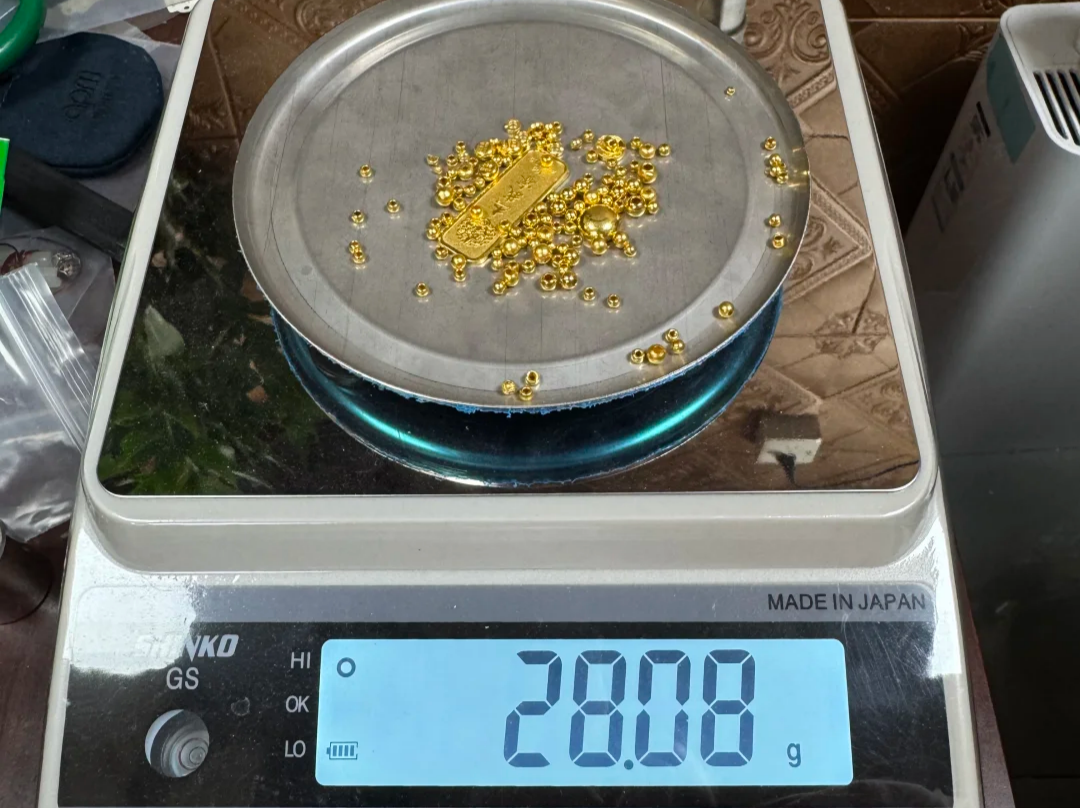
Bag, photograph and weigh different apparent fineness groups separately. Preserve the scale display and unit; grams, taels and troy ounces are not interchangeable labels.
For a wedding set, record the hallmark and weight of each component. Tags and non-gold decoration never disappear into a set total.
Attach a source and consultation date to production or historical claims. Old descriptions and online images remain indexes.
Record damage, valuation inputs and object traceability
Record breakage, deformation, missing metal, solder and repair positions individually. Each can affect recoverable metal even when the underlying fineness has not changed.
Reference gold price, fineness and net weight are three different fields. Inspection, deductions and handover conditions can only be documented after the object is seen.
Keep whole views, clasp details, measurements, enclosure and papers under one object number. Never borrow a cleaner example to fill a concealed joint.
Let the structural gap decide what comes next
Group visible 999, 916, 750 or other marks for review, but keep the stamp provisional. Solder, added clasps, hollow supports and mixed materials still need object evidence.
Photography locates obvious damage and construction; metal, fine repair and enclosure-covered areas may still need direct inspection.
Connect the clasp and solder record to weight
First map the clasp, seams, solder and moving elements; then list stones, pearls, cords and other non-gold components under the same number.
Next record receipts, tags and packaging before transcribing style, piece count, hallmark and damage. Every addition keeps its original date and unit.
Separate photographs and scale readings from market names or inherited stories. Where two sources disagree, preserve both rather than selecting one as fact.
Repeat the same weighing and viewing positions when results conflict. Direct inspection should answer a named structural or material question, not an open-ended guess.
Before consultation, leave the gold unpolished and assembled as found. Add safe photographs of the clasp, solder and hollow structure plus the existing documents.