
 WhatsApp item photos
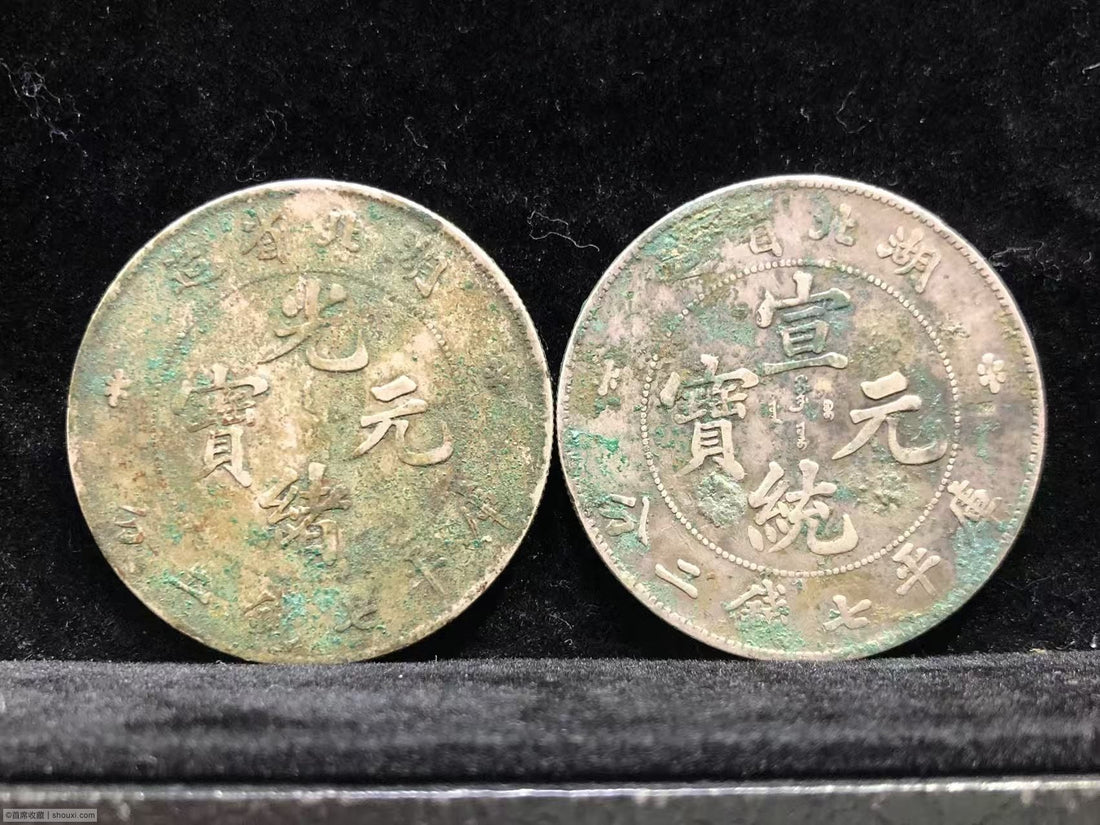
Separate Guangxu Yuanbao from Great Qing silver before reading colour
A mixed dragon-dollar group should first be arranged by visible type, provincial or central wording, date and Kuping denomination. Surface colour cannot replace those basic identifications.
Identification: preserve complete inscription and dragon faces, visible Chinese and English legends, date and value wording.
Separate Type and Condition Fields
Describe patina, wear, weak strike, wiping and altered colour apart from the full edge, original weight, diameter, instrument and native unit.
Make comparable whole-coin photographs
Use the same neutral background, distance, orientation and white balance for complete faces. Save the originals before making any crop or tonal adjustment.
Add raking-light images for hairlines, relief and rim changes, with a located close-up for every observation. Exposure-driven colour differences should not be described as treatment.
Read Designs Before Surfaces
Complete the inscription and dragon views, then preserve an ordered edge sequence with every join, repair, hole or former-mount trace located.
For Guangxu Yuanbao, transcribe the provincial mint or mint name, reign or cyclical date, Kuping wording and surrounding legends from the complete faces.
For Great Qing silver, locate the date and denomination, dragon, beaded border, denticles and English wording without borrowing features from a different type.
Use Precise Condition Language
Compare surfaces only after the Guangxu Yuanbao and Great Qing groups are secure, describing every difference by position rather than broad appearance.
Stable toning may sit above or between design elements; wear reduces relief at circulation high points; weak strike originates in the making of the coin. Record locations that support each description.
Keep Holder Claims and References Separate
Do not wash, polish, rub, scrape or apply chemicals. Changing the surface would destroy the evidence the comparison is meant to preserve.
Retain holder wording, access-dated references and any conflicting colour images as context while preserving the unwashed physical surface.
A grading holder supplies label wording and a stated score. Inspect the enclosed legends, dragon and surface through the available areas, and list any plastic-related limits.
How Controlled Light Separates Colour from Treatment
A colour question becomes testable only when the same coin has an unchanged neutral-light baseline, a separately labelled raking-light view and a map of the disputed area.
Coin type and inscriptions determine which record is being compared. Each surface observation then receives a face, nearby motif and image filename.
Reconnect the edge sequence and original measurements to the same identifier. A specification cannot decide whether colour is natural or later.
Where photographs conflict, make a new controlled image and preserve both earlier versions. Arrange direct examination for concealed rims, fine repair or unresolved surface behaviour.
Before an enquiry, check that no Guangxu Yuanbao detail has been attached to a Great Qing coin, and leave all metal uncleaned in its present enclosure.