
 WhatsApp item photos
Begin with the note, not an album caption
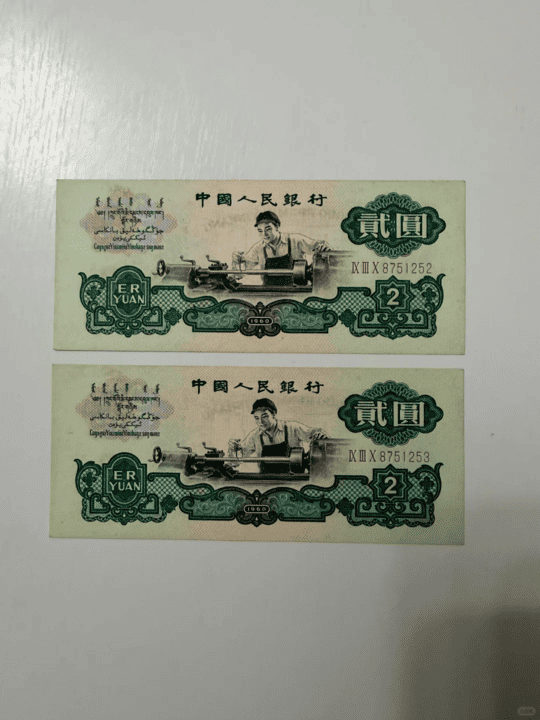
Give every banknote a reference number and take complete, level photographs of its front and back. Include the entire edge so a fold, trimmed margin or missing corner cannot fall outside the evidence.
Copy the issuing name, denomination, printed date, main designs, prefix and serial exactly as visible. Leave an indistinct character open instead of completing it from another note.
Record height and width with the tool and unit. Measurements can distinguish formats after a series is supported, but they cannot identify a note whose essential wording is unreadable.
Photograph the sleeve, album position and any old label separately. Those materials help preserve provenance while remaining distinct from the paper's own text and design.
Sort by supported series and format
Separate notes first by issuing authority, series, denomination and visible front-back design. Treat date or plate variations only after each note has its own image set.
For a bundle or serial run, retain the original order and record every accessible first and last serial. Do not break an intact group merely to create a tidier spreadsheet.
Use transmitted light as an observation, not an assumption
Photograph only features actually seen through the subject note. A catalogue watermark, thread or paper description must not be copied into an individual entry without visual support.
Keep the lighting setup and orientation with the transmitted-light image. This allows another person to distinguish a genuine paper feature from a shadow, sleeve seam or backing sheet.
Map paper condition by place and type
Record centre folds, handling folds, tears, edge splits, pinholes and missing corners with positions. Add close-ups only after each area can be found on a complete face.
Describe stains, foxing, ink transfer, thinning, glue, tape, repairs, recolouring and flattening separately. A note can carry several histories that should not be collapsed into ‘poor condition’.
Keep original paper behaviour intact
Support brittle or folded notes on a clean flat surface and avoid repeated flexing. Do not wash, iron, laminate or use pressure to remove a crease.
If a note is stuck to an album or backing, photograph what is safely visible and state the restriction. Forced removal may destroy paper fibres and provenance at the same time.
Reconcile groups before storage
Match each front, back, serial and sleeve to its reference number. A group image should agree with the individual count without being used to fill missing details.
Keep published issue data in a cited background note. Features visible on the banknote and unresolved readings belong in their own sections.
Preserve the first photographs when a later inspection changes a serial digit or format name. Date the revised reading and explain which image supports it.
Finish with a short list of hidden, faint or conflicting points. A defined uncertainty gives a paper specialist a safer task than an unsupported attribution.
Store each note in a suitable inert sleeve after the examination, retaining old labels nearby but not in direct contact when they pose a risk.