
 WhatsApp item photos
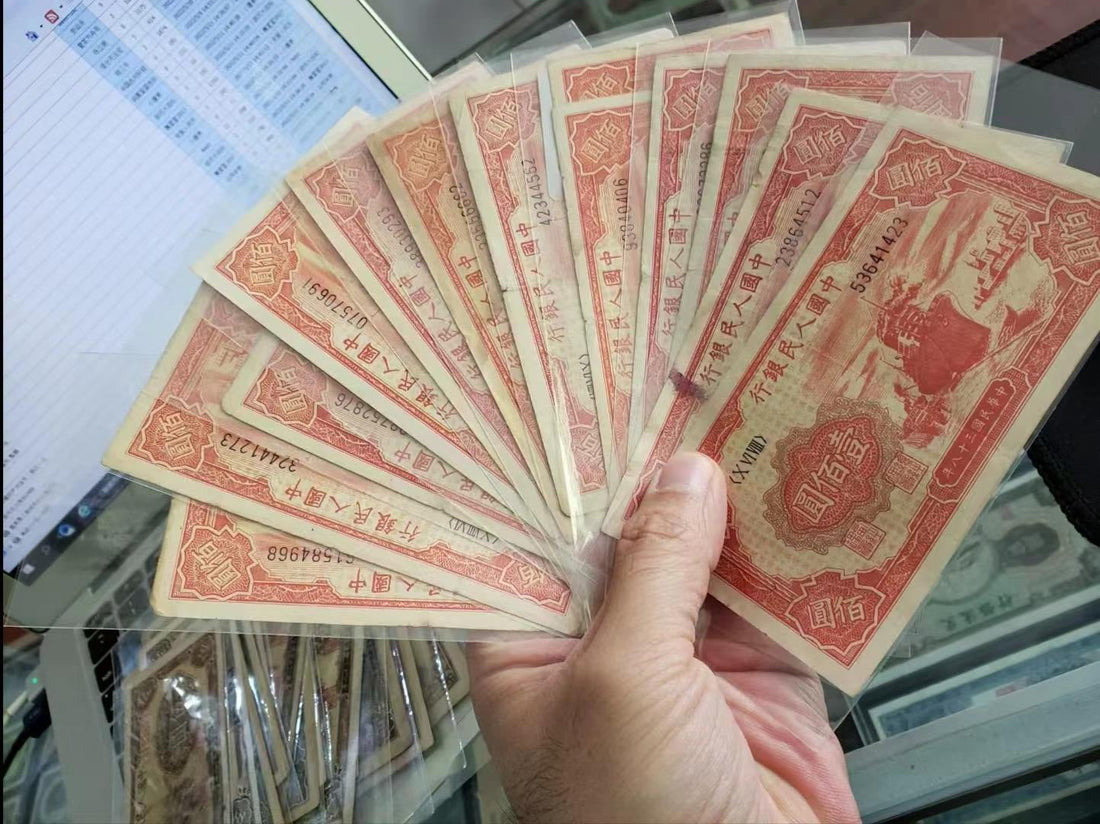
Count and number the old RMB notes before sorting condition
A group photograph records quantity, but each note needs its own link between denomination, printed details, prefix, serial number and physical condition.
Evidence This Pass Can Establish
Transcribe the visible series, denomination, printed year, principal designs, prefix and serial, then secure both complete faces, all four corners and the full perimeter.
What Must Remain Open
Keep folds, tears, stains and mould as separate located observations, preserve album order, and record viewing limits and the impact of any contact or removal before it is attempted.
Photograph paper condition without flattening it
Place one note at a time on a clean support and use even light for complete faces. Add raking light for folds and surface disturbance without pressing the paper flat.
Use transmitted light only where handling is safe, and describe what is visible rather than assuming a watermark or security feature. Record camera direction for repeatability.
Keep Every Detail Locatable
Preserve prefix and serial order, and ensure each close-up of a tear, stain or seal returns to the numbered note and the correct face.
Transcribe prefixes and serials character by character, distinguishing uncertain digits from confirmed ones. Never complete a sequence by inference from neighbouring notes.
If a bundle is consecutive, sealed or tied, record that arrangement before moving anything. The wrapper and order may be part of the evidence even when individual faces are not accessible.
Keep identification apart from grade
Describe corners, perimeter, folds and paper surface in locatable terms. Broad adjectives such as excellent should not replace observations another person can verify.
A holder label or album caption provides dated context, but it cannot supply an obscured serial or unseen reverse. Preserve the wording and note the viewing limit.
References for issue history need a named publication or archive and an access date. Do not merge historical context with the condition of the physical note.
Repairs need neutral language
Look for filled pinholes, trimmed or rebuilt edges, replaced corners, tape residue, recolouring and heavy pressing under suitable light. State evidence without assuming who carried out the work.
Isolate suspected active mould and avoid brushing, solvents, heat or direct sun. Note odour only as a dated observation and protect nearby paper from contact.
How Serial Order and Paper Condition Stay with One Note
Read the value, printed year, principal designs, prefix and serial from complete face images, then compare them with the album caption or wrapper as a separate step.
Inspect four corners and every side in order, followed by the paper field under even, raking and transmitted light where appropriate. Record every restriction.
Keep bundles, consecutive runs and sealed groups in their original sequence. If removal is necessary later, photograph the position before and after with consent.
Retain the first unedited images and append dated corrections rather than overwriting a doubtful serial. This preserves how the reading changed.
Before handover, reconcile the inventory, note numbers, enclosures and all loose inserts. Package paper flat with clean, inert support and no added adhesive.