
Establish the Silver Dollar Before Reading Small Details
Assign the coin a unique number and begin with uncropped photographs of both faces, using a fixed orientation and neutral illumination.
Transcribe the visible year, denomination, legends and main designs, leaving uncertain letters or numerals open rather than copying a proposed attribution.
Place raking-light and damage frames after the complete views, with a nearby letter, motif or clock position that relocates each detail.
Retain old labels, sleeves and inherited names in dated attachment fields, separate from the present coin and its visible condition.
Record the Entire Circumference
Photograph overlapping edge sections from a marked start, preserving their sequence and identifying any section concealed by a holder.
Leave joins, rim work, piercings, solder and former-mount traces unchanged, without filing or polishing the metal for inspection.
Use Measurements After the Coin Family Is Plausible
Keep weight, diameter, tool display, native unit and contact point under the same identifier as the faces and ordered edge.
Preserve conflicting repeats with their dates, because one convenient reading should not replace the recorded variation.
Separate Circulation from Other Surface Effects
Describe high-point wear, softened lettering and contact friction apart from rim knocks, cuts, holes and isolated scratches.
Use raking light to show parallel hairlines, interrupted lustre or abrupt colour change, while avoiding a definitive cleaning claim from one photograph.
Keep Packaging and Documents in Their Own Fields
A grading label can contribute its wording and stated grade, but the enclosed coin still needs matched faces, edge, measurements and surface observations.
Date published references and preserve oral provenance as a lead, without allowing either to fill an unreadable year or denomination.
Complete the Main Evidence Set
Recheck both faces, the entire circumference and every reading under one coin number before comparing varieties or market records.
List which inscriptions, edge segments and surface areas remain hidden, and define the purpose of any requested direct examination.
Keep unedited photographs, earlier descriptions and later corrections as separate dated layers so the reasoning remains traceable.
Leave the silver dollar unwashed, unpolished and in its recorded enclosure until a permitted examination method is agreed.
Reading Circulation on a Republic Year 23 Junk Dollar
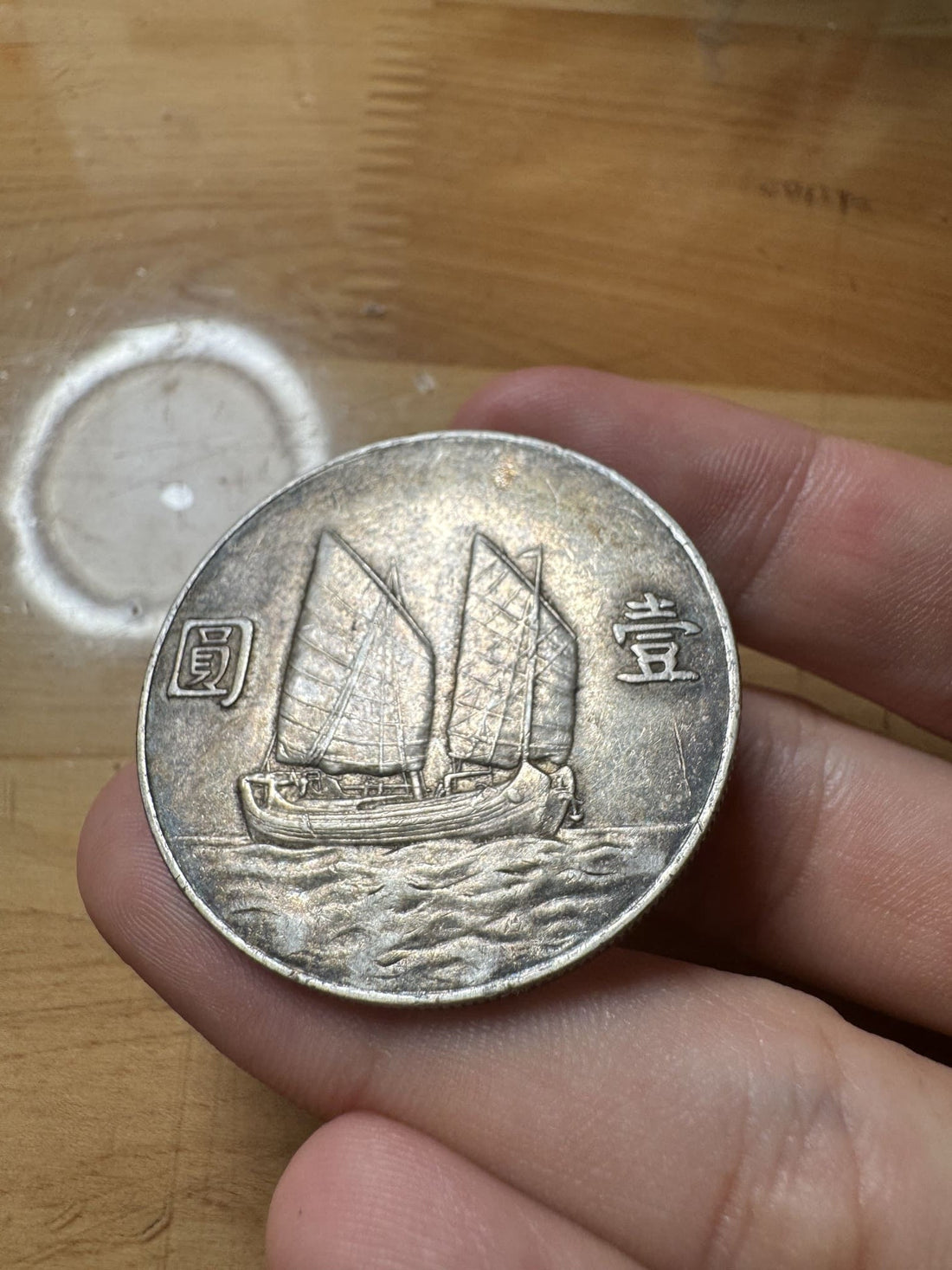
The source image identifies a Republic Year 23 Sun Yat-sen junk dollar, so wear is read across the full portrait and junk-design faces before isolated marks are interpreted.
Wear on the Portrait and Junk Design
High-point smoothing, softened lettering and loss of fine design detail describe circulation, while weak strike remains a separate explanation tied to the same locations.
Edge Damage and Holder Contact
Rim knocks, cuts, holes and holder rub are mapped by clock position, with raking light reserved for hairlines, interrupted lustre and abrupt colour change.
Original weight, diameter, tool and unit remain with this Year 23 coin, and any attribution or condition point not supported by the recorded views stays provisional.
