
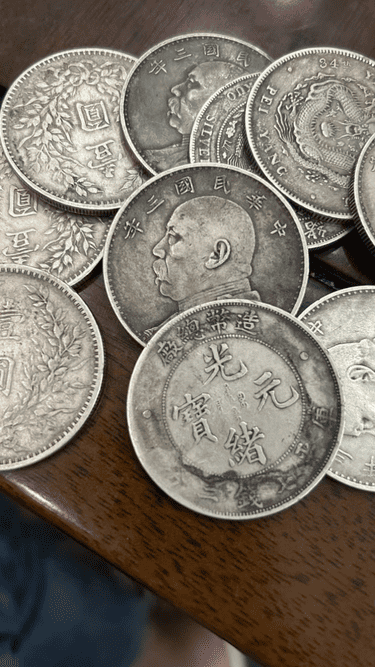
Identify the missing silver-dollar evidence first
Begin with details the coin itself supports. Retain clear complete views, raking-light images and located damage close-ups; do not borrow an indistinct feature from a similar piece.
Evidence that can be completed now
Use the final checklist to transcribe the visible year, denomination, legends and principal designs under identification, matching each point to the original coin number.
Evidence that must remain open
Where weight, diameter, measuring tool or original unit is absent or blocked, explain why. A missing angle or document remains outstanding and is no reason to alter the coin.
A case description can help locate material but does not prove provenance or a transaction; only physical silver-dollar observations are used below.
Build a complete edge sequence
While the coin remains enclosed, cover the circumference with overlapping sections. Preserve joins, changed rims, holes, solder and former-jewellery evidence until the checklist is complete.
On another pass, separate patina, circulation rub, weak strike, wiping lines and cleaning-related colour without treating the metal.
Keep wear observations tied to whole views
Arrange several coins by visible date, denomination and main design before assigning identifiers. Each obverse, reverse, edge, weight and diameter stays together.
A holder records another party's attribution and grade. Recheck the visible type, year, proposed variety and surface on the enclosed coin, and leave every blocked feature unresolved.
One coin number for every image and reading
Copy the date, value, legends and major motifs from the actual piece before dimensions are compared within an established type.
Preserve both faces with the full circumference visible, then locate the legends, main design, denticles, mintmark and edge areas in detail photographs.
Know what still requires examination
Keep countermarks, old sleeves and provenance notes apart from physical inscriptions, motifs, surface and rim; contextual material cannot replace observation.
Coins sharing a general name may differ by date, denomination or mintmark. Sort those visible points before moving to condition.
Which Silver-Dollar Close-Ups Still Need a Whole-Coin Reference
Secure the whole, raking-light and damage images first, then list any unconfirmed name or variety. Use identification to find the correct coin whenever another detail is required.
Place weight, diameter, tool and native unit under measurements, while mintmarks, chops, holes and rim work remain under condition. Check both sections against the date, value and designs.
When documents and the object disagree, keep both wordings and dates. Do not complete a variety, period or material from another coin.
The checklist must let someone locate the same piece and repeat the observation. State clearly what is hidden, sealed or unsupported.
Before opening a related link, ensure every coin is numbered and its weight, diameter and surface evidence are not mixed with boxes or attachments.
