
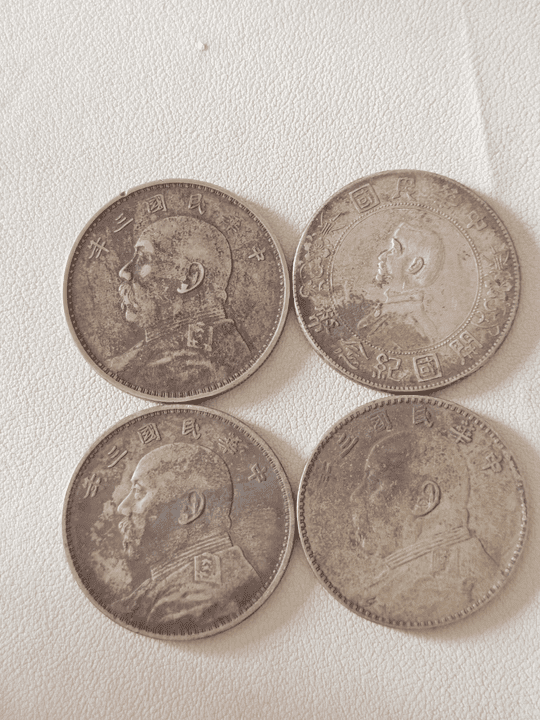
Move from supporting documents back to the silver dollar
Begin with observable toning, high-point wear, knocks, wiping and possible chemical colour. Keep those surface observations apart from packaging and provenance; if the sources disagree, preserve both without making one complete the other.
Give paper sleeves, grading holders and old labels their own references, then match them to the coin. Describe condition by location and lighting so another person can find the same feature.
Transcribe the date, denomination, wording and principal designs on both faces. Identify any area that cannot be viewed safely and stop a measurement or examination that would not be repeatable without risk.
The same approach applies regardless of who owned the coins or when a transaction occurred: examine and photograph every silver dollar independently.
A published specification is not a conclusion
Sort several silver coins by date, denomination and principal design. Number each one so its obverse, reverse, edge, weight and diameter stay together, retaining the original units.
A grading holder contributes a label and score, while the enclosed coin still needs to match the stated type, date, variety and visible condition. Name whatever the plastic conceals.
Confirm the inscriptions and designs first
Read the date, denomination, obverse wording, reverse wording and main devices before comparing dimensions. Use a specification only after the coin type is supported.
Preserve uncropped photographs of both faces and the whole circumference. Add located details of lettering, devices, denticles, mintmarks and edge, while identifying positions hidden by packaging.
Photograph details after the complete coin
Cover the edge in overlapping sections. Preserve seams, filed areas, holes, solder and evidence of earlier mounting without intervention, and keep the measuring tool and unit with each reading.
Distinguish natural-looking toning, circulation loss, strike weakness, fine wiping lines and colours that may indicate chemical treatment. Do not clean the coin to make a detail more visible.
Keep enclosures and provenance distinct
Chop marks, paper sleeves and ownership accounts may add context, but they cannot replace direct evidence from inscriptions, designs, the metal surface and circumference.
Coins sharing a market name can differ in date, denomination or mintmark. Separate them on visible features before comparing condition or adding research.
Let the surface map decide whether direct review is needed
Compare the date, denomination and designs with the mapped toning, wear, knocks and suspected cleaning before deciding what still needs the coin in hand. Describe the observable toning, wear, knocks and suspected cleaning, and name any missing full-face, raking-light or damage image.
Keep the inscriptions and designs distinct from weight, diameter, tool and unit. Both groups should carry the coin number, with original observations preserved when later conversions or oral accounts are added.
When a document name conflicts with the object, transcribe each wording and date. Leave format, period or metal unresolved instead of borrowing the answer from a look-alike.
The evidence should enable a later examiner to locate the same coin and repeat the review. State when an inscription is unclear, a holder cannot be opened or a source is absent.
Finally check dates, units and photograph orientation across the complete set. If early and later information conflict, retain both versions with their source.
