
 WhatsApp item photos
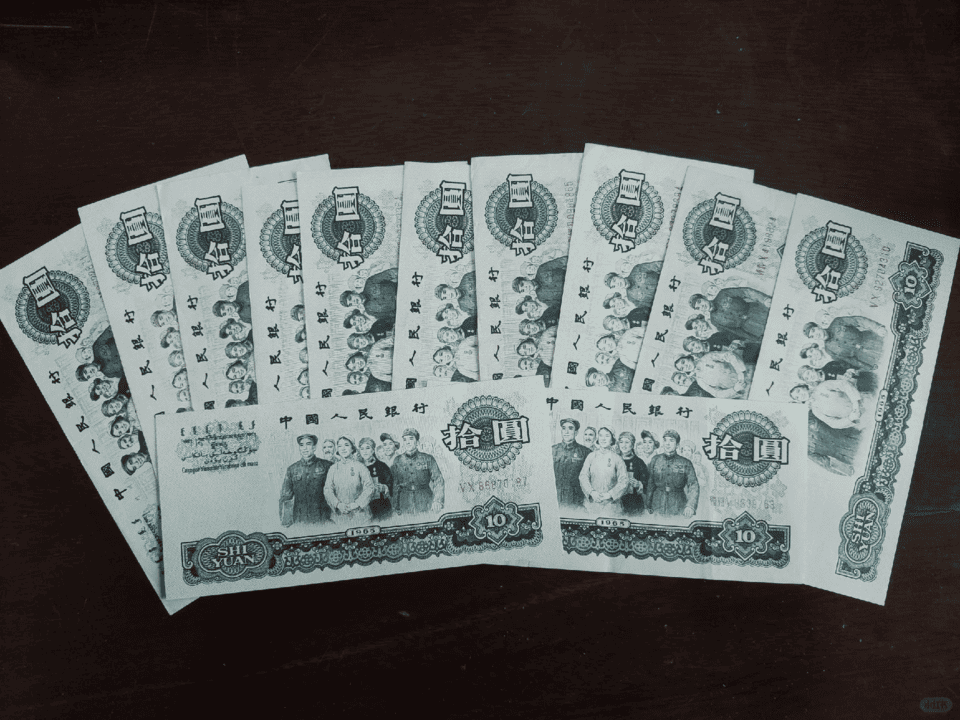
Begin with the complete Third Series RMB note
Identify the visible denomination, printed year, principal designs, prefix and serial before describing condition. Number each note even when an album caption already supplies a name.
Whole-Note Views and Serial Details
Copy the prefix and serial exactly, retaining uncertain characters as uncertain rather than completing a run from neighbouring notes.
Map Paper Condition by Position
Keep any album page, wrapper or group order as found during the first pass. Note areas that cannot be viewed without changing the arrangement.
Begin at the upper-left corner and proceed around the note in a stated direction so trimmed, rebuilt or missing areas remain locatable.
Inspect Corners and Sides in Order
Photograph the paper field under even light, then use raking light for folds, pressing and disturbed fibres. Do not flatten the note to make a cleaner image.
A detail image should retain enough design to show its location. Anonymous close-ups of a corner or stain can easily be attached to the wrong specimen.
Limit transmitted-light claims to what is visible
If the note can be supported safely, transmitted light may show paper thickness, holes, repairs or a visible feature. Do not assert an expected watermark when none can be seen.
Record the light direction, enclosure and camera settings that materially affect the view. A dark patch in one photograph is not automatically staining.
Let serial and design evidence lead identification
Transcribe the denomination, printed date and principal face designs before comparing a catalogue. A printed year should not be confused with a later circulation or withdrawal date.
Treat a grading label or album caption as a separate dated statement. Check the enclosed note's visible text, serial and condition through the available surfaces.
Keep Issue History Separate
Use a named publication or archive for historical facts, while trimming, filling, pressing and replaced corners stay in the physical condition field.
Distinguish ordinary folds from heavy pressing, and original perimeter wear from trimming, filling or replaced corners. Use raking and transmitted light where safe.
Why Fragile Third Series Paper Limits the Next View
Suspected mould, adhesion or brittle edges determine whether another view is safe, while erasers, heat, liquids and tape removal remain outside the documentation process.
Complete front and back frames with all corners visible establish the note before any small serial character is enlarged.
The serial transcription, album position and wrapper stay with the physical note number, including the original order of consecutive or grouped material.
Plastic, mounting and adhesion may block particular paper areas, and those named gaps define the limited purpose of direct examination.
At handover, flat inert support, the existing enclosure and the indexed image set preserve the fragile Third Series note without new pressure or adhesive.