
 WhatsApp item photos
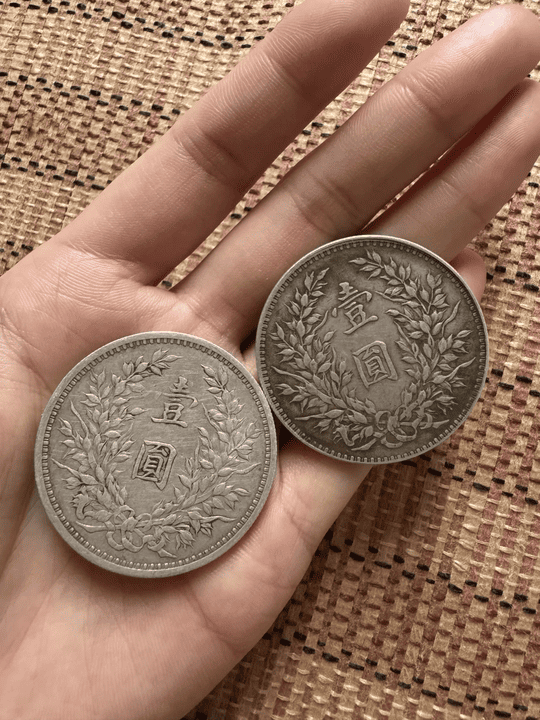
Start the Yuan Shikai record at the reverse and edge
Give the coin its own identifier, then photograph the complete grain-wreath face before enlarging leaves, grain heads, denomination or knot. Keep the paired portrait face in the same folder.
- Identification notes should cover visible date wording, portrait details, reverse denomination, wreath structure and any locatable variety marker.
- Measurement notes should contain the complete circumference, scale reading, diameter, instrument, native unit and precise contact points.
- Condition notes should separate patina, wear, knocks, weak strike and possible cleaning from the design transcription.
A paper sleeve or holder label stays with provenance. It cannot replace the reverse design or a missing segment of the physical edge.
Create a repeatable circumference series from a fixed starting point, keeping every segment connected to the portrait and grain-wreath faces.
Make the Circumference Repeatable
Do not roll the coin across a hard surface or file a rough area to improve the view. Use a supported enclosure and change the camera angle instead.
Match each edge frame to both complete faces. A row of anonymous circumference photographs cannot prove which Yuan Shikai coin was measured.
Weigh only after the identifier is secure
Photograph the instrument display with the coin number visible, record the native unit and state whether packaging was included. Repeat unexpected readings without deleting the first.
Measure diameter at a documented axis and note rim damage that affects contact. A single number should not be used to force a variety attribution.
Read the wreath before using market shorthand
Locate denomination characters, grain heads, leaves, knot, border and nearby marks on the full reverse. Connect portrait hair, epaulette and year wording from the paired obverse.
Signed type, O variety, triangular-yuan variety and regional names are conditional on visible diagnostics. Record the exact location rather than merely repeating a label.
Keep Research Separate from the Coin
Historical claims need a named reference and access date, while patina, wear, weak strike and cleaning evidence remain physical condition observations.
Use even light for the overall surface and raking light for hairlines or flattened high points. Describe colour without assuming that darkness equals originality or dirt.
What the Holder Prevents the Record from Claiming
If plastic hides the edge or reflections prevent a confident reading, list the precise unavailable area and plan any direct check around that gap.
Follow the reverse from denomination through wreath and knot to the border, then verify that every close-up returns to the complete face.
Reconcile weight, diameter, edge sequence and instrument details with the same identifier. Keep a conversion separate from the measurement shown by the tool.
Retain packaging, attachments and labels with their own descriptions and seal states. Note precisely which evidence they obscure.
Before an enquiry, check the portrait and wreath pair, the start and end of the circumference sequence, and both original readings. Leave unresolved variety claims clearly open.