
 WhatsApp item photos
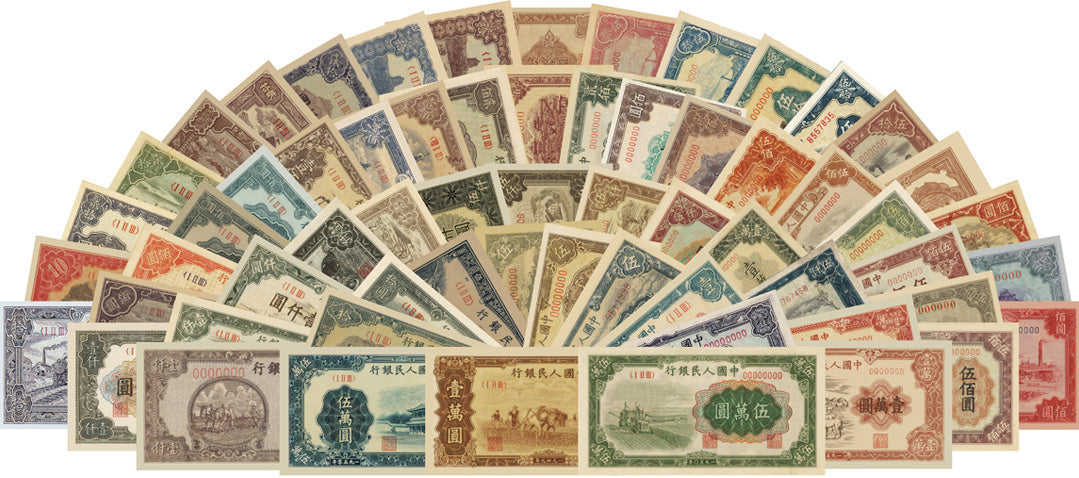
Read an early Renminbi note before naming its format
Transcribe the words on the note before choosing its series or variety name. Start with the series, denomination, printed date and principal designs, without supplying unreadable text from another example.
Keep the document date distinct from the banknote's printed date. Record dimensions, measuring tool and original unit under the identifier assigned to that note.
Add an even transmitted-light view and describe any possible watermark cautiously. Check that no image or measurement has acquired the identifier of a neighbouring note, and list inaccessible evidence for later review.
Support issue statements with a source
Use broad, even backlighting for watermarks and internal paper features. An intense point of light can erase the fibre and outline detail needed for comparison.
Do not flatten foxing, adhered areas, tears or old tape. Separate an affected note from other paper and avoid washing, ironing or damp treatment.
Cite the reference and access date for issue, production and historical information. A previous label, family account or online photograph can guide research, but it cannot replace the paper in hand.
Sort the banknotes before interpreting them
For each early Renminbi note, state the visible wording, design, dimensions, current packaging and condition as well as the proposed series and denomination. Put an obscured feature on the review list.
Arrange several notes by series, denomination and design. The front, back, four corners, prefix, serial number, size and transmitted-light image all need to identify one particular note.
Do not sacrifice an original grouping for a photograph
Preserve a consecutive run, strapped bundle or sealed pack. First photograph the seal, visible first and last serials, side profile and stated count; only then consider whether individual viewing is necessary.
Photograph an old sleeve, album page or annotation without writing, stamping or attaching a fresh label to the banknote. Use the note identifier on the related images.
Keep complete photographs, details, measurements, packaging and documents together. Add later information with a date so the original transcription remains available.
Trace every observation during re-examination
Place ration coupons, foreign notes, commemorative issues and uncut or joined sheets in separate groups. Their production contexts and collecting categories are different from the early Renminbi series.
Images can support visible classification and major damage, but may not settle fibre, minute paper repairs or areas blocked by packaging. Mark which points require direct inspection.
Photographs, measurements and limits for an early Renminbi note
Begin with the series, denomination, printed year and principal designs, then capture the prefix, entire serial string and its print location. Keep the two tasks distinct so a partially hidden number does not become an assumed identification.
Describe transmitted-light observations independently from possible patching, recolouring, flattening and replaced corners. The first concerns internal or watermark features; the second concerns physical condition.
Locate condition precisely by corner, margin or seam. General labels such as “good condition” or “signs of age” do not allow another person to repeat the assessment.
Count notes and packaging by their identifiers at handover. Preserve oral information as background and do not merge it with visible paper features.
Before an enquiry, check complete views, close-ups, dimensions and packaging as a set. Add photographs of missing denomination, design or serial evidence without altering the banknote.