
Treat condition and humidity as separate questions
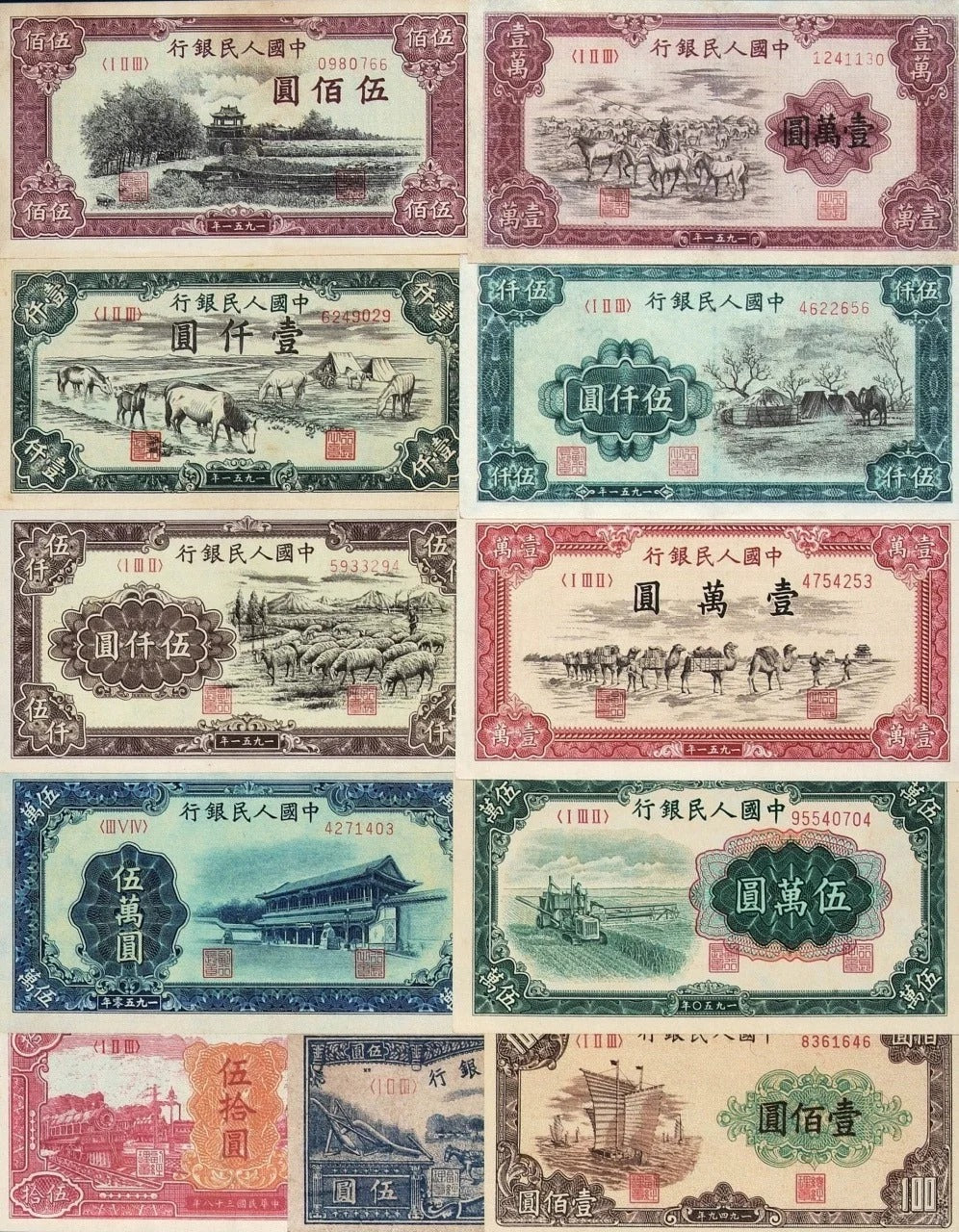
Sort old Renminbi by supported series, denomination and design, then photograph every note front and back with all corners and edges visible.
Map folds, splits, stains, foxing, adhesive, repairs and flattening by position rather than reducing the paper to one grade.
Isolate material that feels damp, smells musty or adheres to a page. Keep ventilation stable without sun, hot air or cleaners.
Open the condition record with the note itself
Transcribe the denomination, visible date, main designs, prefix and serial under an individual number, marking weak digits as unresolved.
Keep each face, corner, edge, dimension and sleeve with that number even when the notes form a set.
Photograph overall structure before details
Do not break a sealed bundle, consecutive run or original wrapper for routine photography. Record the seal, count and accessible serial range first.
Old album captions and sleeves remain provenance. Never write, stamp or attach a new label directly to the banknote.
Preserve original files, orientation, tools and units when later images or measurements are added.
Use transmitted light carefully
Keep the light even and distant enough to show paper structure without burning out fibres or design. Avoid filters that invent contrast.
Record only a watermark or feature actually seen on the subject note, leaving catalogue expectations in a cited background note.
Leave mould spots, adhesion and old tape untouched until a paper specialist can assess the risk.
Keep the paper in its present state
Place coupons, overseas currency, commemoratives and joined sheets in independent groups with their own issue histories and storage needs.
Photographs can locate obvious faults, but paper feel, fine repair and concealed album contact may require direct examination.
Stabilise the paper before returning it to storage
Reconcile the note, serial, dimensions, sleeve and condition map, keeping any inaccessible back or margin on the unresolved list.
Retain full-colour originals before editing exposure, and add dated images instead of overwriting a suspected mould or stain boundary.
Do not iron, wash, press or repeatedly reverse a fold. Stable support preserves more evidence than a cosmetically flat note.
Return each item to its numbered safe sleeve or original position after photography, checking that the set order remains intact.
Read a fold by direction and location
Mark whether a centre fold, corner crease or local wrinkle crosses lettering, design or edge, adding raking light for raised fibres.
Separate edge faults from moisture evidence
Survey tears, losses, pinholes and repairs around the margins, while recording tide lines, foxing, adhesion and moisture source independently.
Keep notes within the same issue individually accountable
A set can contain one intact edge, one central fold and one repaired split; each serial therefore needs its own photographs and condition description.
Complete the enquiry set with denomination, design, serial, dimensions, packaging and precisely stated gaps.
