
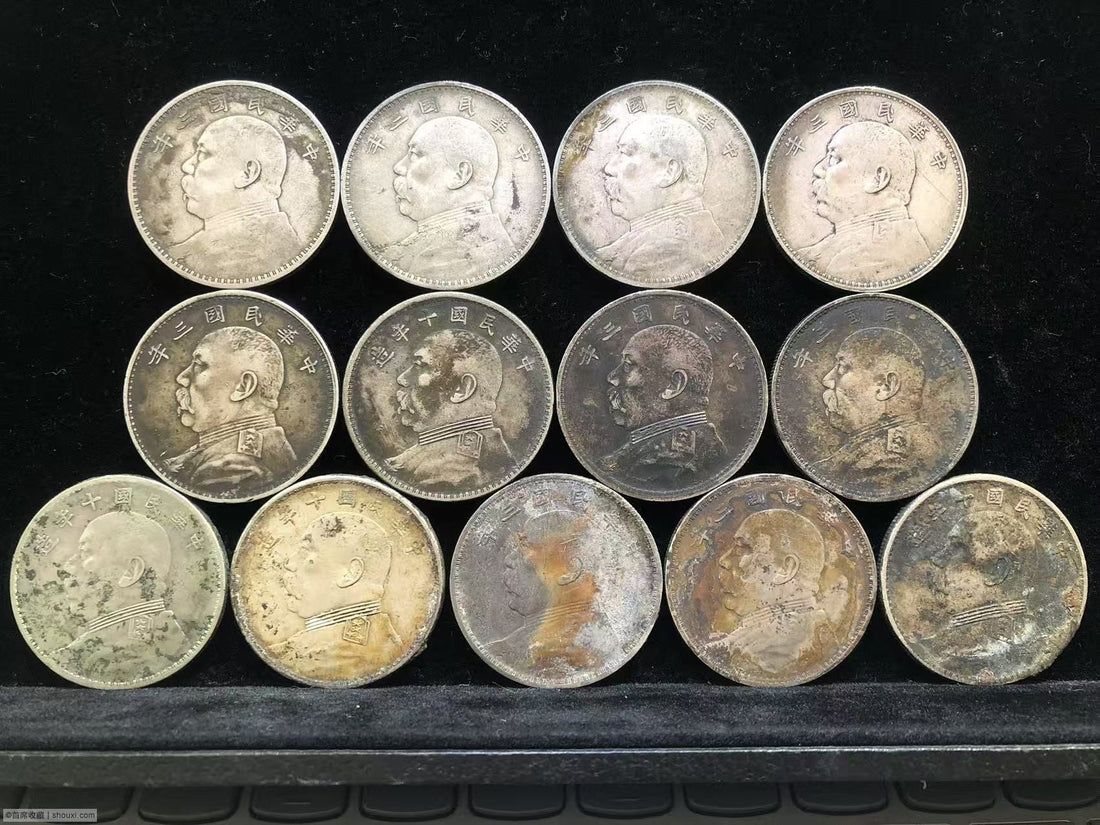
Bring a Hong Kong Yuan Shikai comparison back to the coin
Record the grain wreath, knot, denomination characters and proposed variety markers from the object. Packaging and oral descriptions stay in separate fields when their wording differs.
Map countermarks, holes and rim changes in condition under the coin number. Photograph the whole face before enlarging a claimed marker.
Use provenance for sleeves, slabs and old labels, and circle every area that cannot be inspected safely. An unavailable measurement remains open.
Attach sources to issue statements
A signed, O, triangular-yuan or local-variety name enters comparison only when its described marker is visible on the particular numbered coin.
Photograph the entire circumference in overlapping sections without filing, polishing, removing solder or opening a holder merely for access.
Historical and production details need a named source and consultation date. Inherited labels and internet images are starting points for research.
Sort visible types before condition
Enter the working name, inscriptions, principal designs, available dimensions, enclosure and condition. Leave hidden date or denomination characters unresolved.
Countermarks, sleeves and source accounts can remain as context but never replace portrait lettering, wreath, strike, metal surface and edge.
Retain original instrument readings
Take complete portrait and wreath sides before locating hair, epaulette, date characters, grain details, denticles and proposed markers.
Number several Yuan Shikai dollars before grouping dates or varieties. Its faces, circumference, weight and diameter remain attached to the individual record.
Keep complete images, details, dimensions, packaging and papers under that number so a later comparison cannot exchange coins.
Make the second review traceable
A slab provides a printed attribution and grade for transcription. Compare those entries with the visible date, variety, portrait, reverse and surface.
Photography shows obvious classification features and damage, while metal, fine repair and enclosure-covered positions may still require direct inspection.
Focus the Hong Kong comparison on repeatable conditions
Start with visible wreath, knot, denomination and variety markers, then record patina, wear, knocks and cleaning indicators. Every missing view becomes a stated gap.
Store sleeves, slabs and old labels in provenance and portrait hair, epaulette, lettering and denticles in identification. Later interpretations never overwrite the first observation.
When a file name disagrees with the object, keep both wordings and dates. Do not complete type, period or material by analogy with a nearby dollar.
The finished checklist lets another reviewer find the same coin and repeat the comparison without dismantling its packaging.
Before consultation, align complete views, surface images and dimensions, then note precisely which year, variety marker or edge section remains uncertain.
