
Locate L.GIORGI before enlarging it
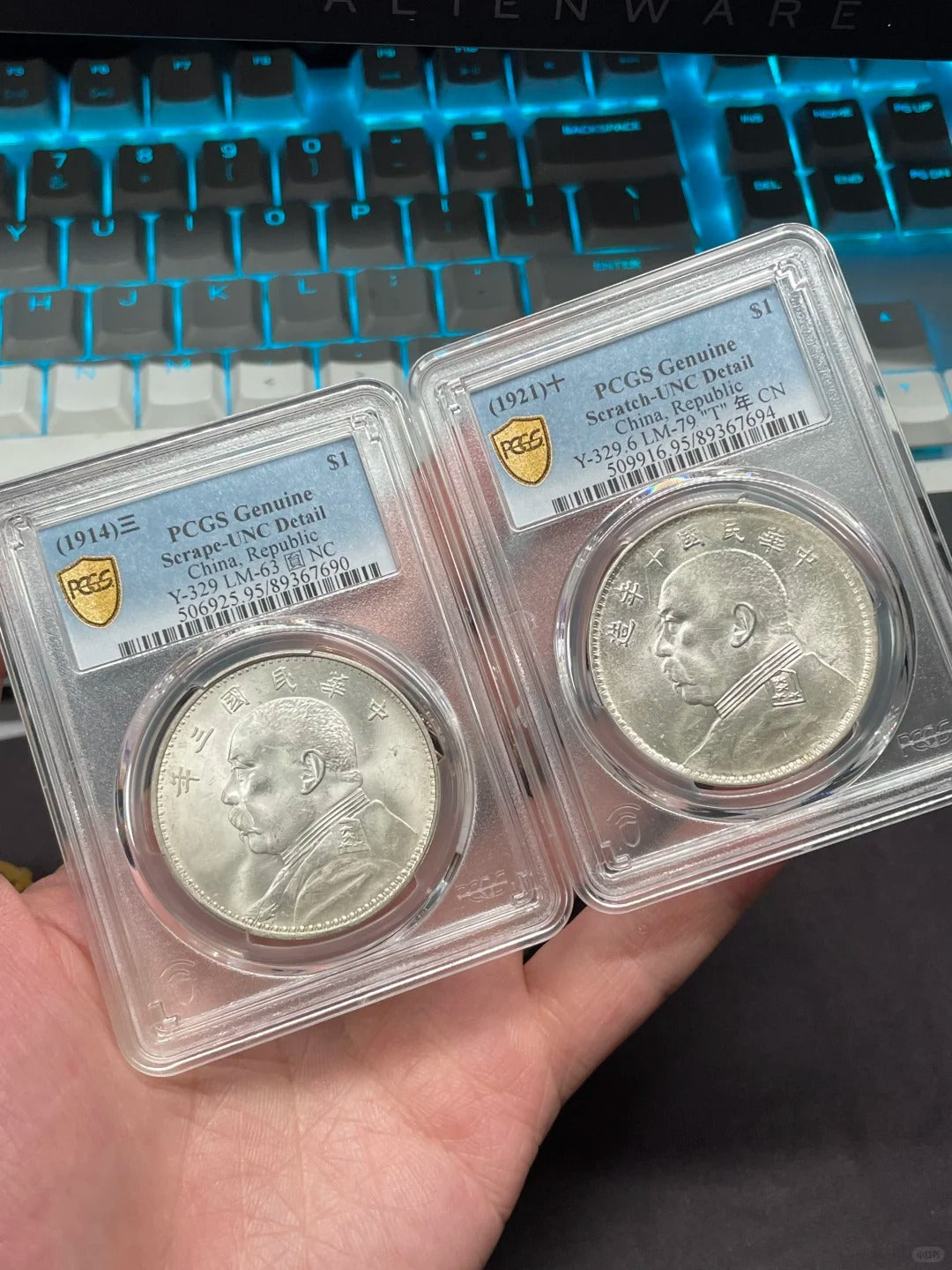
The relevant observation is the visible L.GIORGI lettering beside the Yuan portrait. Photograph the entire obverse first so its position relative to the portrait, date characters and denticles cannot be lost.
A signature question still requires the date, portrait lettering, grain wreath, denomination, inner border, circumference, original weight and diameter to be recorded from this dollar.
A detached close-up does not establish an L.GIORGI attribution. Letter shape, relief, surrounding strike, surface continuity, edge and possible later engraving need to be considered together.
Add condition evidence after the complete coin
Number each Yuan portrait dollar before grouping visible dates or proposed varieties. Keep its signature view, obverse, reverse, circumference and measurements as a single file set.
Do not adopt a specialist nickname until its stated diagnostic feature can be located on the complete coin. Full images come first.
If plastic or an old sleeve blocks a detail, retain the packaging image and name the blind area. Do not silently complete the signature from a reference coin.
Keep lettering, edge and attribution limits explicit
Make an overlapping record of the edge without filing, polishing or opening a holder. Note seams, holes, former mounting and solder wherever they appear.
A holder label and grade remain label evidence. Compare them with the enclosed date, portrait, wreath and visible surface rather than copying the attribution into the observation field.
Historical and production notes require a named reference and consultation date; inherited descriptions and online images remain provenance or research aids.
Keep this proposed signature on its own page
List the working name, every readable inscription, designs, available dimensions, enclosure and condition. Anything hidden by the holder remains pending.
Take complete portrait and wreath views, then map signature letters, hair, epaulette, date, denomination, denticles and other proposed markers back onto those faces.
Reconcile the checklist before fine attribution
Transcribe date, denomination and both face legends before comparing specifications. A weight or diameter without its identified type and instrument has limited value.
Photography can reveal a later scratch or obvious damage, while metal continuity and extremely fine alteration may require a specialist to inspect the coin directly.
Build the L.GIORGI file around the signature context
Keep two evidence groups under one number: the full portrait with the signature location, and the edge, weight, diameter, instrument and native units. Neither should be detached from the dollar.
Record the complete faces and raking-light damage views before recording what any label calls the coin. The label transcription and object observation should never share one undifferentiated sentence.
If a new photograph contradicts a previous reading, retain both versions with dates and repeat the same position. Do not select the more convenient reading without explanation.
A cropped signature, unmatched dimension or unidentified edge image stays out of the attribution until it can be tied back to the numbered object.
Before seeking a comparison, make sure every document, holder and image refers to this L.GIORGI candidate and not another Yuan portrait dollar.
