
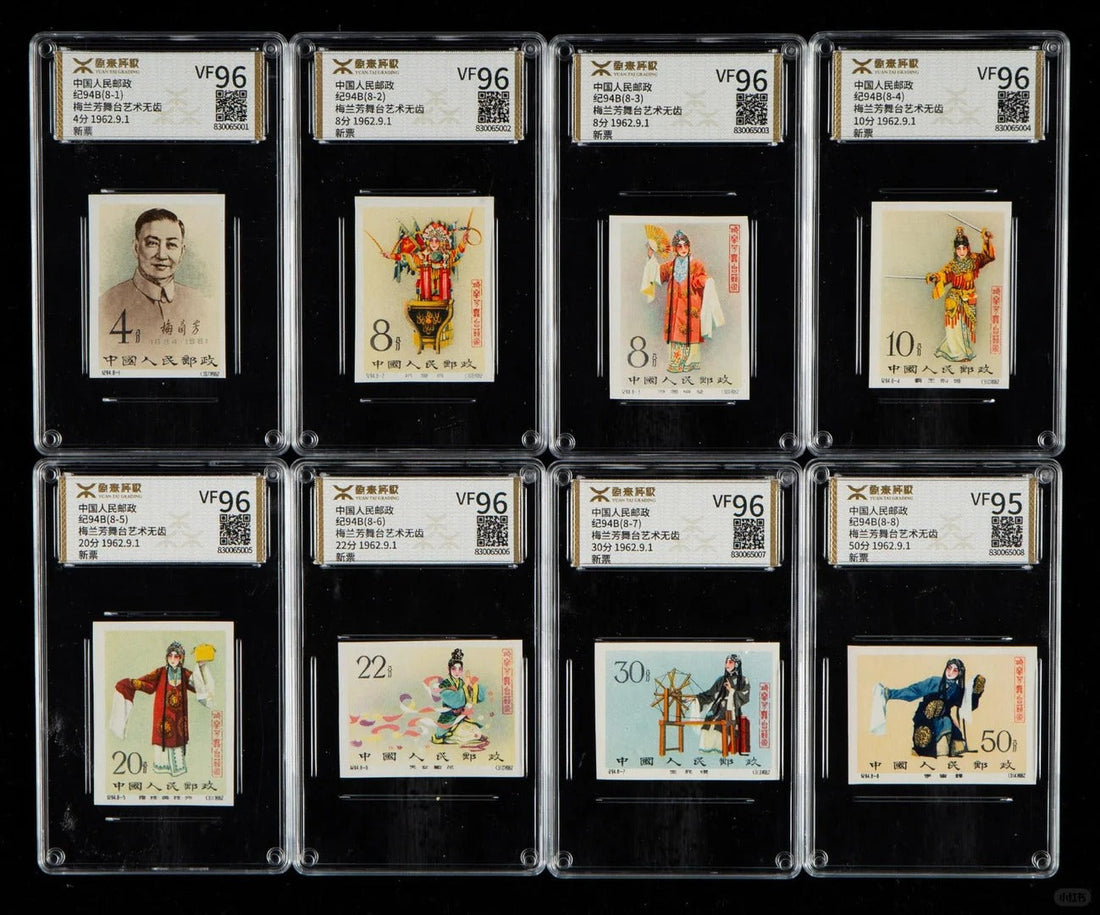
A dedicated file for the Mei Lanfang C94 souvenir sheet
The supplied issue data state that the C94 Stage Art of Mei Lanfang set was first issued on 8 August 1962: eight stamps totalling 152 fen, printed by photogravure, designed by Sun Chuan-zhe and produced by the Beijing Stamp Factory. A stage-photograph souvenir sheet followed on 15 September 1962.
For the Mei Lanfang souvenir sheet itself, separate overall dimensions, image area, perforations, gum, foxing, creases, thinning and old hinge traces. A single stamp, the eight-stamp set and the souvenir sheet are different objects.
Market multiples and asking prices are not paper features. Photographs establish layout and visible condition; paper, gum and later treatment may still need examination of the actual philatelic item.
Transcribe the item before opening an album
Record the working name, readable text, design, dimensions, enclosure and current condition. Leave any covered margin or reverse area unresolved.
If an album shows moisture or mould, isolate it with air circulation. Do not use heat, direct sunlight or cleaning agents to accelerate drying.
Do not let a collector name replace the object
Old album annotations, pockets and sequence can support provenance. Photograph the page structure first if brittle film makes removal unsafe.
Inspect perforations for short, missing, bent or reperforated areas, retaining margins, inscriptions and colour guides wherever present on the souvenir sheet.
Attach a source and consultation date to issue history. Handwritten labels and web images remain research indexes.
Give each philatelic format its own number
Compare the issue year, code, denomination and set count, then separate loose stamps, a block of four, full sheets, the souvenir sheet and covers.
Photograph an album from its cover through every page, preserving page numbers and sequence. Stop turning pages if damp stamps have adhered.
Store whole views, details, dimensions, packaging and documents under the object's number. Never fill a hidden area from a similar example.
Let the missing evidence decide the next action
A used stamp should retain its cancellation date and place; an entire cover retains front, back and seal. Do not cut the stamp away for convenience.
Original photographs show layout and obvious damage, while gum, fine repair and enclosed areas can require direct philatelic inspection.
Separate Mei Lanfang issue history from the paper evidence
Place the C94 code, the 8 August 1962 set facts and the 15 September souvenir-sheet date in a sourced issue field. The sheet's visible title, denominations and margins still need their own transcription.
Map every short perforation, foxed spot, crease, hinge trace and thin area on complete front and reverse views. Describe gum gloss or possible regumming as an observation, without washing or lifting an old hinge.
Do not merge the eight individual stamps, their total 152-fen denomination and the later stage-photograph souvenir sheet into one object record. Format is part of the identification.
Keep the album page, pocket, certificate and source note as numbered attachments. Their wording may explain custody, but it cannot supply paper or gum evidence hidden from view.
At handover, pair the Mei Lanfang sheet's overall and design-area dimensions with its margin, perforation and gum photographs. Any adhered or enclosed area remains explicitly unread.
