
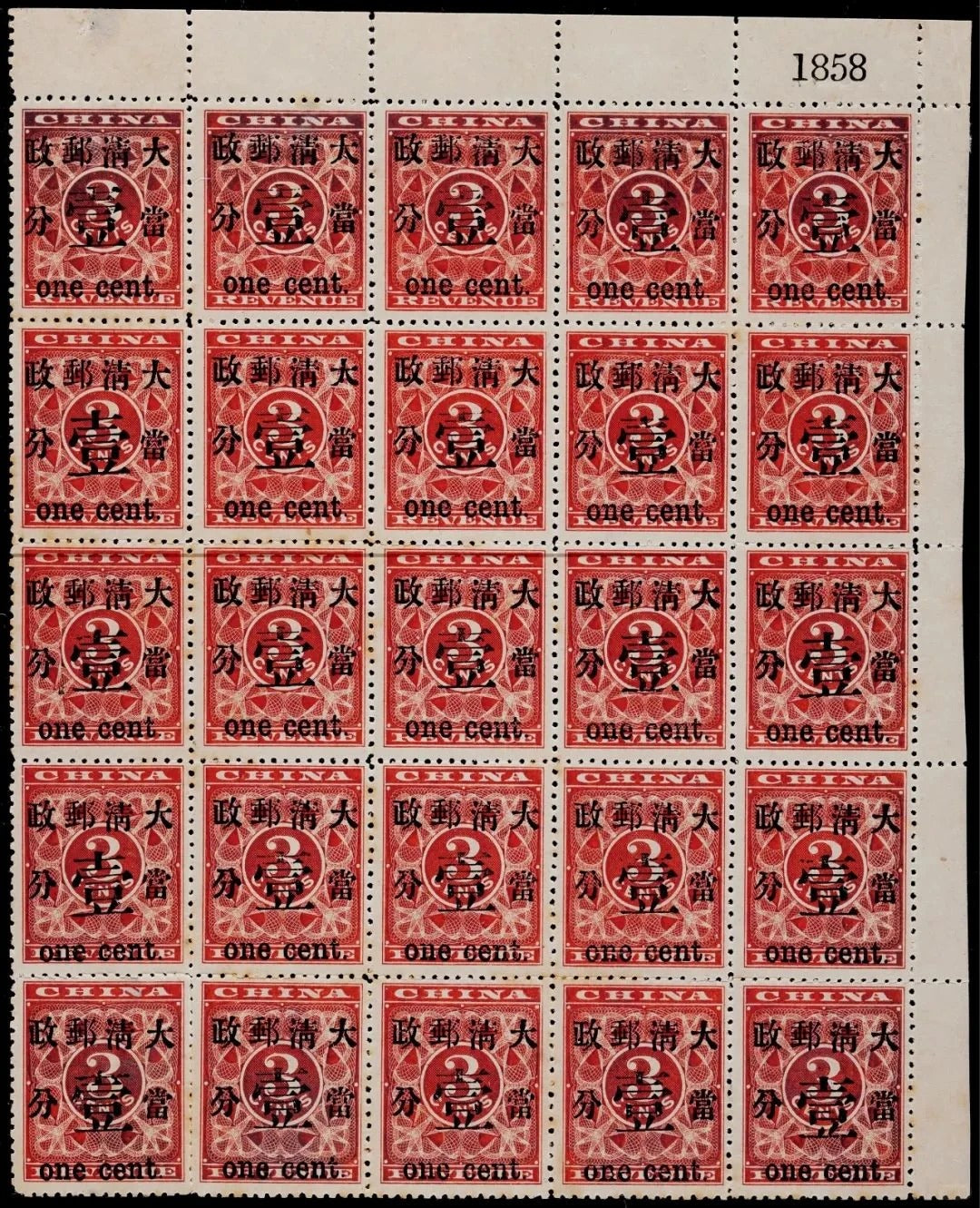
Keep Large Dragon and Red Revenue material separate
China Post records the Large Dragon issue as an 1878 Customs Post set of three: green one-candareen, red three-candareen and yellow or orange-yellow five-candareen stamps.
Later study often distinguishes thin-paper, wide-margin and thick-paper stages. Red Revenue overprints belong to another stamp type and need an independent object entry.
Photograph complete fronts, backs, all perforations and cancellations; for an overprint, retain the underlying design, added wording, position and colour together.
Start with size, wording and format
Transcribe every visible value and inscription before assigning a paper stage or overprint variety. Mark weak characters rather than completing them from a reference.
Isolate damp or mouldy album pages and stop moving adhered stamps; no heat, sunlight or cleaner should accelerate drying.
Preserve album restrictions
Separate singles, blocks of four, full sheets, souvenir sheets and covers. Record the physical format actually present.
Photograph an album from its cover through numbered pages, retaining handwritten notes and arrangement without forcing stuck mounts.
Use one reference number for full views, details, dimensions, packaging and supporting documents.
Avoid destructive handling
For used stamps, transcribe visible cancellation dates and places. A cover must retain its complete front, back, seals and attached stamp.
Images may reveal absent perforations or repairs, while paper, gum disturbance and concealed thinning can require direct review.
Keep provenance and history contextual
Old album notes and glassine packets may preserve ownership information. Photograph them without treating their wording as proof.
Map short, missing, bent or reperforated teeth; for sheets, retain margins, inscriptions, colour marks and connected perforations.
Cite issue and production facts with the source and consultation date, keeping online images outside the object condition entry.
Reconcile each stamp with its original album position
Large Dragon records separate set count, values, issue data, gum and condition; Red Revenue records keep the base stamp and overprint evidence together.
A positional condition map covers foxing, mould, creases, tears, thinning, regumming and repair more precisely than a broad grade.
Before storage or handover, each stamp should match its album page, mount and photograph number.
Adhered, brittle or enclosed items remain untouched until a postal specialist can address a defined question.
Complete imagery and original paper condition remain with the record; trimming, washing or separating joined stamps removes evidence.
