
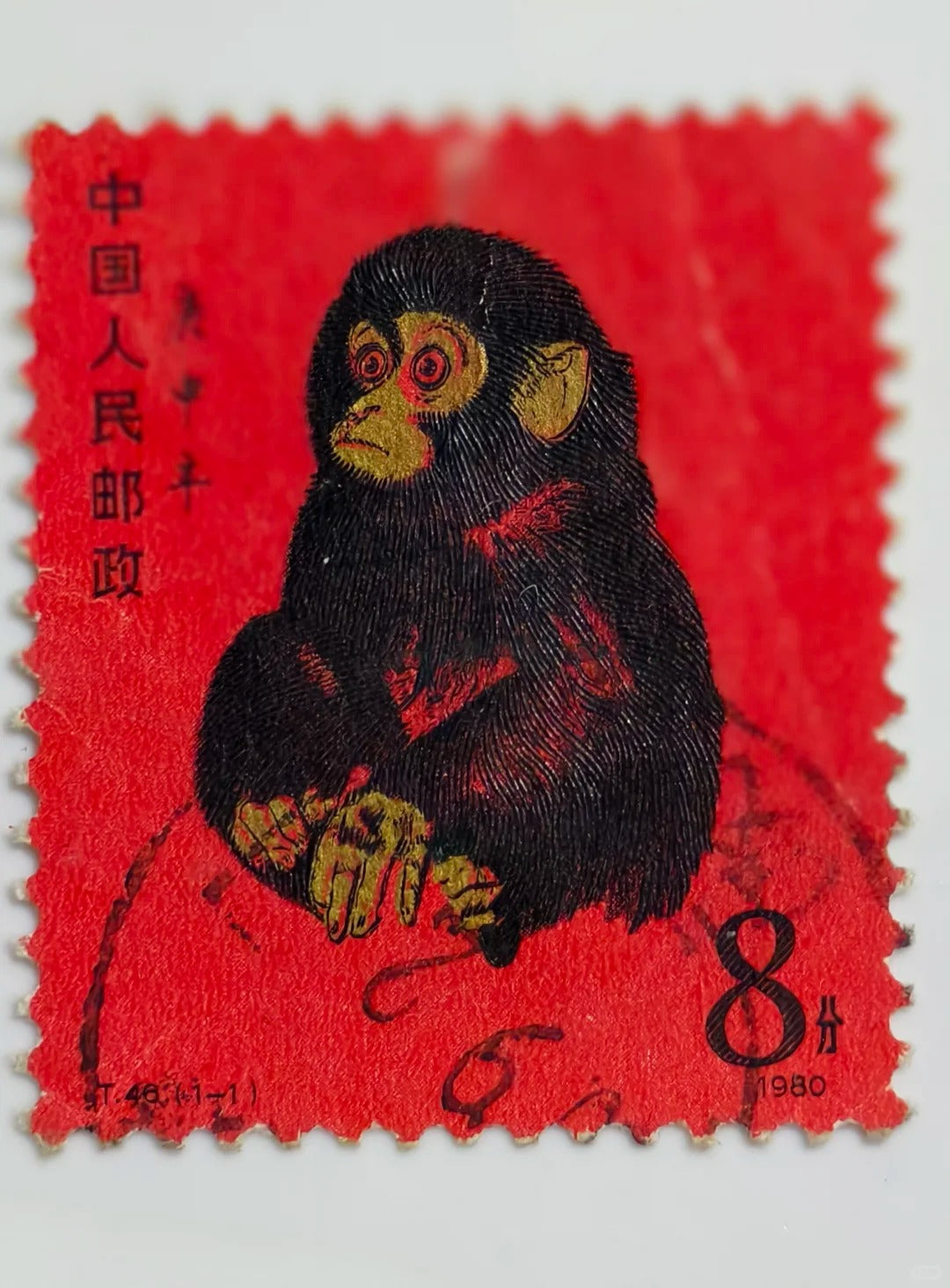
A famous stamp still needs an item-level record
Photograph the complete stamp, block or sheet before enlarging its design. Keep the issue code, printed value, inscriptions, margins and every perforation visible in the opening view.
For a T46 Monkey stamp, read the code and value from the item itself. For an item described as The Whole Country Is Red, preserve that working name without borrowing format or condition from another example.
Give each stamp or joined unit one reference number. Album page, mount, certificate and reverse image should all return to that number.
Identify the format before judging completeness
State whether the object is a single stamp, block, full sheet, souvenir sheet, cover or another format supported by the material. Do not call a trimmed or separated piece complete because its central design survives.
For joined material, count positions and retain margins, plate inscriptions and internal perforation junctions. For a single stamp, show all four sides and enough background to assess tooth length.
A used stamp needs its cancellation photographed with the design and any cover context. Do not detach it from an envelope merely to obtain a clean reverse.
Inspect perforations, gum and paper separately
Map shortened or absent perforations, pulled teeth, creases, thins, stains and tears to the complete front. Use neighbouring design or a grid position where repetition could cause confusion.
Photograph the reverse under neutral and raking light without touching gum. Distinguish original gum appearance from hinge remnants, adhesion, disturbance and uneven sheen only where visible.
Keep album and storage evidence intact
Record the page, mount, interleaf, sleeve or packet before moving the stamp. Foxing, dampness, brittle paper or adhesion may make removal unsafe.
If the item resists, stop and photograph the exposed contact. Pulling a stamp from an album can remove paper, gum or perforations and erase the storage evidence you need.
Retain the first album-page and exposed reverse views together. A later safe removal should add evidence while preserving the original position, mount direction and contact area.
Use references without importing rarity claims
Issue date, code, printing method or production history should come from an identified reference with a consultation date. Keep that research separate from the condition of this example.
Auction labels and online images can help locate design points. They do not prove gum, margins, cancellation or authenticity for the stamp in hand.
Know the limit of photographs
Clear images can establish format, issue markings, perforation condition and visible faults. Paper, gum disturbance, repairs and concealed album contact may still need direct review.
State which edge, reverse area or mount is inaccessible. Preserve the album relationship until a safe removal decision has been made.
Reconcile the issue name, code, printed value, format, margins, perforations, gum or cancellation and album position under one reference number.
Keep a famous design from overshadowing condition. A complete fault map is more useful than a broad claim that the stamp is rare or valuable.
Retain the first album photographs if the item is later removed safely. Date new reverse views, note exposed fibres or gum contact, and pass uncertainty forward without washing, regumming, trimming or repairing teeth.
