
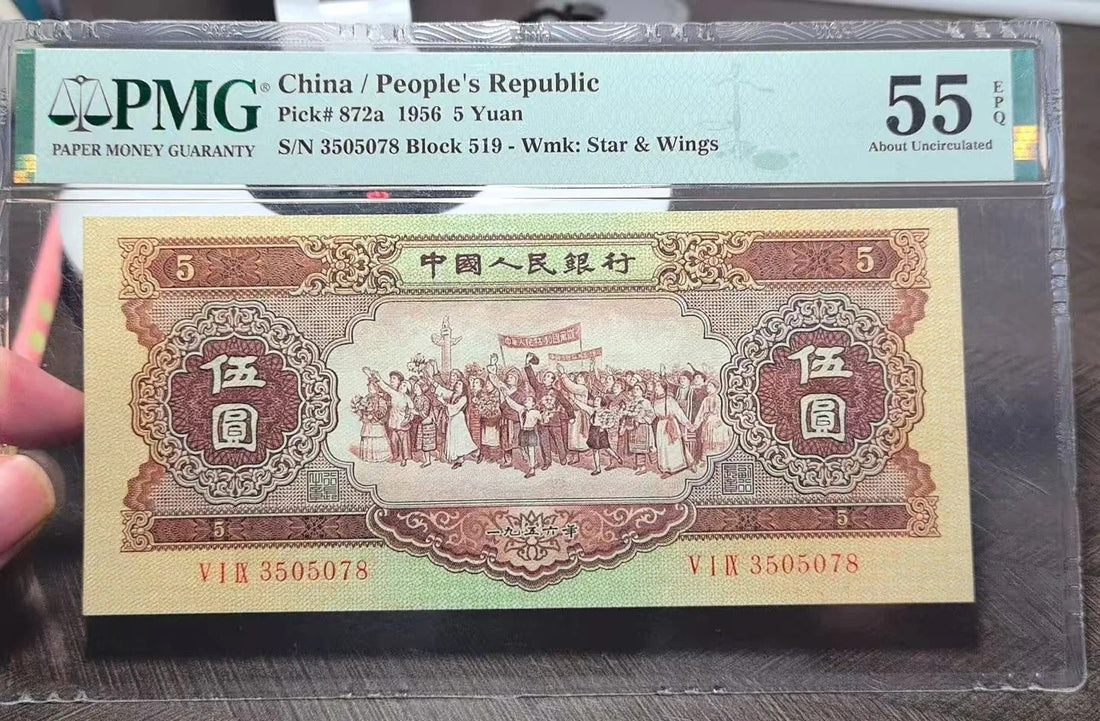
Read the Old Banknote Before Naming Its Version
Copy the series and value first, followed by the visible date, main artwork, prefix and serial before adopting a catalogue label or album caption.
Use one note identifier across its front, back, four corners, full perimeter, dimensions, wrapper and documentary references.
Leave an indistinct character open and retain the original frame, because a cropped enlargement may hide whether two details belong to the same note.
Attach Dates to Published Information
Record the named source and access date for issue history, production information or official dimensions, separating those facts from the observed object.
An old annotation, seller's description or similar online image can guide research but cannot complete the printed wording or serial.
Preserve both the documentary claim and the physical observation when they conflict, each with its own date and origin.
Photograph Paper and Printed Detail Deliberately
Capture parallel, evenly lit complete faces before serial, signature, design-boundary and damage close-ups, keeping every corner visible.
Use uniform backlighting for a possible watermark, and describe only the position and form that the unfiltered image actually reveals.
Separate Original Readings from Conversions
Keep dimensions, tools and native units beside the relevant note, and add any conversion as a labelled secondary value rather than a replacement.
For sealed bundles or consecutive runs, document seals, side views, visible count and first and last numbers before considering individual access.
Retain the existing album sequence, wrappers and page numbers so later review can reconstruct which face, note and enclosure were together.
Respond Safely to Paper Damage
Locate folds, edge splits, corner loss, stains, mould, adhesion, tape and suspected repair without brushing, dampening or ironing the paper.
Isolate damp, mould-affected or adhering material from unaffected paper and stop turning a page when movement would enlarge a tear.
A Seagull Five-Yuan Label Still Needs Note-Specific Evidence
A sleeve or album caption reading Seagull Five-Yuan is preserved as context until the denomination, printed designs, prefix and serial agree with the enclosed note.
Front and back photographs can establish visible layout and damage, while a watermark or fine paper repair may remain uncertain behind the mount.
Issue history and catalogue format belong to access-dated references rather than being inferred from the familiar collector name.
Mould, adhesion and brittle edges determine whether the note can be moved safely, regardless of how useful a reverse or transmitted-light photograph would be.
The record separates what the Seagull label claims, what this note visibly shows and which paper features still require controlled direct access.
