
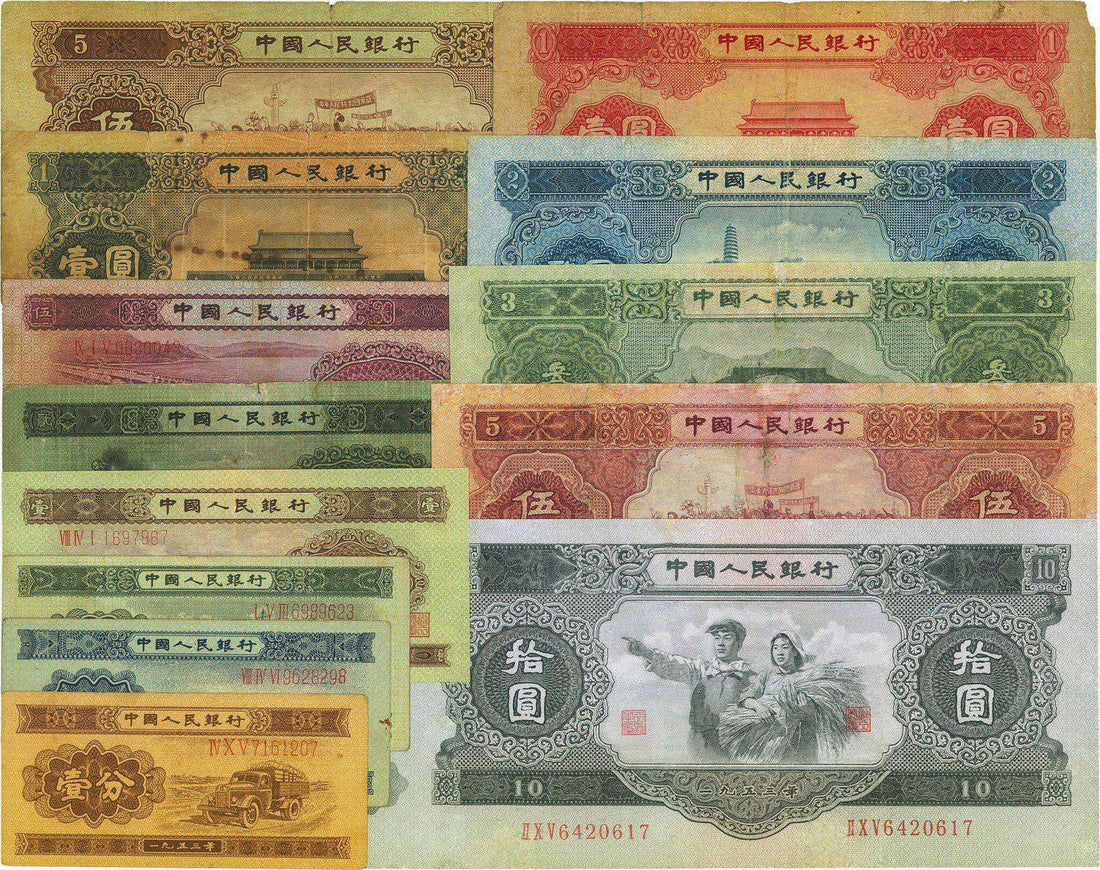
Separate Renminbi issue history from the note in hand
Use an identified reference for statements about the People's Bank of China, an issue, denomination or production method. Record when the source was consulted so later readers can distinguish historical context from current observation.
For the physical note, begin again with its complete front and back, printed value, visible date or issue wording, design and serial. Do not let a broad history supply details absent from the paper.
Give each banknote one number and keep its photographs, sleeve, album position and condition notes together. A mixed group should not share one serial or paper conclusion.
Build a note-level record
Photograph all corners and edges under neutral light, then add the prefix, serial, denomination and key inscriptions at readable size. Retain the full-face view as the location map.
Use transmitted or raking light only for features the note actually shows. Record the setup and orientation, and leave a suspected watermark or repair open when it cannot be repeated.
Describe physical condition by location
Map folds, stains, foxing, pinholes, tears, washing, pressing, tape and repairs by position, keeping condition with the individual note rather than its issue history.
A booklet, certificate, envelope or album page may clarify storage and ownership. Photograph it with the item number while avoiding any claim that the accessory proves authenticity.
Catalogue and online images can show where to look for an inscription or design detail. They must not provide a serial, paper feature or condition statement for this note.
Organise a collection without erasing differences
Group notes by supported series, denomination and design, then number every item. When a series or date is uncertain, keep a temporary descriptive name rather than forcing the note into the nearest category.
Retain original order when a set, run or album sequence may matter. Photograph the arrangement before separating pieces and record any missing or substituted position.
Preserve the first group and item views together. A later reclassification should add a dated explanation without replacing the images that show the note's original order and storage.
Protect the paper while collecting evidence
Use a dry, clean support and handle only where safe. Do not iron folds, wash stains, apply tape or peel a mounted edge to improve presentation.
If moisture, brittleness or adhesion is present, stop movement and photograph the affected area in context. Direct inspection can then focus on a safe storage or removal decision.
Know what a remote review can and cannot establish
Images can support denomination, design, visible serial and conspicuous damage. Paper texture, subtle repair and treatment history often remain uncertain without the note in hand.
State those limits next to the relevant item number. A useful record does not hide uncertainty behind general statements about Renminbi collecting.
Check that every historical statement has a cited reference and date, while every material observation returns to an actual banknote photograph. The two evidence streams should meet only where both support the same point.
Confirm that serials, watermarks, folds and repairs have not migrated between notes. Keep group images for order and quantity, not for individual condition conclusions.
Retain the first scans when a note is reclassified, date the evidence behind the change, and pass unresolved paper or mounted areas forward. Return each note to stable, dry storage without pressure.
