
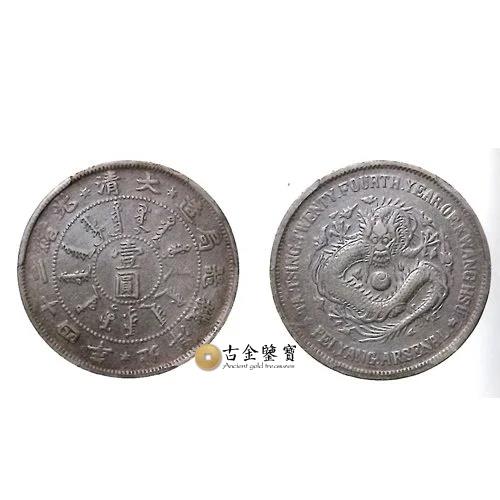
Review a Peiyang Year 34 dragon dollar in a fixed order
Begin with the mint or mint name, date inscription, Kuping denomination and all legible wording. Keep the complete edge sequence, weight, diameter, measuring tool and original unit under the same item number.
Note visible mintmarks, chop marks, holes and altered-edge areas separately from attribution. The checklist should let another person repeat the examination without turning an uncertain feature into a variety or date.
Transcribe an old label exactly and note when it was checked, but treat it as background. Where evidence is missing, state the reason and leave the answer open.
Read the coin before relying on its market name
Give each Peiyang Year 34 Guangxu Yuanbao its own number. Record the working identification, visible inscriptions and design, dimensions or weight, enclosure and surface condition; flag every obscured area.
Dragon dollars sold under one familiar name may differ by mint, date, denomination or dragon design. Sort them by the inscriptions actually present before considering finer variety details.
Keep attribution and condition evidence distinct
Transcribe the mint, date inscription, Kuping denomination and wording on both faces. Compare weight and diameter only with the same coin type, and keep each image tied to the numbered coin.
Describe patina, circulation wear, strike weakness, wiping lines and colour associated with chemical cleaning as separate observations. Dark or uneven toning is not a reason to clean the coin; identify anything the holder prevents you from seeing.
Any production, issue or historical statement needs a named reference and consultation date. Old labels, oral accounts and online images may guide research, but they do not supply missing inscriptions.
Carry one item number around the whole edge
Photograph the circumference in overlapping sections. Leave seams, edge alteration, holes, solder and traces of former jewellery use untouched, and make every detail locatable on an overall view.
A grading holder contributes a label and grade only. Check that the enclosed mint, date, denomination, dragon design and surface agree with it, and leave hidden features unresolved.
Use the same identifier on complete views, close-ups, measurements, packaging and documents. Preserve the first reading and unit when later information is added.
Let the evidence gap determine the next step
Store chop-mark notes, an old paper sleeve and provenance accounts apart from direct observation. Inspect the lettering, dragon, beaded border, metal surface and edge on their own merits.
Photographs can establish visible design and conspicuous damage, but they may not settle metal, faint hairlines or repair beneath packaging. Keep the enclosure intact and identify which Kuping text, motif or edge section still needs direct examination.
Final checks for a Peiyang Year 34 Guangxu Yuanbao
Start the focused review with the mint, date and Kuping denomination. Keep those inscriptions together, while full obverse, reverse and dragon details form a separate image set; both must return to the item number.
Confirm that every mintmark, chop mark, hole, altered edge, sleeve, grading holder and old label points to the correct coin. Date converted measurements, oral accounts and later additions separately, then look again for gaps in the mint and denomination.
Images can support inscriptions, design, proportions and obvious damage. Metal, hidden hairlines and subtle later work may still require examination of the coin itself, so retain those limitations with its number.
Leave the silver coin as found: no cleaning, polishing, scrape test or edge filing. Do not open a grading holder or sealed package until the need, location and possible effect have been explained.
Before closing the enquiry, review colour and possible later treatment once more. Include only what the coin, photographs and numbered measurements support.
