
 WhatsApp item photos
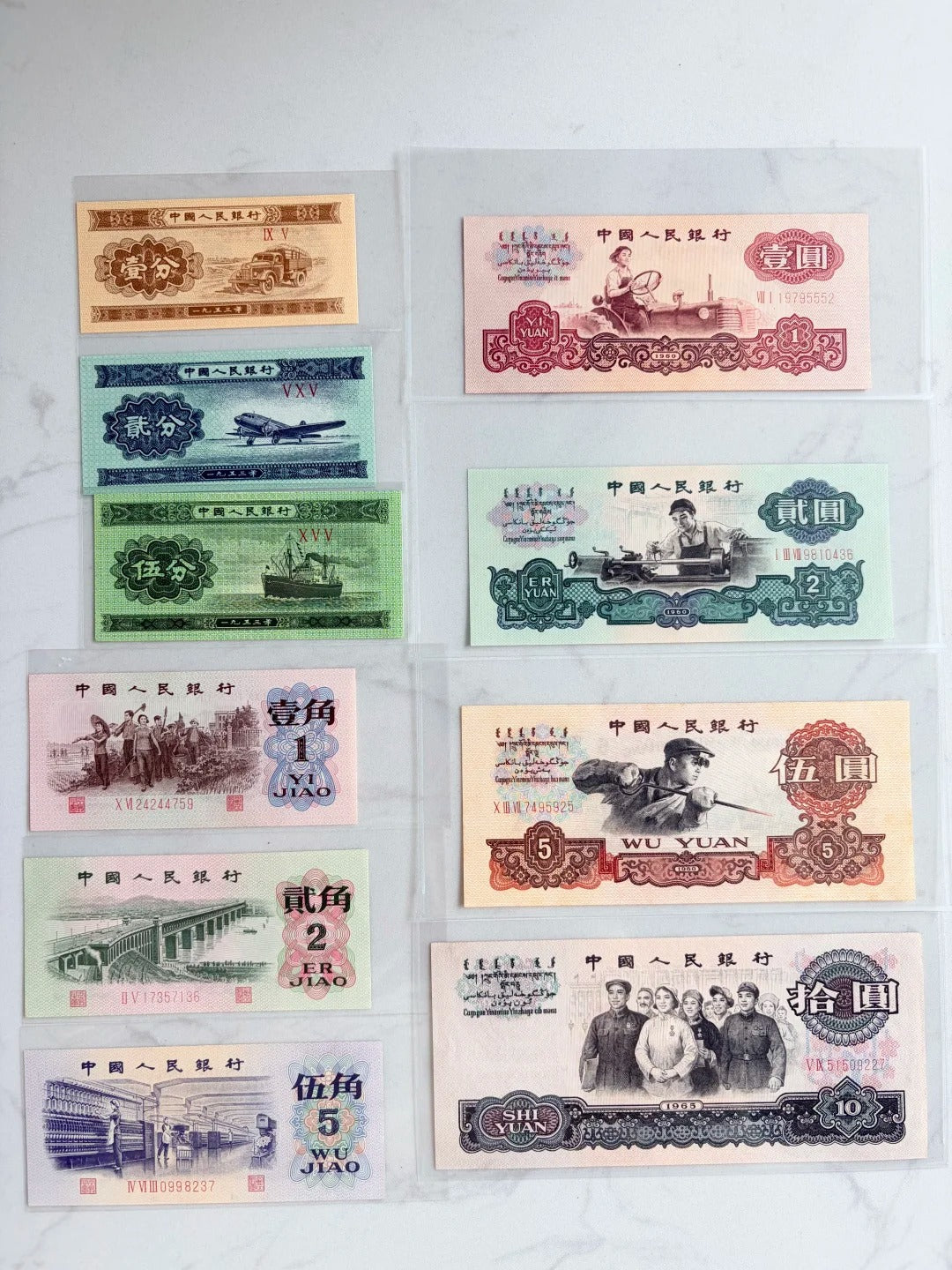
Treat the set view and the individual note as different records
Photograph the group in its present order before moving anything. The set view establishes arrangement and quantity; it does not show every serial, corner or repair clearly enough for an individual conclusion.
Give each note a number and make uncropped front and back images. Record the denomination, visible date or issue wording, principal design and full serial only from that numbered note.
What belongs on the first pass
List the supported series, denomination and design, then describe the paper, corners and edges. Leave a finer variety open until the relevant colour, watermark, printing or inscription can be shown on the note itself.
Preserve album and sequence evidence
Keep album page numbers, sleeves, envelopes and labels with the note references. Photograph empty positions or later substitutions rather than silently rearranging the group into a more complete-looking set.
If serial order matters, retain a group image and individual readable views. Never infer a covered digit or consecutive run from neighbouring notes.
Separate variety checks from condition grading
Use neutral light for printed colour and design, transmitted light only for a feature that is genuinely visible, and soft raking light for folds, pressing or repairs.
Describe foxing, stains, tears, pinholes, missing paper, washing, tape and patching by position. Those observations should not be folded into a variety name.
A familiar nickname may help locate reference material, but it cannot prove a green back, watermark or printing distinction. Keep the proposed term outside the confirmed section until the evidence agrees.
Make comparison photographs useful
Show the entire note before enlarging a denomination, portrait, machinery, bridge or other design detail. The close-up needs enough adjacent printing to establish its position and orientation.
When comparing two examples, keep their serials, transmitted-light images and measurements separately labelled. A feature visible on one note cannot repair a gap in the other.
Protect the paper while checking a collection
Work on a clean, dry support and avoid pressure on brittle corners. Do not flatten old folds, wash discolouration or peel adhesive mounts for the sake of a complete photograph.
If notes are stuck, damp or fragile, document the album contact and stop. Safe direct review is preferable to losing an edge or disturbing an original sequence.
After photography, return each note to its numbered sleeve or original album position, then verify the restored group order against the opening overview.
Keep contextual sources separate from object evidence
An old certificate or family account may explain how the set was stored. Match it to the relevant group, but confirm denomination, variety and condition from the notes.
Finish by reconciling every Third Series note against the group count, serial sequence, denomination, design and condition map.
Check every note number against its two faces, serial, denomination, design and condition map. Then compare the set photograph with the individual list for missing, duplicated or substituted positions.
Retain the first photographs if a variety is later revised. Date the change and identify which visible feature or cited evidence supported it.
Keep unresolved watermarks, colour distinctions or repairs on a separate question list. Do not let a desire for a complete set turn uncertainty into fact.