
 WhatsApp item photos
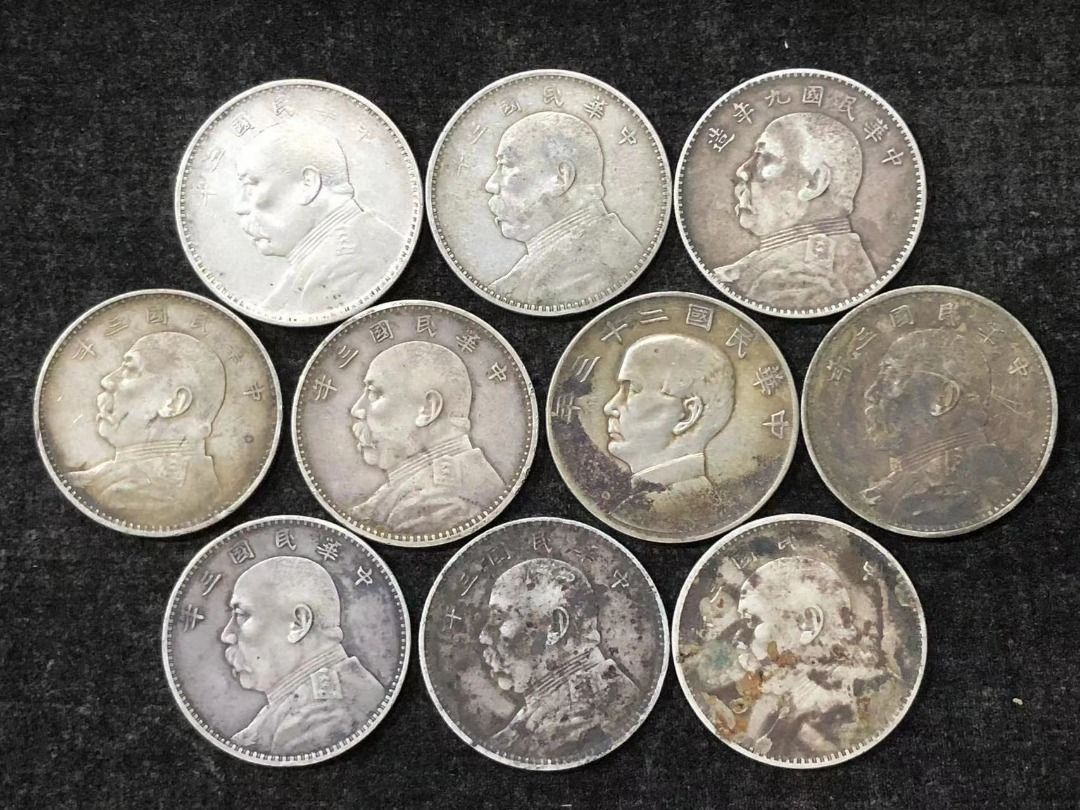
Make a Yuan Shikai variety claim locatable
Start with both complete faces and a coin number. A close-up of one letter or hair strand cannot establish a variety unless its position on the whole coin is clear.
Obverse fields: visible year characters, portrait hair, ear, epaulette, surrounding lettering and denticles.
Reverse fields: denomination, grain wreath, grain heads, knot, border and any proposed marker.
Read the Year and Lettering First
Transcribe the visible year, portrait lettering, hair and epaulette in orientation before applying a nickname or finer variety term.
Transcribe the complete visible inscription in orientation, marking uncertain strokes. Do not select a year because the holder or a similar coin supplies it.
Photograph hair, epaulette and lettering with enough surrounding design to relocate them. Repeat the method for wreath, knot and denomination on the reverse.
Use Conditional Names Carefully
Signed type, O variety, triangular-yuan variety and regional labels require their defining markers to be visible on matched complete faces.
If a named marker conflicts with the surrounding lettering or reverse design, retain both observations and leave the finer attribution unresolved.
Make the Edge and Readings Repeatable
Choose a photographed rim marker as the start of the circumference sequence and keep every frame under that Yuan Shikai coin number.
Capture the full circumference in overlapping sections from a fixed start. Preserve seams, altered areas, piercings, solder and former jewellery traces without filing.
Record scale and calliper readings with the coin number and tool display. Specifications can test a plausible type, but cannot replace missing lettering or design.
Separate Condition from Diagnostics
Describe patina, wear, weak strike, hairlines and rim work independently, preserving unexpected measurements and the uncleaned surface.
Use neutral light for complete designs and raking light for hairlines, flattened relief and rim work. Patina, wear, weak strike and cleaning evidence require distinct descriptions.
When a Yuan Shikai Variety Marker Is Actually Locatable
Check year characters, portrait features, lettering, reverse design, denticles and edge against the complete coin, noting everything a holder obscures.
Confirm year characters and complete portrait-side lettering, then locate hair, ear and epaulette markers. Turn to the reverse only after those images are indexed.
Read denomination, wreath and knot, follow the denticles, and complete the edge sequence. All views and measurements must point to the same specimen.
Arrange direct examination if glare, a sealed holder or conflicting diagnostics prevent a responsible decision. State the exact feature that needs access.
Before an enquiry, preserve unedited images, old labels and every tentative wording. A transparent gap is more useful than a forced market name.