
Collectible appraisal
1878 US Morgan Dollar
Start with photos so we can assess type, condition and market direction. Higher-value or uncertain items can then be checked in person.
WhatsApp photos for appraisal Front, back and edge photos are usually reviewed firstFree photo review Phone 852 98342057


Collectible appraisal
1878 US Morgan Dollar
Start with photos so we can assess type, condition and market direction. Higher-value or uncertain items can then be checked in person.
1878 US Morgan Dollar
Photograph the front, back, side or edge, plus any close-up details. Include dimensions, the measured weight, certificates or original packaging where relevant.
The supplied identity is a United States silver coin dated 1878 with Morgan Dollar wording. No denomination or weight standard is separately supplied, and no person, principal design, mint or mintmark is named. Treat Morgan Dollar as the supplied issue wording, not permission to add familiar imagery.
Item details and appraisal notes
The supplied identity is a United States silver coin dated 1878 with Morgan Dollar wording. No denomination or weight standard is separately supplied, and no person, principal design, mint or mintmark is named. Treat Morgan Dollar as the supplied issue wording, not permission to add familiar imagery.
Keep Morgan Dollar wording separate from an unstated face value
| Feature | Supported evidence |
|---|---|
| Object | United States silver coin |
| Date | 1878 |
| Issue and denomination | Morgan Dollar wording; no denomination or weight standard is supplied. |
| Country and design | United States; no person or principal design is supplied. |
| Boundary | The year, country and issue wording support a broad attribution; authenticity, mint and exact variety still require separate evidence. |
Start with 1878 and the issue attribution
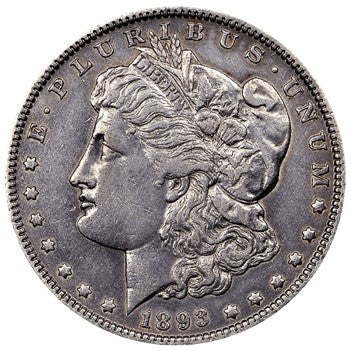
1878 date: Photograph the complete date with adjacent lettering, border and rim. Use a second light angle on weak strokes rather than completing them digitally.
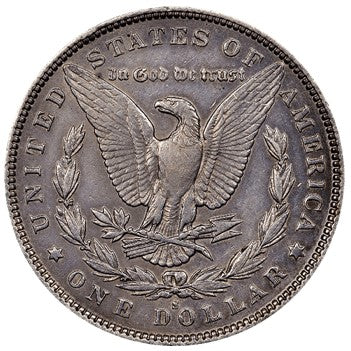
Morgan Dollar wording: Keep the attribution tied to both complete faces and the edge; do not assume that the words themselves must appear as a continuous inscription.
Open design, value and mint: Do not add a person, principal motif, denomination, weight standard, mint or mintmark from another United States coin. Physical resemblance cannot fill those fields.
Three evidence groups for the 1878 coin
Relief and lettering: Compare raised lines, fields, borders and visible legends under matched illumination before distinguishing weak strike from circulation wear.
Edge and dimensions: Make an ordered circumference sequence and show tool and unit for safe readings. Weight, diameter and thickness are cross-checks only.
Surface history: Retain toning, hairlines, deposits, contact marks and old cleaning. Locate damage or repairs on full views before enlarging them.
Keep a loose coin and its packaging unchanged
Hold the edge over a padded dry area and leave any grading holder closed. Photograph a detached ticket or box separately, keeping its association conditional unless corroborating evidence connects it.
Foreign-silver research and handling
Consult Foreign Silver Coins and Junk Dollar, French Indochina Piastre and British Trade Dollar Records. The method cannot supply this coin's absent denomination, person, design, mint or mintmark.
Different coins carrying dated attributions
Send the 1878 date, complete faces, edge sequence and any conditional packaging to About Gu Jin Jian Bao | Collection Enquiries, WhatsApp 9834 2057 or Phone +852 9834 2057. Identify the United States and Morgan Dollar wording while keeping the denomination, person, design and mint open.
Questions before an appraisal
What should you check before selling?
What matters depends on the item. Photograph both sides, the edge, hallmarks or base marks, and any damage. Include the original box, certificate or weight information where relevant so we can decide whether an in-person inspection is needed.
