In old Hong Kong buildings, one might occasionally stumble upon a blackened silver coin or two at the bottom of a camphor chest or drawer. The obverse usually features a human head, while the reverse depicts either a sailing ship, a standing goddess, or an eagle clutching a snake—many clients'first question when sending photos is:"Is this a'Ship Dollar'?"In fact, simply mentioning"ship"might already be half-wrong.
Ship Dollars, Seated Dollars, Standing Dollars, Mexican Eagle Dollars, Spanish Pillar Dollars… Although they all look like"small silver discs,"their origins, years of mintage, market popularity, and buyback prices can vary greatly. This article brings together several common foreign/Republic of China silver coins found in the Hong Kong and Macao markets, along with some practical tips for condition assessment and authentication, so you have a general idea when tidying up your home.
1. Ship Dollars, Seated Dollars, Standing Dollars: The three most easily confused silver coins
These three types of silver coins are the most frequently encountered"foreign/Republic of China currency"combination in the Hong Kong buyback market. Their names are similar, and their sizes are close, making them easy to confuse for newcomers. Let's start by distinguishing them based on their designs.
1. Ship Dollar: The main currency of the Republic of China in 1933 and 1934
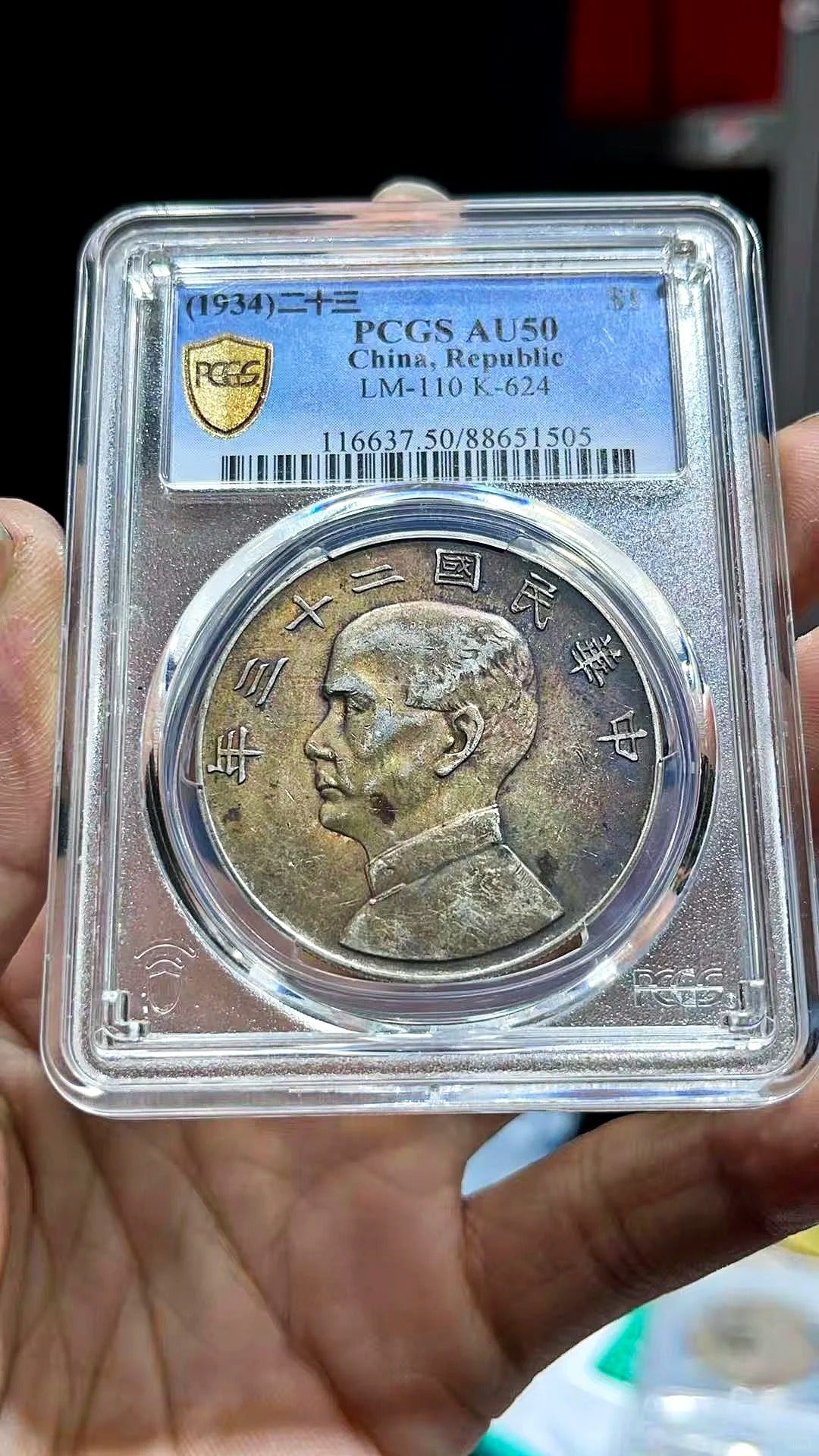
The Ship Dollar is not a foreign coin; it is a"national currency"minted by the Nationalist Government of the Republic of China in the 1930s. The obverse features a profile of Sun Yat-sen, and the reverse depicts a two-masted sailing ship sailing out to sea, which is why it is colloquially known as"Ship Dollar"in the trade.
- Common Years:Republic of China Year 22 (1933) and Year 23 (1934). The Year 22 version has a smaller mintage and is relatively more sought after.
- Buyback Market:Stable purity, mature design, high market liquidity. General circulated pieces sell for around HK$1,200–2,200, while uncirculated specimens with original luster or graded coins can reach over HK$5,000.

2. Seated Dollar: Trade silver of French Indochina
The official name for the Seated Dollar is"French Indochina Trade Dollar."Because the reverse features a seated Goddess of Liberty, it is simply referred to as"Seated Dollar"in the trade.
- Design Features:The goddess holds a fasces in her right hand and steers a rudder with her left; below are the year (1885–1928) and the silver content"0.900."
- Buyback Market:Price difference mainly depends on the year. Early issues like 1885 and 1886 have smaller mintages, with common grades fetching HK$2,500–4,000; later common years such as 1900 and 1908 mostly fall between HK$700–1,400.

3. Standing Dollar: British trade silver, the most common type in Hong Kong
The Standing Dollar is a"British Trade Dollar"issued by the British Royal Mint specifically for Far Eastern trade between 1895 and 1935. The obverse features the standing Goddess Britannia, holding a trident and shield, hence the name"Standing Dollar."
- Design Features:The reverse has Chinese characters"Yi Yuan"(One Yuan) and Malay"Ringgit,"this multi-lingual design is a hallmark of the Standing Dollar.
- Buyback Market:Common years like 1902 and 1908 in circulated condition are approximately HK$1,500–2,800; early issues from 1895, 1899 with a B mint mark (Bombay) in original luster can easily exceed HK$10,000.

The simplest way to distinguish these three: if the reverse features aship, it's a Ship Dollar (Republic of China); if it's aseatedgoddess, it's a Seated Dollar (French Indochina); if it's astandinggoddess, it's a Standing Dollar (British trade silver). Japanese Dragon Dollars and Mexican Eagle Dollars are almost impossible to confuse once you see the dragon/eagle motif.
2. Market Popularity Comparison of Common Foreign/Republic of China Silver Coins in Hong Kong and Macao
The table below summarizes some of the most frequently seen silver coins in the Hong Kong buyback market, helping you make an initial assessment of your collection. Prices are converted based on 1 Renminbi ≈ 1.1 HKD and are for reference only; actual prices depend on the silver spot price of the day and the condition of the physical item.
| Coin Type | Main Years/Versions | Core Features | Buyback Popularity | Key Premium Factors |
|---|---|---|---|---|
| Ship Dollar | Republic of China Year 22, 23 | Sun Yat-sen portrait, sailboat motif | ⭐⭐⭐⭐⭐ | Year 22 version is scarcer, original luster significantly adds value |
| Seated Dollar | 1885–1928 | Seated Goddess of Liberty, French inscription | ⭐⭐⭐⭐ | Year determines rarity, weight must meet standards |
| Standing Dollar | 1895–1935 | Goddess Britannia holding trident | ⭐⭐⭐⭐ | Edge nicks, mint mark (B/C), and completeness of patina |
| Japanese Dragon Dollar | Meiji, Taisho periods | Text year on obverse, double dragons on reverse | ⭐⭐⭐⭐⭐ | Meiji Year 3, 8 Ichien are highly sought after |
| Mexican Eagle Dollar | Mid-to-late 19th century | Eagle clutching snake motif | ⭐⭐⭐ | Numerous varieties, fineness is key assessment point |
| Spanish Pillar Dollar | 18th century | Carlos portrait, crowned pillars | ⭐⭐⭐⭐ | Ancient, favored by experienced collectors |
(Note: The above reflects market observations in Hong Kong and Macao over the past three months. Actual transactions depend on the silver spot price of the day, condition, and graded coin scores.)

For the relationship between Japanese Dragon Dollars and early Republic of China silver dollars, you can also refer to theJapanese Dragon Dollar Ichien Buyback Guide; if you have other old silver dollars that you want to have appraised at once, theCentralized Appraisal of Old Silver Dollarsarticle lists common ranges for Yuan Datou, Guangxu Yuanbao, etc.
📷 Not sure if the coin you have is a Ship Dollar or a Seated Dollar?
Send three clear photos of the obverse, reverse, and edge to us viaWhatsApp 98342057, and we'll reply within half an hour with an identification and preliminary estimate. Appraisal is free, and there's no obligation to sell.
3. Why Condition is the Lifeline for Premiums on Foreign Silver Coins
Similar to Republic of China silver dollars, the final offer price for foreign silver coins is only partly based on the silver price; a larger weighting is given to their condition. A price difference of several times between a common circulated coin and a pristine, uncirculated one with original luster is normal.
- Physical Integrity:Chips, missing reeding, deep nicks, and cleaning marks will immediately relegate a silver coin to the"damaged"category, causing its buyback price to drop significantly, even by half.
- Patina:The natural oxidation layer that forms on the surface of genuine silver dollars, ranging from light to dark, is evidence of over a hundred years of circulation and a key factor in authenticating them.Remember not to use silver cleaner, toothpaste, or abrasive cloths to clean them.Cleaning damages the surface structure of the silver and immediately halves its market value or more. For the principles behind patina and preservation methods, the articlePatina and Preservation: The Key to Valueprovides a more detailed illustrated explanation.
- Microscopic Details:Under magnification, observe the inscriptions and reeding. Genuine coins have full, sharp lines; high-quality fakes often have soft details, blurry backgrounds, and uneven reeding.

4. Preliminary Authentication of Foreign Silver Coins: Several Methods You Can Do at Home
Before waiting for professional appraisal, you can make a rough judgment using the following methods:
- Sound Test:Gently tap the edge of a genuine silver dollar with another silver coin, and it will produce a clear, melodious sound with a long resonance; steel fakes will have a sharp sound, while copper-core fakes will have a dull sound.
- Weight Test:A standard One Yuan silver dollar weighs approximately 26.5–26.7 grams and has a diameter of about 39 mm. Be wary if it is noticeably lighter or heavier, or if the size is incorrect.
- Magnet Test:Silver itself is not magnetic. If it sticks to a magnet immediately, you can rule it out as genuine silver.
- Magnifying Glass for Inscriptions:Genuine coins have deep, crisp strokes with metallic luster; cast fakes often have pitting and indistinct text outlines.
For more advanced techniques like tapping for sound and comparing reeding, refer toSound Test for Authenticity: Three Ways to Identify Family Heirloom Silver Dollars.
5. Buyback Process: Delivery Methods in Hong Kong and Macao
- Online Preliminary Appraisal (Free):Send clear photos of the obverse, reverse, and edge via WhatsApp, and we will compare them with recent transaction records to provide a reasonable estimated price range.
- Appointment for Meeting:If you are satisfied, you can schedule a free home visit anywhere in Hong Kong, Kowloon, or the New Territories, or visit our shop for a physical re-inspection. Macao clients can arrange a meeting point in Wan Chai/Central.
- Instant Transaction:After on-site confirmation, payment will be made instantly via cash or Faster Payment System (FPS). The entire process is transparent, and a receipt can be issued.
6. Silver Coin Storage: While Awaiting Appraisal, Not Rushing to Sell
With Hong Kong's summer humidity often reaching 80-90%, carelessly stored silver coins can quickly develop uneven dark spots—this is not desirable patina, but uneven oxidation, which will lower their condition score. Recommendations:
- Humidity Control:Use an electronic dry cabinet, set to 45%–55% relative humidity.
- Physical Isolation:Avoid touching the coin surface with bare hands; use cotton gloves or wooden tweezers.
- Separate Storage:Store each coin in an individual paper holder or plastic capsule to prevent mutual impact.
- Avoid Light:Prolonged exposure to strong light can cause premature discoloration of patina, so store in a cool, dark place.
Conclusion
Although Ship Dollars, Seated Dollars, and Standing Dollars are all"small silver discs,"each has its own historical context. If you find one while tidying up, don't rush to polish it, and especially don't try any cleaning"hacks"copied from eBay—keeping it in its original state and having a professional examine clear photos is the safest approach.
Contact Information
- WhatsApp:98342057
- WeChat:john19998
- Phone:852-98342057
Free home visits in Hong Kong, Kowloon, and the New Territories. Delivery can be arranged in Macao. All appraisals are free.
Want to know which"Yang"your coin is?
Free appraisal, estimated value provided within 30 minutes, same-day doorstep purchase, instant cash payment. Send us a photo via WhatsApp, and we'll immediately help you identify Ship Dollars, Seated Dollars, Standing Dollars, and their years, no need to visit our shop in person.
