
 WhatsApp item photos
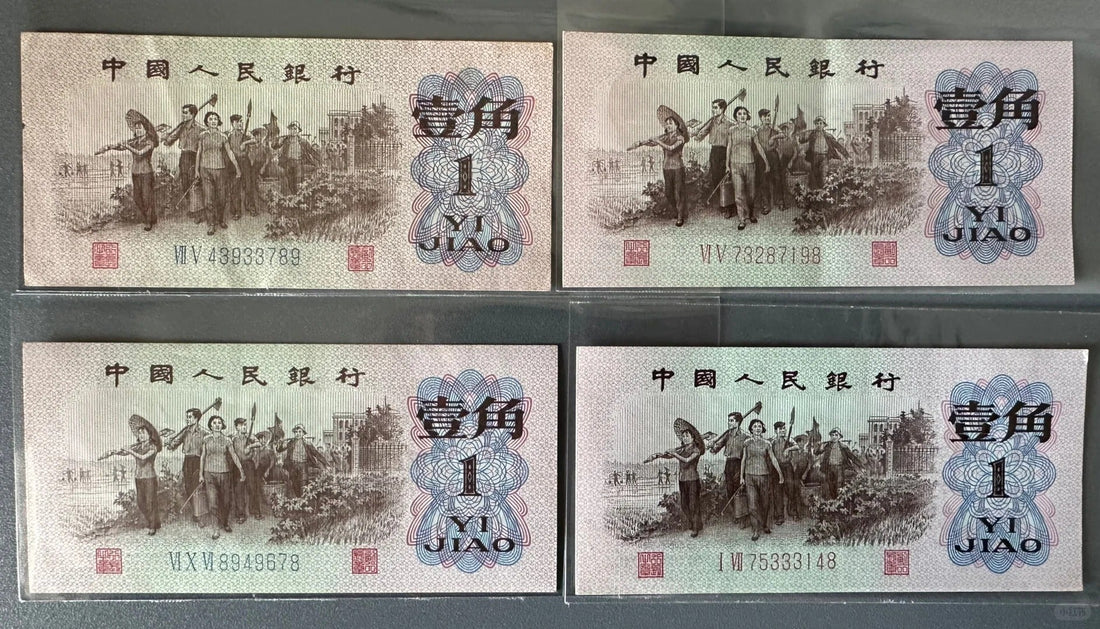
Return Every Version Claim to the One-Jiao Note
Begin with complete front and back images, then copy the denomination, printed wording, prefix, serial and principal designs under one note number.
Treat flat print, raised print and watermark names as questions until their required physical features appear in the recorded images.
Keep wrappers, album captions and inherited version labels as dated context, especially where their wording conflicts with the note.
Build a Complete Photograph Sequence
Leave all four corners and every edge inside the first frames, adding serial, inscription and design details only with enough surrounding area for relocation.
Retain the unedited colour files and note any mount, glare or crop that prevents a complete reading of the Third Series RMB one-jiao.
Use Raking Light for Surface Relief
Place the light at a low angle to show paper relief, folds, embossing and possible pressure changes without flattening or rubbing the note.
Compare several positions under the same setup, because one bright ridge or shadow cannot establish a printing process by itself.
Record tools, orientation and exposure conditions so another reviewer can repeat the image rather than infer the result from a label.
Describe Only the Transmitted-Light Evidence
Use an even source behind the paper and state the location, outline and visibility of any observed structure without presuming a watermark.
Keep a partial or uncertain feature provisional when a sleeve, stain, fold or uneven light interrupts its outline.
Do not detach the note from an album, wet the paper or apply intense heat merely to make a transmitted feature more visible.
Keep Condition Separate from Version
Locate folds, tears, edge loss, stains, mould, adhesive, filled holes, retouching, trimming and replaced corners as individual observations.
A special prefix or attractive serial belongs in its version context but does not override paper, ink, corner and repair evidence.
What Raking and Transmitted Light Can Actually Distinguish
Raking light can show relief, folds and local pressure, but one bright ridge does not by itself decide between flat and raised printing.
Even transmitted light records the position and interruption of a visible paper structure without presuming that the structure is a watermark.
A sleeve, stain or fold may explain an incomplete outline, and that physical limitation stays beside the image rather than becoming a version label.
Prefix and serial context can narrow a comparison group, although paper, ink, corners and repair evidence remain independently necessary.
The one-jiao record ends by stating which print or watermark claim the photographs support, contradict or leave unresolved.