Collectible appraisal
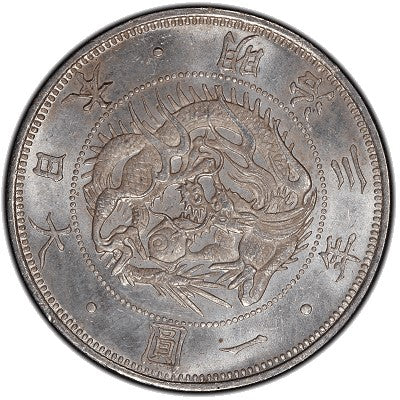
1870 Japan Meiji Year 3 Rising Sun Dragon One Yen
Start with photos so we can assess type, condition and market direction. Higher-value or uncertain items can then be checked in person.
WhatsApp photos for appraisal Front, back and edge photos are usually reviewed firstFree photo review Phone 852 98342057


Collectible appraisal
1870 Japan Meiji Year 3 Rising Sun Dragon One Yen
Start with photos so we can assess type, condition and market direction. Higher-value or uncertain items can then be checked in person.
1870 Japan Meiji Year 3 Rising Sun Dragon One Yen
Please include front, back, edge, weight, size, detail and certificate photos where available.
Item details and appraisal notes
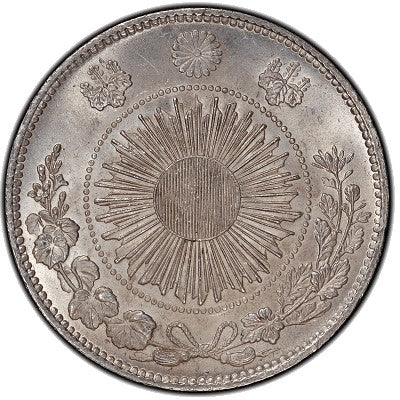
Meiji Year 3, 1870, Japan, the sun device and dragon wording are supplied for this silver coin. No denomination or weight standard appears, and no personal ruler or mint is named. A similar one-yen dragon coin must not fill those gaps.
Keep the sun and dragon with Meiji Year 3, not with a borrowed value
| Feature | Supported evidence |
|---|---|
| Issue | Japanese sun-and-dragon silver coin |
| Date | Meiji Year 3; 1870 |
| Denomination | No denomination or weight standard is supplied. |
| Country and devices | Japan; sun and dragon. No personal ruler or mint is named. |
| Boundary | The date, country and devices guide identification but do not establish authenticity, denomination or variety. |
Read the symbols without inventing a value
Sun and dragon: Photograph each device on its complete face before taking low-angle details. Keep their relative position, lettering and border visible.
Date wording: Show Meiji Year 3 and 1870 continuously with adjacent characters. An unclear stroke should remain open until another light direction resolves it.
Open denomination: Do not assign One Yen, Fifty Sen or a weight-based value from another Japanese coin. Safe measurements remain cross-checks and cannot create a denomination.
Photograph the symbols and perimeter before measuring
Place the coin over a padded, dry support and begin with natural-colour faces. Add a complete edge sequence, then show any holder or label separately unless evidence supports its association.
Three ways to separate appearance from attribution
- Sun device: Use direct and raking light to show relief edges and nearby fields without sharpening away fine surface changes.
- Dragon relief: Capture high points, scales, open areas and rim contact marks at a fixed orientation so wear is not mistaken for a different design.
- Edge and readings: Note tool and unit beside any safe diameter, thickness or weight reading; none proves authenticity, mint or a missing value.
Other Japanese dragon coins
Handling guidance for trade silver
See Foreign Silver Coins and Junk Dollar, French Indochina Piastre and British Trade Dollar Records. Compare imaging technique only, keeping the missing denomination, ruler and mint open for this sun-and-dragon coin.
Send both devices, the Meiji Year 3 and 1870 inscriptions, and the full circumference to About Gu Jin Jian Bao | Collection Enquiries, WhatsApp 9834 2057 or Phone +852 9834 2057. State that no denomination or weight standard is being asserted and preserve the surface exactly as found.
此類藏品 FAQ
出售前先看這類藏品的關鍵問題
每個產品頁會按藏品類型顯示專屬問答。先看保存狀態、成色、證書、照片角度與交收方式,再把實物照片傳給我們初步判斷。
